VIDEO

A Himalayan Paradise

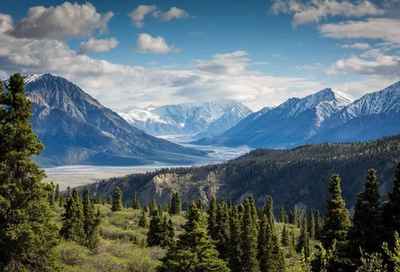
At the heart of Himachal Pradesh lies a congregation of snow-bound peaks that sleep quietly in the midnight chill. As the sun peaks above the horizon, the snowy mountains are lit aglow with ethereality, their white vertiginous slopes bathed by yellow-orange light. Standing proudly like tall spires, they beckon the climber in with their beauty, masking the dangers faced by those who once dared to climb them. Welcome to the Himalayas! Rocks, rocks, and more rocks… From the very start of the expedition, my rucksack became something extremely essential- a portable necessity, stuffed to the rim with cotton-clad armour to battle the harsh winter weather. It contained several pairs of thermals, balaclavas, caps, gloves, down jackets, and my most trustworthy ammunition: a handful of chocolate bars. Accompanied by 5 experienced guides and 12 of my fellow teammates, I started my journey from McLeod Ganj’s basecamp towards Triund: a beautiful meadow situated at 9,350ft amidst nature’s wilderness! With a trekking pole tightly clutched in one hand, I traversed amidst hilly terrains, tall pine trees and bushes filled with verdant foliage. The trail was strewn with rocks, arranged haphazardly like a twisted maze waiting to be solved. Some were as big as boulders, while others were small, sharp and jagged. After a 6-hour-long arduous ascent, we stopped in front of a panoramic mountain landscape to warm our cold hands with steaming plates of delicious Maggie. Let’s get Eco-friendly! Living in the mountains meant sacrificing my warm, cushioned bed for a small, waterproof, alpine tent. I remember how humbled I was when I first reached the Triund campsite. That night, I lay slanted, cocooned by a sleeping bag, while my tent balanced precariously over the edge of a mountain. Over the next few days, my survival soon became entrusted to 4 tightly (or not so tightly) latched pegs. And when the fate of your life rests on 10-centimetre, alloyed metal sticks, forget about getting beauty sleep. I’d much rather wake up with eye bags and dark circles as opposed to falling off a cliff. Apart from sleep deprivation, mountain life also entails a scarcity of water resources and washrooms. So, there’s nothing more terrifying and amusing than running to a tent at 12 am in the morning with frozen fingers and a barely functional head torch to do your business in a dug-up muddy hole. Let’s just say that the most convenient substitute to a flush is a heap of dried mud that lies on the side. Truly eco-friendly indeed. Plot twist… On our third day of the expedition, we reached Snowline, with an elevation of 10,000ft. We had lunch while basking in the sun and sang songs together in the tent that night. However, the once joyous atmosphere soon transformed into something more sullen. During a team meeting, one of our seniors spoke: “We have to descend back to Triund”- words I never expected to hear from the very people who had been our guiding force throughout the trip. They cited sub-zero temperature, lost confidence, high technicality, casualties, mortality and lack of resources as major limiting factors, but did so in a superficial manner without adequate explanation. Fuelled by shared disbelief and dissatisfaction, my fellow teammates and I stood outside our seniors’ tent at 1 am in the morning, desperate to solve our predicament. After several heated conversations, we finally convinced our guides and team leaders to continue our journey uphill as a bold act of defiance against nature’s harshness. While standing amidst the spine-chilling wintery breeze, we realised that nothing could come in the way of our relentless pursuit to the summit. Girl Power! On the night of 31st December, I was roused by the urgent voices of our guides. “Wake up! Breakfast ready hai!”. With a dehydrated system, sore muscles, and bandaged feet, I relished the black tea, poha, and dalia given to us as an early breakfast, in hopes of rejuvenating my fatigued and sleep-deprived self. At around 2 in the morning, the cold weather ate into my head torch’s battery at a speed faster than usual. With little to no visibility, I was tasked to navigate dangerous, steep routes and widely spaced boulders, silently praying that I don’t meet my demise with every waking step. At the crack of dawn, our team hit 13,000 ft, a point that marked the beginning of something far riskier than I could ever have imagined. During this time, many of my teammates who encountered bad injuries, dizziness, and excruciatingly painful headaches were forced to descend back to the campsite. Eventually, 5 of us remained, ready to take on whatever the mountains had to offer. With the city lights winking up at us from far below, the path ahead of me was an unprecedented mix of rocky terrains, soft murren, snow, and hard slats of ice where each surface required a different level of grip, balance, and adaptability. As I gained more elevation, I felt the weight of my rucksack almost double and press down on me. Gravity grinned at me with menace and gleefully laughed at the heavy breathing that accompanied my every step uphill. Fortunately, I was grateful to have a supportive team beside me, whose confidence and motivation never seemed to dwindle, even during the toughest of times. At around 10 am, we finally summited Indrahar Pass, one of the highest in the Dhauladhar range, standing at an astounding 14,245 ft. During the expedition, a fellow teammate of mine had said, “The more beautiful the view, the harder you need to work for it.” Those words struck me as my eyes were met with several snow-dotted mountain valleys; a view that instantly silenced my aching muscles and frazzled mind. After reaching the top, part of me felt proud to be the only female in the team to reach the summit. During the trip, days commenced with golden sunrises and steaming mugs of morning chai while nights were warmed by bonfires, shared songs, and horror stories that brought the team

Ranganathittu

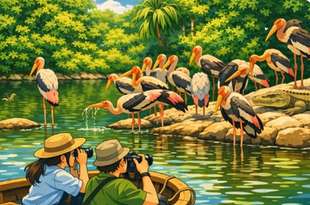
Ranganathittu We left Whitefield before dawn on 18 January 2026, with a thermos and camera in the glovebox and the expectation of a quiet day by the Cauvery. The drive to Ranganathittu is a comfortable road trip of roughly 150–160 km (about 2–3½ hours depending on traffic), threading past Bangalore’s suburbs and the greener plains toward Mysuru and Srirangapatna. If you time the start early, you dodge the worst of Bangalore traffic and reach the sanctuary when the birds are at their most active. Ranganathittu is small — only about 40 acres made up of several river islets — but famously dense with life. The islets were formed centuries ago after a weir was built across the Kaveri (Cauvery) in the 17th century, and the place began to attract nesting birds in large numbers; ornithologist Salim Ali helped persuade the Maharaja to protect the site in the 1940s. Today it’s the largest bird sanctuary in Karnataka and was even designated a Ramsar wetland in recent years. That mix of natural history and protection is why birders call it “Pakshi Kashi” (bird Kashi). From a handful of islets formed by a 17th-century embankment on the Kaveri to one of South India’s most celebrated bird sanctuaries, Ranganathittu’s journey is a story of nature finding opportunity in human intervention. Since 1940, the sanctuary stands today as a testament to timely conservation and foresight. With continued efforts by the Karnataka Forest Department and the declaration of an eco-sensitive zone around it, Ranganathittu remains not just a haven for birds, but a living reminder of how history, ecology, and responsible stewardship can coexist in harmony. What we found — is that the heart of the experience is the guided boat ride around the islets. Boats pull close enough to watch colonies of nesting birds on the shrubs and boulders, and the soundscape of flapping wings and distant calls is unforgettable. People who visit regularly emphasize going early (boats generally start in the morning), taking a boat for the best views, and keeping still and quiet to maximise sightings. Weekends get busy; midweek mornings are calmer. Ranganathittu hosts both resident and wintering species. Common and eye-catching birds you’re likely to see are painted storks, spot-billed pelicans, open-billed storks, Asian woolly-necked storks, various egrets and herons, darters and cormorants, and spoonbills — and if you’re lucky, some kingfishers and migrant waders. In winter months (November–February) many migratory species increase the numbers and variety, so a January visit is excellent for birdwatching. Beyond birds, the river banks and reedbeds shelter monitor lizards, smooth-coated otters, bonnet macaques, mongoose, and a notable population of freshwater (mugger) crocodiles often basking on sandbanks — a dramatic natural contrast to the nesting storks overhead. Why January? Winter in southern India brings migrants from the north and temperate regions, and the cooler, drier weather makes boating and shoreline watching pleasant; many visitors say January combines good bird numbers with comfortable light for photography. (Nesting activity peaks during and after the monsoon, but January gives you the mix of resident colonies plus winter arrivals.) Recommendation: Start early (first boats) to see active birds and soft morning light. Take the boat ride — it’s the main way to see the nesting colonies up close. Bring binoculars and a telephoto lens if you photograph; keep voices low. Carry water, a hat and sun protection (even in January the sun can be strong later). Avoid throwing anything into the water — the sanctuary is small and sensitive; local rules protect nesting sites. For anyone from Bangalore who wants to escape the city for a single morning or day of birding and river scenery, it’s one of the best nearby choices. https://youtu.be/b4xnv5pTwF0https://youtu.be/TgXUWGdHSokhttps://youtu.be/ruzbXBOMWLg Sample Itinerary (Time and Activity) Here’s a clean, practical sample itinerary for a one-day trip from Whitefield → Ranganathittu → back to Whitefield, paced the way most people actually enjoy it (early start, relaxed wildlife time, good food stops). Total distance: ~155–165 km one way. Best day: Any day; weekday if you want fewer crowds. Best season: Nov–Feb (January is excellent).   Early Morning: Whitefield → Breakfast Stop 5:30 AM – Depart Whitefield. Early start = smooth ORR + NICE Road + Mysuru Road. This also ensures you reach the sanctuary before birds retreat from the heat. 7:00–8:00 AM: Breakfast: Option 1 (popular & reliable): Kamat Lokaruchi. South Indian breakfast (idli, dosa, pongal). Clean restrooms. Quick service. Best if you want a no-nonsense stop. Option 2 (more relaxed by 7:30–8:30 AM): MTR – Maddur.  Famous Maddur Vada. Filter coffee stop. Slightly slower but iconic.  Drive: Breakfast → Ranganathittu  and by 8:00–9:30 AM -Route after Maddur: Maddur → Srirangapatna → Ranganathittu. The last stretch becomes greener and calmer, setting the mood nicely. 9:30 AM – 12:00 PM:Main Experience: Ranganathittu Bird Sanctuary. What to do:  Entry + Boat Safari (must-do).  Boat ride: ~20–30 minutes.  Short walking trails & viewpoints. What you’ll likely see in January: Painted storks, pelicans, spoonbills, Egrets, herons, cormorants, Crocodiles basking on rocks and Otters (if lucky!) Why this timing works: Bird activity is still high, light is great for photos, and boats operate smoothly. Tip: Do the boat ride first, then walk around.  12:30–1:30 PM:  Lunch Options (Post-Sanctuary): Option 1: Authentic local Karnataka meal: Hotel Mayura River View. Run by Karnataka Tourism. Riverside location. Traditional thali options. Option 2: Slightly upscale, relaxed. The Olive Garden. Calm ambience. Indian & continental options. Good for families or longer lunches. Optional Short Stop (If Energy Allows) 2:00–3:00 PM:  Srirangapatna. Tipu Sultan’s summer palace. Historic island town on the Cauvery. Even a 30–40 min walkaround is worth it. (Skip this if you want an earlier return — totally fine.) 4:30–5:00 PM: Tea Break on Return :  Recommended stop.  Café Coffee Day (Highway outlet). Stretch your legs . Coffee + snacks before final drive. 5:00–8:00 PM: Evening: Return to Whitefield. Expect Bangalore traffic after NICE Road. Put on music or a podcast — you’ll be tired but satisfied.  What to Carry: Binoculars (huge upgrade to the experience). Hat + sunscreen. Camera / phone with zoom. Water bottle. Cash (small fees, parking).   In short: Early start = best wildlife sightings, Balanced pace (no rushing, no boredom), Reliable food stops and Minimal stress driving Maddur Tiffanys (Nidagatta) Maddur Tiffany’s is a famous, long-standing South Indian restaurant, especially known for its iconic, crispy Maddur Vada, a beloved snack originating from Maddur town on the old Bengaluru-Mysuru highway. While it’s a popular

Flame University

FLAME UNIVERSITY FLAME University in Pune, India, is a private university known as a pioneer in liberal education in India, offering multidisciplinary undergraduate and postgraduate programs, including B.A., B.B.A., B.Design, and M.B.A. Established in 2015, it focuses on holistic, student-centric learning with an interdisciplinary approach, allowing students to combine majors and minors, and emphasizes leadership, innovation, and real-world skills, with a vibrant campus life and strong placements. Pune is a vibrant city that blends history, education, culture, and modern living with ease. Often called the “Oxford of the East,” it is home to some of India’s top universities and research institutions, giving the city a youthful, intellectual energy. Historically, Pune was the heart of the Maratha Empire, and this legacy still shows in its forts, old neighbourhoods, and cultural pride. At the same time, Pune is also a major IT and startup hub, especially around Hinjewadi, Kharadi, and Baner, making it both traditional and forward-looking. The city is known for its pleasant climate, green hills, and easy access to nature—treks, forts, and weekend getaways like Lonavala and Mulshi are just a short drive away. Pune’s food scene is equally diverse, ranging from iconic Maharashtrian dishes like misal pav to trendy cafés and global cuisine. Overall, Pune feels calmer than Mumbai but more dynamic than a typical city—a place that values learning, culture, and quality of life, while still offering plenty to do and explore. Traveling from Pune Airport to FLAME University is a smooth and straightforward experience. After landing at Pune Airport and collecting your baggage from the conveyor belt, the best way to reach the campus is by booking a prepaid airport taxi or an app-based cab such as Uber or Ola. The journey to FLAME University, located in Lavale, takes about one to one-and-a-half hours depending on traffic.  The route passes through key areas like Baner and Bavdhan before gradually giving way to greener, quieter surroundings as you approach the campus. The final stretch is scenic and hilly, offering a calm transition from the city to the university environment. Upon arrival at the main gate, campus security guides visitors to the reception or hostel area, making the overall journey safe, comfortable, and well-organized. What is Kurukshetra?  Kurukshetra is the flagship cultural and sports festival of FLAME University (in Pune, India). It’s a large, student-run event that brings together students from across India and beyond for 3–4 days of cultural competitions, performances, workshops, and sports. The festival blends arts, creativity, athletics, and student energy, making it one of the most anticipated annual events at FLAME. History — How It Started?:  The festival began as an initiative by FLAME students to cultivate a vibrant campus culture beyond academics. Its name — Kurukshetra — draws from the legendary battlefield in the Mahabharata, symbolizing healthy competition and spirited engagement. Over the years, the event expanded from internal showcases to a larger inter-college fest, inviting participants from other universities for competitions in music, dance, drama, literary arts, photography, debates, and sports. What Kurukshetra Is Like in 2026: In 2026, Kurukshetra at FLAME University has evolved into a well-established cultural and sporting festival with features like: Competitions & Events: Cultural Battles: Dance, music, fashion shows, dramatics, and fusion arts. Literary & Creative Arts: Debates, poetry slams, writing contests, and art exhibitions. Workshops & Talks: Guest artists, performers, and industry professionals lead interactive sessions. Sports & Games: Team sports, athletics, and fun campus games. Performances & Concerts: Evening pro-nights with live performances from popular bands, musicians, or DJs. Student talent shows spotlighting emerging performers. Inclusivity & Vibe: A mix of competition, camaraderie, cultural exchange, and celebration. Welcoming atmosphere for both university students and visiting delegates. Reinforces FLAME’s emphasis on holistic education — balancing academics with expression and leadership. Brings together a wide student community from multiple institutes.  Acts as a platform for young talent in arts, sports, and performance. https://youtu.be/3jNnCErmtKEhttps://youtu.be/97GqkjQoNFYhttps://youtu.be/IQF96Q0LeLI Badminton at FLAME Kurukshetra: Badminton has consistently been one of the most competitive and well-participated sports at Kurukshetra, FLAME University’s annual inter-college cultural and sports festival. Known for its fast pace and intense rallies, the badminton tournament attracts players ranging from casual enthusiasts to highly trained competitors, making it one of the most anticipated sporting events of the fest. When It Happens: The badminton tournament is typically held during Kurukshetra, which usually takes place in January or February. Matches are spread across one or two days, depending on participation, and are scheduled alongside other major sporting events. How the Tournament Is Conducted: Categories generally include: Men’s Singles. Women’s Singles. (In some editions) Mixed Doubles or Men’s Doubles, depending on time and registrations. Registration opens a few weeks before the festival, with slots filling up quickly due to high demand. Matches are conducted in a knockout format, ensuring high-stakes games from the very first round. Games follow standard badminton rules, with on-ground referees and student volunteers ensuring smooth coordination. What sets the Kurukshetra badminton tournament apart is its electric atmosphere. Friends crowd around the court, cheering loudly for every smash, drop shot, and rally. The matches often go down to the wire, with momentum  shifting rapidly and underdogs frequently challenging experienced players. Winners at Kurukshetra badminton vary each year, as the tournament is open to a wide pool of participants from different colleges and backgrounds. Rather than being dominated by a single institution or player, the event is known for fresh faces and surprise victories,  which keeps the competition exciting and unpredictable. Beyond trophies and titles, the badminton tournament at Kurukshetra represents: Sportsmanship and discipline, Mental agility and physical endurance, A break from academic routines through healthy competition. For many players, it is not just about winning, but about testing their limits, playing under pressure, and experiencing the thrill of competition on a larger stage. My Kurukshetra Experience: On Court, With a Racket in Hand: Participating in badminton at Kurukshetra was one of the most grounding and memorable experiences of my time at FLAME University. Kurukshetra, the university’s annual cultural and sports festival, brings an energy to campus that’s hard to describe unless you’re in the middle of it. For me, that energy found its shape on the badminton court—early mornings, tight schedules, nervous stretches, and the quiet focus that settles in just

Magical Musings

“Just look at those dragons!” As a teenage kid, I always found myself utterly engrossed between the pages of a fantasy novel. My tiny little mind would light up with fireworks every time I thought of something “supernatural” that defied the workings of our mundane, ordinary world. I made friends with fictional characters, gasped at every plot twist and marvelled at the intricately constructed world-building. My childhood was spent walking along the halls of Hogwarts, dodging Seraph blades from Cassandra Claire’s Shadowhunters while I traversed into the action-packed realm of Sarah J. Maas’s Erilea. It was through spending years immersed in such phantasmagorical realms filled with strange creatures, waxed candles, ancient runes and artful pentagrams that eventually shaped my interest in tarot. For a long time, tarot cards have captivated the minds of many with their enigmatic inscriptions, intriguing archetypes and mystical allure. Tarot is believed to have originated in 15th-century Northern Italy, where it was initially played as a game. Later, it was used in cartomancy, an art form steeped in fortune-telling and divination. Comprising of 78 cards, a tarot deck is split into two sections: the Major Arcana (22 cards) and the Minor Arcana (56 cards). The Major Arcana often represents significant life events and pivotal turning points, while the Minor Arcana focuses on everyday experiences and daily actions. Personally, I feel like there’s something so therapeutic about having a physical deck of cards. It’s like these magical manifestations and so-called “spiritual energies” are captured and stored within something tangible, weighed down and solidified on paper. The cards carry an air of mysticism, enlivened by fantastical archetypes and aged with Roman numerals, making them feel truly ancient and timeless. Driven by curiosity, I got a tarot reading done last year on the night of Halloween. My hand hovered over a deck of face-down cards as I closed my eyes, letting them gravitate towards the card that called out to me the most. The card I chose was named The Star. It depicted an image of a calm figure kneeling beside a stream of water, which was fed to the surrounding grass. The card symbolized optimism, creative inspiration, and the attainment of inner peace after a period of chaos and restlessness. Surprisingly, I was able to draw an accurate connection between the card and my own life. As I stared at it, thoughts about the first few months of college came rushing back. Looking back, the boisterous energy that filled campus gradually subsided. Corridors once flooded with a sea of shuffling feet during move-in day soon emptied out. Loud, hyper screams lowered to midnight chatter behind closed doors.  Halls echo silence during weekend-long respites, when the RH lies abandoned for a location beyond the bounds of campus. Timetables found structure and routines were solidified. Friendships were forged over cups of evening tea, excitedly spilt during afternoon perimeter walks as we quenched our thirst for campus drama. The card wasn’t an unsettling foreshadowing of what was to come, but a pause. A moment for deep introspection, as I took a trip down memory lane to hand-pick experiences that truly encapsulated the essence of the card’s message. The Fool, depicted as a young traveler, symbolizes naivety, hopefulness and someone who takes a risk without thoughtful consideration. This card often reminds me of my food-driven impulsive self, especially during a heavily resisted late-night Narsi run for yet another one of those ice cream sandwiches. The Four of Swords, portraying a figure lying down, surrounded by suspended blades, symbolizes rest and renewal after a period of mental exhaustion. I’d like to think of it as an oddly calming feeling of relief after finally submitting an assignment that had haunted my to-do list for days. Strangely enough, tarot archetypes bear some resemblance to college life after all. Over time, tarot has evolved and so has its purpose. To me, tarot doesn’t function like a crystal ball that lets you peek into the future and neither is it a Magic 8-Ball that gives you a clear-cut yes or no answer. Frankly, predicting the future gives me the chills. Clearly, Percy Jackson’s prophetic dreams were more of a burden than a gift (poor guy suffered far too many sleepless nights, frightened by nightmares). After all, the future isn’t pre-written and doesn’t guarantee assuredness. It’s shaped by the many actions and decisions that we consciously make along the way. So why predict the future when doing so is simply futile? In the end, tarot isn’t a fortune-telling tool or a twisted way of eliminating our agency. These decks of cards call out to the lost, confused parts of ourselves who demand not answers, but a space for quiet rumination. A chance to slow down and streamline our scattered thoughts when the world around us feels a little too overwhelming and a little less magical. References Magical Musings

Change Without Novelty

I didn’t cry when I graduated from high school.    Caps were tossed into the air, candles burned out, and people rejoiced in the supposedly “bittersweet” moment that marked an important chapter in their lives. While students excitedly embraced each other with tight hugs, I simply stood there—placid, perplexed as to why I couldn’t quite bring myself to shed a few tears of my own. Initially, change unsettles you. It’s like a siren blaring in your head every time you walk into a new classroom, meet new people, encounter new teachers, or adjust to unfamiliar environments. There are times when change arrives with a weight capable of upending your entire world. I’d like you to ask yourself the following question: What happens when you build your life around something that suddenly disappears one fine day? I was forced to confront this dilemma four years ago when I left competitive badminton after nine hard-fought years in the sport. From 5 a.m. alarms and morning fitness sessions to rigorous summer camps and strict diets, everything felt deeply nostalgic.  I felt so dejected after I stopped training that my heart would skip a beat every time I saw a small child sauntering confidently onto the court carrying a kit bag twice his size. The sport was ingrained so deeply into my life that adjusting to this change was more than just replacing a routine; it meant rediscovering my identity, rebuilding my mindset, finding another purpose, and attaining emotional stability when the world around me felt foreign. Yet, while change can be deeply emotional and transformative, it can also be desensitizing.   Third grade was undoubtedly one of the best times of my life. Days were filled with morning mugs of Born Vita, movie screenings, “family-fun days”, and “cross-country runs”. I spent my first three years of schooling at one of Bangalore’s largest and most prestigious international schools, where everything felt expansive and lively. Soon after, I shifted to a school that felt starkly different. Unlike my previous school, this one had a surprisingly small campus with a culture rooted in academic rigor. I still remember how my hands would turn sore from hours of relentless note-taking in pursuit of something everyone around me seemed to want: academic excellence. But just when life began to find its rhythm, I changed schools yet again. And again. No, this isn’t a typo—my formative schooling years spanned across four different schools. Over the past 12 years, I’ve experienced change in all its forms. From eating rice and rasam to pasta and pita bread for lunch. I gained a newfound interest in a subject I once despised. Outgrowing my tomboy era. Alternating between befriending and unfriending. Breaking free of the monotony that came with a jam-packed nine-subject calendar to one with just five. And finally reaching a stage where true freedom felt less like a 5-minute snack break and more like stepping beyond the confines of four concrete walls. It was through these constant shifts in environment that instilled in me a sense of quiet detachment, only staying long enough to be simply present. But never enough to pause, process, or even reminisce. Memories began to take form but rarely solidified into something permanent. My life began to feel like a playlist on shuffle, with each song abruptly replacing the last, rarely allowing the melodies of the previous one to linger. Eventually, my brain got wired to these repetitions of novelty. I realized that I was no longer intimidated by the prospect of change. Instead, it had become something I’d simply grown accustomed to. My new sense of normal So perhaps the reason I didn’t cry on Graduation Day wasn’t that I was emotionless or indifferent. It was because somewhere along this rollercoaster of a ride, I had learned to let go of places, routines, and even parts of myself I never thought I’d lose. References https://www.hercampus.com/school/krea/change-without-novelty/

Japan – III

Literary tradition Japan has a rich literary tradition, and there are many excellent books that provide insights into its culture, history, and society. These books represent a diverse range of perspectives on Japan and its culture, making them essential reads for anyone interested in delving deeper into this fascinating country: “The Tale of Genji” by Murasaki Shikibu: Written by a lady-in-waiting in the early 11th century, “The Tale of Genji” is considered the world’s first novel. It offers a vivid portrayal of court life in Heian-era Japan and explores themes of love, ambition, and human nature. “Hiroshima” by John Hersey: This non-fiction book tells the story of six survivors of the atomic bombing of Hiroshima in 1945. It offers a harrowing account of the devastation caused by the bomb and its aftermath, as well as the resilience of the human spirit. “Snow Country” by Yasunari Kawabata: This novel, winner of the Nobel Prize in Literature, follows the romantic relationship between a Tokyo dilettante and a geisha in a remote hot spring town in snowy northern Japan. It’s a beautifully written exploration of love, longing, and cultural contrasts. “The Wind-Up Bird Chronicle” by Haruki Murakami: Murakami is one of Japan’s most celebrated contemporary authors, and this novel is one of his most acclaimed works. It’s a surreal and labyrinthine tale that weaves together elements of mystery, fantasy, and psychological drama. “A Tale for the Time Being” by Ruth Ozeki: This novel intertwines the stories of a teenage girl in Tokyo and a writer living on a remote island in British Columbia. Through their narratives, the book explores themes of identity, memory, and the interconnectedness of lives across time and space. “In Praise of Shadows” by Jun’ichirō Tanizaki: This essay explores the aesthetics of traditional Japanese culture, focusing on the beauty of shadows, darkness, and imperfection. It offers profound insights into the Japanese appreciation of subtlety and nuance. “Kitchen” by Banana Yoshimoto: This novella and accompanying short story, “Moonlight Shadow,” are poignant explorations of love, loss, and grief. Yoshimoto’s lyrical prose and sensitive portrayal of characters have made this book a beloved classic. “Shogun” by James Clavell: Although written by a Western author, this epic novel set in feudal Japan is a gripping tale of political intrigue, cultural clashes, and samurai warfare. It’s a sprawling saga that immerses readers in the world of 17th-century Japan. “The Japanese Mind: Understanding Contemporary Japanese Culture” by Roger J. Davies and Osamu Ikeno: For those interested in understanding Japanese culture, this book provides valuable insights into the historical, social, and psychological factors that shape Japanese society. “Lost Japan” by Alex Kerr: In this memoir, Kerr, an American who has lived in Japan for decades, offers a thought-provoking reflection on the changes and challenges facing traditional Japanese culture in the modern world. References sdad

Japan – II

shinkansen The Shinkansen ( ’new main line’), colloquially known in English as the bullet train, is a network of high-speed railway lines in Japan. Initially, it was built to connect distant Japanese regions with Tokyo, the capital, to aid economic growth and development. Beyond long-distance travel, some sections around the largest metropolitan areas are used as a commuter rail network. It is owned by the Japan Railway Construction, Transport and Technology Agency and operated by five Japan Railways Group companies. References:  1: https://www.jrailpass.com/shinkansen-bullet-trains 2: https://japantravel.navitime.com/en/ Japan have several high-speed train lines, commonly known as “Shinkansen” or bullet trains:1: Tokaido Shinkansen (Tokyo – Shin-Osaka) : This was the first Shinkansen line, connecting Tokyo to Osaka, with major stops including Yokohama, Nagoya, Kyoto, and Shin-Osaka. The Tokaido Shinkansen is one of Japan’s most important and busiest high-speed railway lines, connecting Tokyo, the capital city, with Osaka, one of Japan’s largest cities. The Tokaido Shinkansen runs along the eastern coast of Honshu, Japan’s main island, connecting Tokyo Station in the east with Shin-Osaka Station in the west. It passes through or near major cities such as Yokohama, Nagoya, and Kyoto. The Tokaido Shinkansen was the world’s first high-speed railway line, opening in 1964 just in time for the Tokyo Olympics. Its opening marked a significant milestone in Japan’s transportation history. Initially, the line was served by the original 0 series Shinkansen trains. Over the years, newer generations of trains have been introduced, including the current N700 and N700A series. The Tokaido Shinkansen offers several categories of service, including the fastest Nozomi trains, followed by Hikari and Kodama trains. Nozomi trains provide the fastest service, with fewer stops between Tokyo and Shin-Osaka, making them the preferred choice for travelers seeking the quickest journey. Hikari trains make more stops than Nozomi trains but still offer relatively fast service, while Kodama trains make stops at all stations along the route, catering to local and regional travelers. The Tokaido Shinkansen is known for its high speeds, with trains reaching maximum speeds of up to 285 km/h (177 mph) on certain sections of the line. Nozomi trains, with their limited stops, can achieve some of the fastest travel times between Tokyo and Osaka, completing the journey in about 2 hours and 30 minutes.  The Tokaido Shinkansen line features advanced railway technology, including dedicated tracks, signaling systems, and safety measures to ensure efficient and safe operation at high speeds. The latest generations of Shinkansen trains on the line, such as the N700 and N700A series, incorporate aerodynamic designs and advanced technologies for improved performance and passenger comfort. Tokaido Shinkansen is a vital transportation artery in Japan, facilitating fast, efficient, and reliable travel between Tokyo and Osaka, as well as other cities along its route.2: San’yō Shinkansen (Shin-Osaka – Hakata) : An extension of the Tokaido Shinkansen, it runs from Shin-Osaka to Hakata in Fukuoka, passing through cities such as Okayama and Hiroshima. The San’yō Shinkansen is a high-speed railway line in Japan, connecting the cities of Osaka and Fukuoka. The San’yō Shinkansen runs through western Japan, linking Shin-Osaka Station in Osaka Prefecture with Hakata Station in Fukuoka Prefecture It passes through major cities such as Kobe, Okayama, Hiroshima, and Kitakyushu along its route. The San’yō Shinkansen opened in stages, with the first segment between Shin-Osaka and Okayama opening in 1972. It was extended to Hakata by 1975. Initially served by the 0 series Shinkansen trains, newer generations of trains, including the 700 series and N700 series, have been introduced over the years.  Like the Tokaido Shinkansen, the San’yō Shinkansen offers multiple categories of service, including Nozomi, Hikari, and Kodama trains. Nozomi trains provide the fastest service with limited stops between Shin-Osaka and Hakata, making them the preferred choice for travelers seeking rapid travel. Hikari trains make more stops than Nozomi trains but still offer high-speed service, while Kodama trains serve all stations along the route. The San’yō Shinkansen allows trains to reach speeds of up to 300 km/h (186 mph) on certain sections of the line. Nozomi trains, with their limited stops and high speeds, offer the fastest travel times between Osaka and Fukuoka, completing the journey in about 2 hours and 30 minutes. The San’yō Shinkansen line features advanced railway infrastructure and technology, including dedicated tracks, signaling systems, and safety measures to support high-speed operation. The newer generations of Shinkansen trains, such as the N700 and N700A series, utilized on the San’yō Shinkansen, incorporate aerodynamic designs and cutting-edge technologies for improved performance and passenger comfort. The San’yō Shinkansen plays a crucial role in facilitating fast, efficient, and reliable travel between the major cities of Osaka and Fukuoka, as well as other destinations along its route in western Japan.3: Tōhoku Shinkansen (Tokyo – Shin-Aomori) : The Tohoku Shinkansen is a high-speed railway line in Japan that connects Tokyo with the Tohoku region, which is located in the northern part of Honshu, the main island of Japan.  The Tohoku Shinkansen runs from Tokyo Station in the capital city to Shin-Aomori Station in Aomori Prefecture, with major stops including Ueno, Omiya, Sendai, and Morioka. It extends further north to Shin-Hakodate-Hokuto Station in Hokkaido, through the Seikan Tunnel, which is the world’s longest undersea tunnel.  The Tohoku Shinkansen opened in stages, with the initial segment between Tokyo and Omiya opening in 1982. It was gradually extended northwards over the years, reaching Shin-Aomori in 2010. The line has seen the introduction of various generations of Shinkansen trains, including the original 200 series, the newer E2 series, and the E5 series, which operates services beyond Shin-Aomori into Hokkaido.  The Tohoku Shinkansen offers several categories of service, including Hayabusa, Hayate, and Yamabiko trains. Hayabusa trains are the fastest category, offering direct service between Tokyo and Shin-Aomori with limited stops. They also continue beyond Shin-Aomori to Shin-Hakodate-Hokuto, providing the quickest travel times to Hokkaido.Hayate and Yamabiko trains make more stops than Hayabusa trains but still provide high-speed service along the Tohoku Shinkansen route. The Tohoku Shinkansen allows trains to reach speeds of up to 320 km/h (199 mph) on certain sections of the line, particularly the newer E5 series trains used for Hayabusa services. Hayabusa trains offer the fastest travel times between Tokyo and Shin-Aomori, completing the journey in around 3 hours, and between

Shibuya, Japan

SHIBUYA (SCRAMBLE) CROSSING Shibuya Crossing, often referred to as the “Scramble Crossing,” is one of Tokyo’s most iconic and busiest pedestrian intersections. Shibuya Crossing is located in the bustling Shibuya district of Tokyo, near Shibuya Station, one of the busiest train stations in Japan. It is surrounded by shopping malls, department stores, restaurants, and entertainment venues, making it a popular destination for locals and tourists alike. Shibuya Crossing is unique for its diagonal pedestrian crossings, which allow people to cross the intersection in multiple directions simultaneously. When the traffic lights turn red, pedestrians flood into the intersection from all sides, creating a mesmerizing spectacle of movement and activity. Shibuya Crossing is often touted as the busiest pedestrian crossing in the world, with thousands of people crossing each time the lights change. The sheer volume of foot traffic and the organized chaos of the crossing have made it a symbol of Tokyo’s energy and dynamism. The surrounding buildings offer elevated vantage points from which visitors can observe and photograph the spectacle of Shibuya Crossing from above. Popular spots for viewing include the Starbucks located on the second floor of the Tsutaya building and the Shibuya Hikarie building. Shibuya Crossing has been featured in numerous films, television shows, and advertisements, both domestically and internationally. Its vibrant atmosphere and iconic imagery have made it a symbol of Tokyo and a must-visit destination for tourists seeking a taste of urban life in Japan. In addition to the crossing itself, Shibuya is known for its vibrant shopping and entertainment scene. Visitors can explore Shibuya’s famous shopping streets, including Center Gai and Takeshita Street, and discover a wide range of shops, cafes, bars, and nightlife venues. Shibuya Crossing is a popular meeting spot for locals and tourists due to its central location and easy accessibility. It serves as a convenient rendezvous point for friends, colleagues, and groups before heading out to explore Shibuya and beyond. Shibuya Crossing is not only a functional pedestrian intersection but also a cultural landmark and tourist attraction that embodies the energy and excitement of Tokyo’s urban landscape. https://youtu.be/RIm2O9STv0ghttps://youtu.be/7uV5RKMflCghttps://youtu.be/MkibTJmaXj0 SHIBUYA SKY Shibuya Sky offers an unforgettable experience for both locals and tourists, allowing them to appreciate the beauty and magnitude of Tokyo from a unique and elevated perspective. Whether it’s for sightseeing, photography, or simply soaking in the awe-inspiring views, Shibuya Sky is a must-visit destination for anyone exploring the vibrant city of Tokyo. Shibuya Sky is an observation deck located in Shibuya, Tokyo, Japan. Situated atop the Shibuya Scramble Square skyscraper, Shibuya Sky offers breathtaking panoramic views of Tokyo and its iconic landmarks.  Location: Shibuya Sky is situated on the upper floors of Shibuya Scramble Square, a multi-purpose complex located near Shibuya Station, one of Tokyo’s busiest transportation hubs. The observation deck occupies floors 45 to 47 of the building. Height: At approximately 229 meters (751 feet) above ground level, Shibuya Sky offers visitors a commanding vantage point from which to admire the sprawling metropolis of Tokyo and its surrounding areas. On clear days, Mount Fuji and other distant landmarks can be seen from the observation deck. 360-Degree Views: Shibuya Sky boasts a unique design that allows visitors to enjoy unobstructed 360-degree views of Tokyo’s skyline. The observation deck features floor-to-ceiling windows, outdoor terraces, and glass floors, providing multiple vantage points for taking in the cityscape. Attractions: In addition to the spectacular views, Shibuya Sky offers various attractions and experiences for visitors to enjoy. These include a cafe serving refreshments and light snacks, interactive exhibits showcasing Tokyo’s landmarks and history, and photo opportunities with Tokyo’s iconic Shibuya Crossing visible from above. Sunset and Night Views: One of the best times to visit Shibuya Sky is during sunset or at night when the city lights illuminate the skyline, creating a mesmerizing backdrop for photography and sightseeing. The observation deck’s extended hours allow visitors to experience Tokyo’s transformation from day to night.  Tickets and Admission: Admission to Shibuya Sky is ticketed, with prices varying depending on the time of day and any additional experiences or amenities included. Visitors can purchase tickets online in advance or at the ticket counter located within Shibuya Scramble Square. https://youtu.be/OxClFeq_Cdkhttps://youtu.be/JxJLIBC7x48https://youtu.be/_J-RbUNoBpA HACHIKO Hachiko, often referred to as “Hachiko the Faithful Dog,” is a legendary Akita dog known for his remarkable loyalty and devotion to his owner. The story of Hachiko has become a symbol of loyalty and friendship in Japanese culture. Hachiko’s story began in the early 1920s when he was adopted by Hidesaburo Ueno, a professor at Tokyo Imperial University. Every day, Hachiko would accompany his owner to Shibuya Station in Tokyo and wait for him to return from work. This routine continued for over a year until May 1925 when Professor Ueno unexpectedly passed away while at work. Despite his owner’s absence, Hachiko continued to wait faithfully at Shibuya Station every day for nearly ten years, hoping for Professor Ueno’s return. His unwavering loyalty touched the hearts of locals, who began to care for him and provide him with food and shelter. Hachiko’s story gained widespread attention after a newspaper article about him was published in 1932. He became a national symbol of loyalty and devotion, and people from all over Japan visited Shibuya Station to see him. In 1934, a bronze statue of Hachiko was erected outside Shibuya Station to honor his loyalty and commemorate his story. The statue has since become a popular meeting spot and a beloved landmark in Tokyo. Hachiko himself passed away in 1935, but his legacy lives on, inspiring countless people around the world with his remarkable tale of loyalty and love. https://youtu.be/GdnpTwB4WI0https://youtu.be/XyBThllPe40https://youtu.be/_J-RbUNoBpA starbucks – reserve roastery The Starbucks Reserve Roastery Tokyo offers a premium and immersive coffee experience that goes beyond the traditional café setting. It’s a destination for coffee lovers to explore, learn, and indulge in high-quality coffee and culinary delights while enjoying the vibrant atmosphere of Tokyo’s Nakameguro neighborhood. The Starbucks Reserve Roastery Tokyo is special for several reasons. Size and Design: It is the largest Starbucks store in Tokyo, spanning over 32,000 square feet across multiple floors. The building itself is architecturally impressive, featuring a modern design with glass walls,

Mt. Fuji, Japan

Mount Fuji is located in Japan and is an iconic and active stratovolcano, standing at 3,776 meters (12,389 feet) tall. Mount Fuji is situated on Honshu Island, specifically within the borders of Yamanashi and Shizuoka Prefectures. It is the highest peak in Japan and is considered one of Japan’s three sacred mountains, along with Mount Tate and Mount Haku. Additionally, Mount Fuji is a UNESCO World Heritage Site and attracts numerous climbers and tourists from around the world each year. Mount Fuji’s combination of natural beauty, cultural significance, outdoor activities, and cultural experiences makes it a must-visit destination for tourists from around the world. Mount Fuji is a popular tourist attraction for several reasons. Mount Fuji holds immense cultural and spiritual significance in Japan. It is considered a sacred site in Shintoism, Japan’s indigenous religion. Many people undertake pilgrimages to the mountain for spiritual reasons, and it has been depicted in numerous works of art, literature, and poetry throughout Japanese history. Mount Fuji’s iconic symmetrical cone shape and picturesque surroundings make it a stunning natural sight to behold. The mountain is particularly beautiful during the cherry blossom season in spring and when covered in snow during the winter months. Mount Fuji offers various climbing routes, catering to both experienced climbers and casual hikers. Climbing Mount Fuji is a popular activity during the summer months when the weather conditions are most favorable. Many tourists aim to reach the summit to witness the breathtaking views of the surrounding landscapes and the sunrise from the peak. Mount Fuji’s majestic presence provides numerous opportunities for photographers to capture stunning images from different vantage points. The mountain serves as a backdrop for many iconic Japanese landscapes, making it a favorite subject for photographers. Visiting Mount Fuji allows tourists to immerse themselves in Japanese culture and traditions. Nearby towns and villages offer authentic Japanese cuisine, hot springs (onsen), traditional ryokan accommodations, and cultural experiences such as tea ceremonies, making it an enriching cultural experience for visitors. https://youtu.be/0zR_TnIkhzchttps://youtu.be/t7YnQgPEo7whttps://youtu.be/EXRDkfoiMqA Reaching Mount Fuji from Tokyo is relatively straightforward, and there are several transportation options available. Here are some common ways to reach Mount Fuji from Tokyo: By Train: Take the JR Tokaido Shinkansen (bullet train) from Tokyo Station to Shin-Fuji Station or Mishima Station. From there, transfer to local trains or buses that will take you to the Fuji Five Lakes area, which is near the base of Mount Fuji. Alternatively, take the JR Chuo Line from Tokyo Station to Otsuki Station. From Otsuki Station, transfer to the Fujikyu Railway and take the Fujisan Limited Express train to Kawaguchiko Station, which is also near the Fuji Five Lakes area. By Bus: Many tour operators and bus companies offer direct bus services from Tokyo to the Fuji Five Lakes area. These buses typically depart from major stations such as Shinjuku Station or Tokyo Station and provide convenient transportation to popular tourist spots around Mount Fuji. By Car: Renting a car is another option for traveling from Tokyo to Mount Fuji. The journey takes approximately 2 to 3 hours, depending on traffic conditions and the specific destination around Mount Fuji. Take the Chuo Expressway or Tomei Expressway and follow the signs for Mount Fuji or the Fuji Five Lakes. Organized Tours: There are many organized day trips and guided tours available from Tokyo to Mount Fuji. These tours often include transportation, guided sightseeing, and sometimes additional activities such as hiking or visiting nearby attractions. Before traveling, it’s essential to check the current transportation schedules, ticket availability, and any travel restrictions or advisories. Additionally, consider the weather conditions and time of year, as visibility of Mount Fuji can vary depending on the season. https://youtu.be/4828J9OtNiYhttps://youtu.be/xBL2p3ctp7whttps://youtu.be/tTaXm_vjNpY When traveling to Mount Fuji by train, the best side to sit on depends on the direction you’re traveling from and your preferences for viewing the mountain. Here are some general guidelines: Tokyo to Mount Fuji (Westbound): If you’re traveling from Tokyo to Mount Fuji (westbound), consider sitting on the right side (seats facing forward). This side of the train typically offers better views of Mount Fuji as you approach the mountain from the east. Mount Fuji to Tokyo (Eastbound): If you’re traveling from Mount Fuji to Tokyo (eastbound), consider sitting on the left side (seats facing forward). This side of the train may provide better views of Mount Fuji as you depart from the mountain and head towards Tokyo.  Summer is also the time when Mount Fuji can be clearly seen from a Shinkansen train leaving Tokyo towards Nagoya – Osaka – Kyoto. The window view is impressive – make sure to reserve your D or E seat (C or D in Green Cars), which is the right side from Tokyo, left side from Kyoto. Keep in mind that visibility of Mount Fuji can vary depending on weather conditions, such as cloud cover or haze. Even if you sit on the recommended side, there’s no guarantee of clear views. Different train lines and routes may offer varying views of Mount Fuji. Research the specific train line you’ll be traveling on to determine the best seating options. If viewing Mount Fuji is a top priority for your journey, consider choosing a transportation option (such as a bus tour or scenic train) that specifically highlights views of the mountain. Ultimately, the best side to sit on for viewing Mount Fuji may vary depending on factors such as weather conditions, train route, and personal preferences. If possible, remain flexible and be prepared to enjoy the scenic views from whichever side of the train offers the best visibility during your journey. There are numerous attractions and points of interest to explore around Mount Fuji. Here are some popular destinations and activities near Mount Fuji: Fuji Five Lakes (Fujigoko): The Fuji Five Lakes region comprises five scenic lakes—Lake Kawaguchi, Lake Yamanaka, Lake Saiko, Lake Shoji, and Lake Motosu—located at the northern base of Mount Fuji. Each lake offers its own unique views of the mountain, as well as opportunities for boating, fishing, and hiking. Lake Ashi (Ashinoko): Lake Ashi is a picturesque crater lake located in Hakone, southwest of Mount Fuji. Visitors can enjoy boat

Kyoto, Japan – I

Kyoto, Japan, is a city steeped in history, culture, and tradition. It served as the imperial capital of Japan for over a thousand years, from 794 until the capital was moved to Tokyo in 1868. As a result, Kyoto is home to numerous temples, shrines, palaces, and gardens, many of which are UNESCO World Heritage Sites. Kyoto is known for its well-preserved historical sites, including the famous Kinkaku-ji (Golden Pavilion), Ginkaku-ji (Silver Pavilion), Kiyomizu-dera Temple, and Fushimi Inari Taisha Shrine, famous for its thousands of torii gates. The city is a center for traditional Japanese culture, including tea ceremonies, kimono wearing, and flower arranging (ikebana). While the emperor and the imperial family moved to Tokyo with the Meiji Restoration in 1868, the Kyoto Imperial Palace remains an important cultural site. Visitors can tour the palace grounds and buildings. Kyoto is a must-visit destination for anyone interested in Japanese history, culture, and tradition. Its timeless beauty and rich heritage continue to enchant visitors from around the world. Visitors can experience these traditions firsthand by participating in workshops or visiting cultural centers. Kyoto is beautiful year-round, but it’s particularly famous for its cherry blossoms in spring and vibrant autumn foliage. The city’s temples and gardens provide stunning backdrops for enjoying these seasonal phenomena. While steeped in tradition, Kyoto is also a modern city with bustling shopping streets, vibrant nightlife, and a thriving arts scene. The city seamlessly blends its historical past with contemporary culture.  Built in the 17th century, Nijo Castle is a UNESCO World Heritage Site and a prime example of feudal castle architecture. Its “nightingale floors” squeak to alert of intruders, and the gardens surrounding the castle are exquisite. Gion is Kyoto’s most famous geisha district, known for its traditional wooden machiya houses and tea houses. Visitors often stroll through Gion in hopes of catching a glimpse of geisha or maiko (apprentice geisha) hurrying to appointments.  Just outside the city center lies the Arashiyama district, famous for its bamboo groves. Walking through these towering bamboo stalks is a serene and picturesque experience. Kyoto is renowned for its traditional cuisine, known as Kyo-ryori, which often emphasizes seasonal ingredients and subtle flavors. Dishes like kaiseki (multi-course meals) and tofu-based dishes are highlights. https://youtu.be/IMjwqUeEOo4https://youtu.be/fjpj0PquGlkhttps://youtu.be/4hNL3agPSvc Kyoto offers a plethora of attractions for tourists, ranging from historical landmarks to cultural experiences. Kinkaku-ji (Golden Pavilion): One of Kyoto’s most iconic sights, Kinkaku-ji is a Zen Buddhist temple with a stunning golden pavilion set amidst a serene pond and lush greenery. Fushimi Inari Taisha: Known for its thousands of vermillion torii gates leading up the mountain, Fushimi Inari Taisha is dedicated to Inari, the Shinto god of rice and prosperity. Visitors can hike through the gates to enjoy panoramic views of Kyoto. Kiyomizu-dera Temple: Perched on a hillside, Kiyomizu-dera offers sweeping views of Kyoto. The temple’s main hall, supported by wooden pillars, is a UNESCO World Heritage Site and a marvel of Japanese architecture. Arashiyama Bamboo Grove: Located in the Arashiyama district, the bamboo grove is a tranquil retreat where visitors can walk through towering bamboo stalks on winding paths. Gion District: Famous for its traditional machiya houses and teahouses, Gion is Kyoto’s geisha district. Visitors can wander its narrow streets, visit historic tea houses, and, if lucky, catch a glimpse of geisha or maiko. Nijo Castle: Built in the 17th century, Nijo Castle is a UNESCO World Heritage Site known for its exquisite gardens, ornate interiors, and “nightingale floors” designed to squeak and alert of intruders. Philosopher’s Path: A scenic walking trail along a canal lined with cherry trees, the Philosopher’s Path is especially beautiful during cherry blossom season, offering a peaceful escape from the city. Ryoan-ji Temple: Famous for its rock garden, Ryoan-ji is a Zen temple known for its minimalist design and tranquil atmosphere. Nishiki Market: Often referred to as “Kyoto’s Kitchen,” Nishiki Market is a bustling covered market offering a wide array of fresh seafood, produce, Kyoto specialties, and traditional snacks. Kyoto Imperial Palace: While the emperor and the imperial family moved to Tokyo in the 19th century, the Kyoto Imperial Palace remains an important cultural site. Visitors can tour the palace grounds and buildings.  10: GION HIGASHIYAMA Gion, Higashiyama (geisha, Kiyomizu-dera, Shirakawa Lane, Kamo river) district is characterized by its well-preserved machiya houses, traditional wooden townhouses with narrow facades and long, deep interiors. Many of these machiya have been converted into restaurants, teahouses, and shops. Kiyomizu-dera Temple: Perched on a hillside, Kiyomizu-dera offers sweeping views of Kyoto. The temple’s main hall, supported by wooden pillars, is a UNESCO World Heritage Site and a marvel of Japanese architecture.  Shirakawa Lane is situated in the heart of the Gion district, Kyoto’s historic geisha district. It is within walking distance of other popular attractions in Gion, such as Hanami-koji Street, where visitors can spot geisha and maiko (apprentice geisha) in their traditional attire. https://youtu.be/v-7j3DInO-Ahttps://youtu.be/8V4F96uyW1Ahttps://youtu.be/B8SzqC888a0 Gion Higashiyama is a historic district in Kyoto, Japan, renowned for its preserved traditional atmosphere, charming streets, and significant cultural landmarks. Gion Higashiyama is one of Kyoto’s most famous geisha districts. Visitors can often spot geisha (known as geiko in Kyoto dialect) or apprentice geisha (maiko) adorned in elegant kimono, hurrying to appointments or performances. The district is characterized by its well-preserved machiya houses, traditional wooden townhouses with narrow facades and long, deep interiors. Many of these machiya have been converted into restaurants, teahouses, and shops. Gion Higashiyama is home to numerous teahouses and restaurants where visitors can experience traditional Japanese cuisine and tea ceremonies. Some establishments offer exclusive opportunities to dine with geisha or watch traditional performances. Located at the eastern end of Shijo-dori, Yasaka Shrine is one of Kyoto’s most prominent Shinto shrines. It is especially popular during festivals such as the Gion Matsuri held in July, one of Japan’s largest and most famous festivals. One of Kyoto’s most important temples, Chion-in is the headquarters of the Jodo sect of Japanese Buddhism. The temple complex features impressive gates, halls, and gardens, including Japan’s largest temple bell. Adjacent to Yasaka Shrine, Maruyama Park is a popular spot for cherry blossom viewing (hanami) in spring. The park’s large weeping cherry tree (shidare-zakura) is illuminated at night during the cherry blossom season, creating a