wisdomhoots

Japan – III

Literary tradition Japan has a rich literary tradition, and there are many excellent books that provide insights into its culture, history, and society. These books represent a diverse range of perspectives on Japan and its culture, making them essential reads for anyone interested in delving deeper into this fascinating country: “The Tale of Genji” by Murasaki Shikibu: Written by a lady-in-waiting in the early 11th century, “The Tale of Genji” is considered the world’s first novel. It offers a vivid portrayal of court life in Heian-era Japan and explores themes of love, ambition, and human nature. “Hiroshima” by John Hersey: This non-fiction book tells the story of six survivors of the atomic bombing of Hiroshima in 1945. It offers a harrowing account of the devastation caused by the bomb and its aftermath, as well as the resilience of the human spirit. “Snow Country” by Yasunari Kawabata: This novel, winner of the Nobel Prize in Literature, follows the romantic relationship between a Tokyo dilettante and a geisha in a remote hot spring town in snowy northern Japan. It’s a beautifully written exploration of love, longing, and cultural contrasts. “The Wind-Up Bird Chronicle” by Haruki Murakami: Murakami is one of Japan’s most celebrated contemporary authors, and this novel is one of his most acclaimed works. It’s a surreal and labyrinthine tale that weaves together elements of mystery, fantasy, and psychological drama. “A Tale for the Time Being” by Ruth Ozeki: This novel intertwines the stories of a teenage girl in Tokyo and a writer living on a remote island in British Columbia. Through their narratives, the book explores themes of identity, memory, and the interconnectedness of lives across time and space. “In Praise of Shadows” by Jun’ichirō Tanizaki: This essay explores the aesthetics of traditional Japanese culture, focusing on the beauty of shadows, darkness, and imperfection. It offers profound insights into the Japanese appreciation of subtlety and nuance. “Kitchen” by Banana Yoshimoto: This novella and accompanying short story, “Moonlight Shadow,” are poignant explorations of love, loss, and grief. Yoshimoto’s lyrical prose and sensitive portrayal of characters have made this book a beloved classic. “Shogun” by James Clavell: Although written by a Western author, this epic novel set in feudal Japan is a gripping tale of political intrigue, cultural clashes, and samurai warfare. It’s a sprawling saga that immerses readers in the world of 17th-century Japan. “The Japanese Mind: Understanding Contemporary Japanese Culture” by Roger J. Davies and Osamu Ikeno: For those interested in understanding Japanese culture, this book provides valuable insights into the historical, social, and psychological factors that shape Japanese society. “Lost Japan” by Alex Kerr: In this memoir, Kerr, an American who has lived in Japan for decades, offers a thought-provoking reflection on the changes and challenges facing traditional Japanese culture in the modern world. ✖ Japan GDP (Last 5 Years) References Deeptech / AI Deeptech / AI × CLOSE TRACKED FUNDING $1.1B AVG ROUND $28M HIRING TREND ↑ Rising Blackstone Peak XV Nexus Venture Norwest Qualcomm India’s AI moment is structural, not cyclical. For three decades India exported AI talent to US hyperscalers; Neysa’s $1.2B financing is the first serious attempt to keep both the compute and the value creation onshore. The real thesis is sovereign AI infrastructure: as US export controls on frontier chips tighten, nations without domestic compute face a genuine strategic gap — and Blackstone’s willingness to write a $600M equity cheque into a GPU cluster signals that Indian enterprises and the Indian state will pay a premium for data residency and regulatory compliance. The next layer is model differentiation: India is systematically underrepresented in LLM pre-training data — Hindi/Hinglish code-switching, regional medical imaging, agricultural yield signals. Companies that build proprietary data flywheels in these domains will carry moats that API wrappers cannot replicate.

Oxidation – Copy

38: ACCELERATED OXIDATION  : Principle of “strong oxidants” is related to the use of substances with powerful oxidizing properties to address and solve problems in innovative ways. Oxidants are substances that facilitate oxidation reactions, where a substance loses electrons. In inventive problem-solving, this principle considers introduction or utilization of substances with strong oxidizing properties to improve a system, process, or product leading to removal of impurities or enhancement of certain properties, or changes in the composition. It implies making transition from one level of purity to the next higher level of purity:  (A) Replace ambient atmospheric air with  oxygenated air (B) Repalce oxygenated with (introduction of) pure oxygen (C) Repalce oxygen with (introductio of) ionized oxygen (D) Repalce ionized oxygen with (introduction of) ozoned oxygen (E) Replace ozone oxygen with (introduction of) ozone  EXAMPLE: Scuba diving with Nitrox, Oxy-Acetylene torch, treatment of wounds Ionize air to trap pollutants in air cleaner, speed up chemical reactions by ionizing the gas before SYNONYMS: STRONG OXIDANTS, Accelerated Oxidation, Enriched Environment ACB: The principle of “strong oxidants” is related to the use of substances with powerful oxidizing properties to address and solve problems in innovative ways. Oxidants are substances that facilitate oxidation reactions, where a substance loses electrons. In inventive problem-solving, the principle of strong oxidants suggests considering the introduction or utilization of substances with strong oxidizing properties to improve a system, process, or product. Oxidation reactions can lead to various effects, such as the removal of impurities, enhancement of certain properties, or changes in chemical compositions. Oxidation is the process of a substance undergoing a chemical change in which it loses electrons or gains oxygen. It refers to a chemical reaction in which a substance loses electrons or a process that involves the addition of oxygen to a substance or the removal of hydrogen from it or transfer of electrons from one molecule to another. It typically occurs in the presence of an oxidizing agent, which is a substance that accepts electrons, and a reducing agent, which is a substance that donates electrons.  At the molecular level, atoms within a substance can lose electrons. This loss of electrons results in an increase in the oxidation state of the atom.  Oxidants like oxygen or chemical oxidants are used in metallurgical processes, such as the extraction of metals from ores and the refining of metals. The substance that loses electrons is said to be oxidized.  An oxidizing agent, also known as an oxidant, is a substance that gains electrons during the oxidation process. It becomes reduced as it accepts electrons from the substance being oxidized. A reducing agent, also known as a reductant, is a substance that donates electrons during the oxidation process. It becomes oxidized as it loses electrons to the oxidizing agent. In practical terms, oxidation reactions can manifest as various phenomena, such as the rusting of iron, combustion (burning) of organic materials, or the metabolism of nutrients in living organisms. Oxidation processes are integral to many chemical and biological reactions, playing a fundamental role in both natural and synthetic processes.   Making transitions from one level of oxidation to the next higher level involves various chemical processes and reactions. Each of these transitions involves specific chemical reactions or processes tailored to manipulate the oxidation state of oxygen molecules and ions. These transitions have applications in various fields, including environmental remediation, water treatment, industrial processes, and chemical synthesis.Here’s how each transition can be achieved:  Ambient air to oxygenated: Transition: Ambient air, which typically contains nitrogen, oxygen, and other gases, can be oxygenated by increasing the concentration of oxygen. Method: Oxygenation can be achieved by passing the ambient air through an oxygen-enrichment system or by introducing oxygen gas into the air using compressed air systems. Example: Oxygen Enrichment System for Combustion. Benefit: In a combustion system, such as a furnace or boiler, introducing oxygen-enriched air instead of ambient air can significantly improve combustion efficiency and reduce fuel consumption. The increased oxygen concentration enhances the combustion process, resulting in higher temperatures, faster reaction rates, and reduced emissions of pollutants such as carbon monoxide (CO) and unburned hydrocarbons. Oxygenated to oxygen: Transition: Oxygenated air, which has a higher concentration of oxygen compared to ambient air, can be converted to pure oxygen. Method: Oxygenation processes such as pressure swing adsorption (PSA) or membrane separation can be used to separate oxygen from other gases in the oxygenated air, resulting in pure oxygen.  Example: Oxygen Generation System for Medical Applications. Benefit: Oxygenation systems used in medical applications, such as oxygen concentrators or oxygen cylinders, produce pure oxygen from oxygen-enriched air. Pure oxygen is essential for patients requiring supplemental oxygen therapy, such as those with respiratory disorders or during medical procedures. The transition from oxygenated air to pure oxygen ensures the delivery of high-purity oxygen for therapeutic purposes, improving patient outcomes and comfort. Oxygen to ionized oxygen: Transition: Oxygen gas can be ionized to form oxygen ions by gaining or losing electrons. Method: Ionization of oxygen can be achieved through various methods such as exposure to high-energy radiation (e.g., UV radiation or X-rays), electrical discharge (e.g., corona discharge or plasma), or chemical reactions involving oxidizing agents.  Example: Ozone Generation for Water Treatment. Benefit: Ionizing oxygen to produce oxygen ions is a crucial step in ozone generation systems used for water treatment applications. Ozone is a powerful oxidizing agent used to disinfect and purify water by destroying organic contaminants, pathogens, and microorganisms. The transition to ionized oxygen enables the efficient production of ozone through processes such as corona discharge or UV radiation, ensuring effective water treatment and disinfection. Ionized oxygen to ozoned oxygen: Transition: Ionized oxygen ions can react with oxygen molecules to form ozone (O3) molecules. Method: The reaction between ionized oxygen ions and oxygen molecules can occur in the presence of energy sources such as electrical discharge (corona discharge) or ultraviolet (UV) radiation, leading to the formation of ozone. Example: Ozonation System for Wastewater Treatment. Benefit: Ozonation systems utilize the reaction between ionized oxygen ions and oxygen molecules to produce ozone for wastewater treatment. Ozone is highly effective in oxidizing organic pollutants, pathogens, and odor-causing compounds in wastewater, leading to improved water quality and reduced environmental impact. The transition from ionized

A Himalayan Paradise

At the heart of Himachal Pradesh lies a congregation of snow-bound peaks that sleep quietly in the midnight chill. As the sun peaks above the horizon, the snowy mountains are lit aglow with ethereality, their white vertiginous slopes bathed by yellow-orange light. Standing proudly like tall spires, they beckon the climber in with their beauty, masking the dangers faced by those who once dared to climb them. Welcome to the Himalayas! Rocks, rocks, and more rocks… From the very start of the expedition, my rucksack became something extremely essential- a portable necessity, stuffed to the rim with cotton-clad armour to battle the harsh winter weather. It contained several pairs of thermals, balaclavas, caps, gloves, down jackets, and my most trustworthy ammunition: a handful of chocolate bars. Accompanied by 5 experienced guides and 12 of my fellow teammates, I started my journey from McLeod Ganj’s basecamp towards Triund: a beautiful meadow situated at 9,350ft amidst nature’s wilderness! With a trekking pole tightly clutched in one hand, I traversed amidst hilly terrains, tall pine trees and bushes filled with verdant foliage. The trail was strewn with rocks, arranged haphazardly like a twisted maze waiting to be solved. Some were as big as boulders, while others were small, sharp and jagged. After a 6-hour-long arduous ascent, we stopped in front of a panoramic mountain landscape to warm our cold hands with steaming plates of delicious Maggie. Let’s get Eco-friendly! Living in the mountains meant sacrificing my warm, cushioned bed for a small, waterproof, alpine tent. I remember how humbled I was when I first reached the Triund campsite. That night, I lay slanted, cocooned by a sleeping bag, while my tent balanced precariously over the edge of a mountain. Over the next few days, my survival soon became entrusted to 4 tightly (or not so tightly) latched pegs. And when the fate of your life rests on 10-centimetre, alloyed metal sticks, forget about getting beauty sleep. I’d much rather wake up with eye bags and dark circles as opposed to falling off a cliff. Apart from sleep deprivation, mountain life also entails a scarcity of water resources and washrooms. So, there’s nothing more terrifying and amusing than running to a tent at 12 am in the morning with frozen fingers and a barely functional head torch to do your business in a dug-up muddy hole. Let’s just say that the most convenient substitute to a flush is a heap of dried mud that lies on the side. Truly eco-friendly indeed. Plot twist… On our third day of the expedition, we reached Snowline, with an elevation of 10,000ft. We had lunch while basking in the sun and sang songs together in the tent that night. However, the once joyous atmosphere soon transformed into something more sullen. During a team meeting, one of our seniors spoke: “We have to descend back to Triund”- words I never expected to hear from the very people who had been our guiding force throughout the trip. They cited sub-zero temperature, lost confidence, high technicality, casualties, mortality and lack of resources as major limiting factors, but did so in a superficial manner without adequate explanation. Fuelled by shared disbelief and dissatisfaction, my fellow teammates and I stood outside our seniors’ tent at 1 am in the morning, desperate to solve our predicament. After several heated conversations, we finally convinced our guides and team leaders to continue our journey uphill as a bold act of defiance against nature’s harshness. While standing amidst the spine-chilling wintery breeze, we realised that nothing could come in the way of our relentless pursuit to the summit. Girl Power! On the night of 31st December, I was roused by the urgent voices of our guides. “Wake up! Breakfast ready hai!”. With a dehydrated system, sore muscles, and bandaged feet, I relished the black tea, poha, and dalia given to us as an early breakfast, in hopes of rejuvenating my fatigued and sleep-deprived self. At around 2 in the morning, the cold weather ate into my head torch’s battery at a speed faster than usual. With little to no visibility, I was tasked to navigate dangerous, steep routes and widely spaced boulders, silently praying that I don’t meet my demise with every waking step. At the crack of dawn, our team hit 13,000 ft, a point that marked the beginning of something far riskier than I could ever have imagined. During this time, many of my teammates who encountered bad injuries, dizziness, and excruciatingly painful headaches were forced to descend back to the campsite. Eventually, 5 of us remained, ready to take on whatever the mountains had to offer. With the city lights winking up at us from far below, the path ahead of me was an unprecedented mix of rocky terrains, soft murren, snow, and hard slats of ice where each surface required a different level of grip, balance, and adaptability. As I gained more elevation, I felt the weight of my rucksack almost double and press down on me. Gravity grinned at me with menace and gleefully laughed at the heavy breathing that accompanied my every step uphill. Fortunately, I was grateful to have a supportive team beside me, whose confidence and motivation never seemed to dwindle, even during the toughest of times. At around 10 am, we finally summited Indrahar Pass, one of the highest in the Dhauladhar range, standing at an astounding 14,245 ft. During the expedition, a fellow teammate of mine had said, “The more beautiful the view, the harder you need to work for it.” Those words struck me as my eyes were met with several snow-dotted mountain valleys; a view that instantly silenced my aching muscles and frazzled mind. After reaching the top, part of me felt proud to be the only female in the team to reach the summit. During the trip, days commenced with golden sunrises and steaming mugs of morning chai while nights were warmed by bonfires, shared songs, and horror stories that brought the team

Ranganathittu

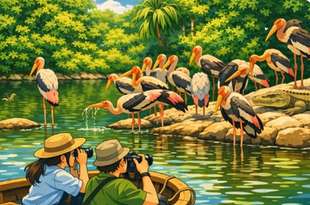
Ranganathittu We left Whitefield before dawn on 18 January 2026, with a thermos and camera in the glovebox and the expectation of a quiet day by the Cauvery. The drive to Ranganathittu is a comfortable road trip of roughly 150–160 km (about 2–3½ hours depending on traffic), threading past Bangalore’s suburbs and the greener plains toward Mysuru and Srirangapatna. If you time the start early, you dodge the worst of Bangalore traffic and reach the sanctuary when the birds are at their most active. Ranganathittu is small — only about 40 acres made up of several river islets — but famously dense with life. The islets were formed centuries ago after a weir was built across the Kaveri (Cauvery) in the 17th century, and the place began to attract nesting birds in large numbers; ornithologist Salim Ali helped persuade the Maharaja to protect the site in the 1940s. Today it’s the largest bird sanctuary in Karnataka and was even designated a Ramsar wetland in recent years. That mix of natural history and protection is why birders call it “Pakshi Kashi” (bird Kashi). From a handful of islets formed by a 17th-century embankment on the Kaveri to one of South India’s most celebrated bird sanctuaries, Ranganathittu’s journey is a story of nature finding opportunity in human intervention. Since 1940, the sanctuary stands today as a testament to timely conservation and foresight. With continued efforts by the Karnataka Forest Department and the declaration of an eco-sensitive zone around it, Ranganathittu remains not just a haven for birds, but a living reminder of how history, ecology, and responsible stewardship can coexist in harmony. What we found — is that the heart of the experience is the guided boat ride around the islets. Boats pull close enough to watch colonies of nesting birds on the shrubs and boulders, and the soundscape of flapping wings and distant calls is unforgettable. People who visit regularly emphasize going early (boats generally start in the morning), taking a boat for the best views, and keeping still and quiet to maximise sightings. Weekends get busy; midweek mornings are calmer. Ranganathittu hosts both resident and wintering species. Common and eye-catching birds you’re likely to see are painted storks, spot-billed pelicans, open-billed storks, Asian woolly-necked storks, various egrets and herons, darters and cormorants, and spoonbills — and if you’re lucky, some kingfishers and migrant waders. In winter months (November–February) many migratory species increase the numbers and variety, so a January visit is excellent for birdwatching. Beyond birds, the river banks and reedbeds shelter monitor lizards, smooth-coated otters, bonnet macaques, mongoose, and a notable population of freshwater (mugger) crocodiles often basking on sandbanks — a dramatic natural contrast to the nesting storks overhead. Why January? Winter in southern India brings migrants from the north and temperate regions, and the cooler, drier weather makes boating and shoreline watching pleasant; many visitors say January combines good bird numbers with comfortable light for photography. (Nesting activity peaks during and after the monsoon, but January gives you the mix of resident colonies plus winter arrivals.) Recommendation: Start early (first boats) to see active birds and soft morning light. Take the boat ride — it’s the main way to see the nesting colonies up close. Bring binoculars and a telephoto lens if you photograph; keep voices low. Carry water, a hat and sun protection (even in January the sun can be strong later). Avoid throwing anything into the water — the sanctuary is small and sensitive; local rules protect nesting sites. For anyone from Bangalore who wants to escape the city for a single morning or day of birding and river scenery, it’s one of the best nearby choices. https://youtu.be/b4xnv5pTwF0https://youtu.be/TgXUWGdHSokhttps://youtu.be/ruzbXBOMWLg Sample Itinerary (Time and Activity) Here’s a clean, practical sample itinerary for a one-day trip from Whitefield → Ranganathittu → back to Whitefield, paced the way most people actually enjoy it (early start, relaxed wildlife time, good food stops). Total distance: ~155–165 km one way. Best day: Any day; weekday if you want fewer crowds. Best season: Nov–Feb (January is excellent).   Early Morning: Whitefield → Breakfast Stop 5:30 AM – Depart Whitefield. Early start = smooth ORR + NICE Road + Mysuru Road. This also ensures you reach the sanctuary before birds retreat from the heat. 7:00–8:00 AM: Breakfast: Option 1 (popular & reliable): Kamat Lokaruchi. South Indian breakfast (idli, dosa, pongal). Clean restrooms. Quick service. Best if you want a no-nonsense stop. Option 2 (more relaxed by 7:30–8:30 AM): MTR – Maddur.  Famous Maddur Vada. Filter coffee stop. Slightly slower but iconic.  Drive: Breakfast → Ranganathittu  and by 8:00–9:30 AM -Route after Maddur: Maddur → Srirangapatna → Ranganathittu. The last stretch becomes greener and calmer, setting the mood nicely. 9:30 AM – 12:00 PM:Main Experience: Ranganathittu Bird Sanctuary. What to do:  Entry + Boat Safari (must-do).  Boat ride: ~20–30 minutes.  Short walking trails & viewpoints. What you’ll likely see in January: Painted storks, pelicans, spoonbills, Egrets, herons, cormorants, Crocodiles basking on rocks and Otters (if lucky!) Why this timing works: Bird activity is still high, light is great for photos, and boats operate smoothly. Tip: Do the boat ride first, then walk around.  12:30–1:30 PM:  Lunch Options (Post-Sanctuary): Option 1: Authentic local Karnataka meal: Hotel Mayura River View. Run by Karnataka Tourism. Riverside location. Traditional thali options. Option 2: Slightly upscale, relaxed. The Olive Garden. Calm ambience. Indian & continental options. Good for families or longer lunches. Optional Short Stop (If Energy Allows) 2:00–3:00 PM:  Srirangapatna. Tipu Sultan’s summer palace. Historic island town on the Cauvery. Even a 30–40 min walkaround is worth it. (Skip this if you want an earlier return — totally fine.) 4:30–5:00 PM: Tea Break on Return :  Recommended stop.  Café Coffee Day (Highway outlet). Stretch your legs . Coffee + snacks before final drive. 5:00–8:00 PM: Evening: Return to Whitefield. Expect Bangalore traffic after NICE Road. Put on music or a podcast — you’ll be tired but satisfied.  What to Carry: Binoculars (huge upgrade to the experience). Hat + sunscreen. Camera / phone with zoom. Water bottle. Cash (small fees, parking).   In short: Early start = best wildlife sightings, Balanced pace (no rushing, no boredom), Reliable food stops and Minimal stress driving Maddur Tiffanys (Nidagatta) Maddur Tiffany’s is a famous, long-standing South Indian restaurant, especially known for its iconic, crispy Maddur Vada, a beloved snack originating from Maddur town on the old Bengaluru-Mysuru highway. While it’s a popular

Emerging Future and IP – Part 1

Generative AI, a branch of artificial intelligence, is capable of autonomously creating new content, including designs, code, and even inventions. It has seen rapid adoption across industries like software development, drug discovery, and creative fields. While its potential for innovation is undeniable, it presents significant challenges to existing patent laws, especially regarding registration, enforcement, patentability, and ownership. Traditionally, patents have been granted to human inventors who demonstrate novelty, non-obviousness, and utility in their inventions. However, generative AI challenges this norm, as it can independently generate inventions. Questions arise regarding whether an AI-created invention can meet the criteria for patentability.  Patent systems are currently built around human ingenuity, raising concerns about the ability to assess whether an AI-generated invention is truly novel or simply a recombination of existing knowledge. One of the most complex issues is determining the ownership of AI-generated inventions. Patent systems worldwide typically require an individual or group of humans to be named as the inventors. When AI autonomously creates an invention, it raises fundamental legal and ethical questions: Should the AI developer, the user of the AI system, or someone else hold the patent rights? In recent cases like Thaler v. DABUS, courts have rejected the notion of AI as an inventor, insisting that only humans can be named in patent filings. This stance may need reevaluation as AI technology continues to evolve.   The model that generates original outputs is fundamentally an extension of the cognitive efforts and intent of its programmer. The AI system, while capable of creating new content autonomously, has been coded and designed to function in this way by its human developer. Therefore, any outcome produced by the AI can be seen as stemming from the intellectual work of the programmer who created the system. In essence, the AI model is merely a tool—an advanced one, but still an instrument—that reflects the ingenuity and invention of its creator. Consequently, any application or invention generated by the AI should, in theory, be attributed to the inventor of the AI system itself.  The enforcement of patents on AI-generated inventions also presents unique challenges. Patent offices may struggle to validate the originality and non-obviousness of an AI-generated invention due to the speed and volume at which AI systems can produce new designs or products. Additionally, enforcing these patents in the marketplace becomes complex, especially when it is unclear who owns the invention or when multiple entities contribute to its development.  Additionally, it’s crucial to clarify the object of invention in the context of AI. Traditionally, patent law distinguishes between process and product as two separate categories of patentable subject matter. However, in AI, the focus shifts to the model, which represents a blend of both process and product. The AI model is a procedural system that generates products (outputs), combining two dimensions that traditionally exist separately. Given this dual nature, patentability requires a different perspective. The inventive differences in AI should be assessed at the model level, where the true ingenuity lies, rather than at the output level. The outputs, such as text or images, may be better suited for protection under other legal frameworks, like copyright, as they can be independently created without utilizing the specific AI model. This distinction is essential to avoid confusion and ensure that the model, as the core invention, is the focus of patent law, while outputs fall under other intellectual property regimes, like copyright. To address these challenges, patent laws may need to evolve significantly. Legislators and policymakers will likely have to consider creating new frameworks that accommodate AI’s role in invention. These could involve hybrid models of ownership that recognize both human and AI contributions, as well as new standards for patent eligibility. Additionally, global collaboration might be necessary to develop harmonized policies that allow for the protection and enforcement of AI-generated inventions across jurisdictions. As generative AI continues to advance, its impact on the patent system will deepen. Current laws governing registration, enforcement, patentability, and ownership are struggling to keep pace with the technology. Adapting these legal frameworks will be crucial to ensure that innovation flourishes while also maintaining a fair and equitable system for recognizing and protecting inventors—both human and AI-driven. Future of IP: Top 10 changes to expect in the next decade Generative AI refers to a class of artificial intelligence systems designed to generate new, original content. These systems can create text, images, music, and even video based on the data they have been trained on. Unlike traditional AI, which focuses on tasks like classification or prediction, generative AI models produce novel outputs by learning patterns and structures from vast datasets. Key aspects of generative AI include: Models: Generative models like GPT (for text), DALL·E (for images), and others are based on architectures like Generative Adversarial Networks (GANs), Variational Autoencoders (VAEs), and Transformers.  Training Data: These models are trained on large datasets, allowing them to learn from diverse examples and mimic creativity in various domains. Applications: (i) Text generation: AI can generate coherent essays, articles, or even code. (ii) Image creation: Tools like DALL·E can generate realistic or artistic images from text descriptions. (iii) Music and video generation: AI can create music compositions or synthesize video content. (iv) Chatbots and conversational agents: Models like ChatGPT can engage in natural language conversations. Generative AI has potential applications in industries like entertainment, content creation, marketing, design, and more, offering tools for automation and creativity. The future of intellectual property (IP) is evolving rapidly, especially in response to emerging technologies like AI, machine learning, blockchain, and quantum computing. Over the next decade, IP laws and systems are expected to undergo significant changes to adapt to these technological advancements. Here are the top 10 changes to expect in IP:  1. Recognition of AI-Generated Inventions:  Current Situation: Most jurisdictions require human inventors to be listed on patent applications, with AI-generated inventions often facing challenges in being patented. Expected Change: Legal frameworks for AI-generated inventions will evolve, allowing for AI to be recognized as a co-inventor or even the primary inventor in some jurisdictions. This could necessitate new guidelines for determining ownership, authorship, and rights related to

Higher Education and Research in India

The current research university landscape in India includes some institutions founded pre-independence, most established in the decades following independence, with several earning global rankings and aspiring for greater international recognition and many young research universities, less than two decades old, seeking global acclaim.  Several private sector universities are emerging or under development with aspirations to attain global recognition as research institutions .Their research performance is yet to be fully gauged, with future trends expected to clarify their trajectory. Their endeavors are backed by significant philanthropic funding. While it’s early days, there’s potential for some of these private institutions to transform into research universities, mirroring the trajectory seen in the USA India possesses an extensive higher education (HE) framework, notably youthful and swiftly expanding. In India, there are approximately 900 universities with the authority to grant degrees.. The rate of growth has seen a substantial rise. From 240 in 2000, the count surged to over 750 by 2015.  Despite having over 900 universities, Indian universities have evolved differently from those in the developed world. Few Indian universities rank among the top 200 globally, with none appearing in the Times Higher Education (THE) and Shanghai rankings, and only a few in the QS rankings.  The Indian HE ecosystem further boasts in excess of 40,000 colleges, with the majority of them emerging,  as recent as in the current century.  The prerequisites for establishing colleges were relatively modest in terms of capital, laboratory facilities, land, and other necessities, thereby enabling more private entities to establish colleges.  The gross enrolment ratio (GER), indicating the percentage of eligible students enrolled in higher education (HE), presently stands at approximately 25% in India and is projected to increase to 30% soon. In comparison, GER in several developed nations like the USA, Australia, and European countries typically exceeds 80%, while China’s GER is around 40%.  The Indian government aims to raise the gross enrolment ratio (GER) in higher education. Given India’s youthful demographic, with over 20% of the population aged 0-10 and another 20% aged 10-20, the HE system must expand to accommodate the growing number of young graduates. To achieve this and further increase GER, the higher education system will need to sustain rapid growth over the next few decades. Though a handful of higher education institutions (HEIs) enjoy international renown for their research endeavors, the overarching emphasis and dialogue within the HE system predominantly revolve around education, with research-oriented universities often overlooked. The majority of Higher Education Institutions (HEIs) in India have prioritized education over research, resulting in a dearth of high-quality educational experiences. Given that involvement in research is widely recognized as crucial for both educational excellence and cultivating a robust academic culture, the prevailing trend in Indian HEIs suggests a deficiency in delivering top-tier education. Nowadays, there’s a growing recognition of the significance of research, leading to a shift in focus from solely education to a combination of research and education in numerous universities.  In many developed nations, this shift occurred predominantly in the early 20th century, with World War II providing additional momentum. Contrastingly, in India, where the basic literacy rate stood at less than 20 percent upon gaining independence in 1947, this transformation appears to be unfolding presently. The inception of the modern university system in India began with the establishment of the University of Calcutta by the British. Subsequently, the universities of Bombay and Madras were established with the explicit aim of nurturing educated human resources to serve the British administrative apparatus in India. These universities, boasting exceptional faculty and pioneering PhD programs, emerged as leading research centers in India, making them the country’s earliest research universities. Notable institutions at the time of independence included the University of Calcutta, the University of Madras, the University of Bombay, Lucknow University, Allahabad University, BHU, Agra University, Punjab University, and Aligarh Muslim University (AMU). However, despite their significance in education, these institutions primarily emphasized teaching. The Universities of Calcutta, Madras, and Bombay awarded early PhDs, being among the earliest universities in the modern format, established in 1857 by the British. In India, the PhD program began in the late 19th century, with Calcutta University granting the first PhD in 1877.  Until the mid-1900s, only a few universities in India conferred PhD degrees, and the number of PhDs awarded was minimal. PhD production in India remained low until before independence in 1947. This was primarily due to the British-established universities being designed to produce human resources to aid administration, with research not being a primary objective, despite the provision of the PhD degree. The total number of PhDs produced until the 1920s was less than one per year, and even in the 1930s, just about three were produced annually nationwide. In the 1930s, India’s PhD output was slightly over 1% of that of the USA, a figure that rose to approximately 5% in the 1950s, the decade following India’s independence.  The production of PhDs in India has seen continuous growth across various fields of study. India ranks fifth globally in terms of the total number of PhDs awarded. While India’s PhD output was significantly smaller than that of the USA around independence (approximately 5%), the current scenario is notably different. Presently, India graduates approximately one-third the number of PhDs awarded by the USA. In a vast higher education system like in India, top universities are expected to prioritize research while others focus on education. Ideally, these leading research universities should produce the majority of PhDs. Data from the USA shows that roughly half of all PhDs are granted by the top 50 universities out of approximately 400 PhD-granting institutions. This pattern suggests a strong higher education system where top universities typically emphasize research and provide rigorous PhD programs, leading to the production of high-quality PhD graduates. In the top 25 institutions, about 85% of PhD students are full-time, a pattern observed in both engineering institutions and universities. This high proportion of full-time students is anticipated as top research universities generally depend on committed full-time PhD candidates. However, this percentage decreases significantly in the remaining top 100 institutions, with about 45% and 68%

Japan – II

shinkansen The Shinkansen ( ’new main line’), colloquially known in English as the bullet train, is a network of high-speed railway lines in Japan. Initially, it was built to connect distant Japanese regions with Tokyo, the capital, to aid economic growth and development. Beyond long-distance travel, some sections around the largest metropolitan areas are used as a commuter rail network. It is owned by the Japan Railway Construction, Transport and Technology Agency and operated by five Japan Railways Group companies. References:  1: https://www.jrailpass.com/shinkansen-bullet-trains 2: https://japantravel.navitime.com/en/ Japan have several high-speed train lines, commonly known as “Shinkansen” or bullet trains:1: Tokaido Shinkansen (Tokyo – Shin-Osaka) : This was the first Shinkansen line, connecting Tokyo to Osaka, with major stops including Yokohama, Nagoya, Kyoto, and Shin-Osaka. The Tokaido Shinkansen is one of Japan’s most important and busiest high-speed railway lines, connecting Tokyo, the capital city, with Osaka, one of Japan’s largest cities. The Tokaido Shinkansen runs along the eastern coast of Honshu, Japan’s main island, connecting Tokyo Station in the east with Shin-Osaka Station in the west. It passes through or near major cities such as Yokohama, Nagoya, and Kyoto. The Tokaido Shinkansen was the world’s first high-speed railway line, opening in 1964 just in time for the Tokyo Olympics. Its opening marked a significant milestone in Japan’s transportation history. Initially, the line was served by the original 0 series Shinkansen trains. Over the years, newer generations of trains have been introduced, including the current N700 and N700A series. The Tokaido Shinkansen offers several categories of service, including the fastest Nozomi trains, followed by Hikari and Kodama trains. Nozomi trains provide the fastest service, with fewer stops between Tokyo and Shin-Osaka, making them the preferred choice for travelers seeking the quickest journey. Hikari trains make more stops than Nozomi trains but still offer relatively fast service, while Kodama trains make stops at all stations along the route, catering to local and regional travelers. The Tokaido Shinkansen is known for its high speeds, with trains reaching maximum speeds of up to 285 km/h (177 mph) on certain sections of the line. Nozomi trains, with their limited stops, can achieve some of the fastest travel times between Tokyo and Osaka, completing the journey in about 2 hours and 30 minutes.  The Tokaido Shinkansen line features advanced railway technology, including dedicated tracks, signaling systems, and safety measures to ensure efficient and safe operation at high speeds. The latest generations of Shinkansen trains on the line, such as the N700 and N700A series, incorporate aerodynamic designs and advanced technologies for improved performance and passenger comfort. Tokaido Shinkansen is a vital transportation artery in Japan, facilitating fast, efficient, and reliable travel between Tokyo and Osaka, as well as other cities along its route.2: San’yō Shinkansen (Shin-Osaka – Hakata) : An extension of the Tokaido Shinkansen, it runs from Shin-Osaka to Hakata in Fukuoka, passing through cities such as Okayama and Hiroshima. The San’yō Shinkansen is a high-speed railway line in Japan, connecting the cities of Osaka and Fukuoka. The San’yō Shinkansen runs through western Japan, linking Shin-Osaka Station in Osaka Prefecture with Hakata Station in Fukuoka Prefecture It passes through major cities such as Kobe, Okayama, Hiroshima, and Kitakyushu along its route. The San’yō Shinkansen opened in stages, with the first segment between Shin-Osaka and Okayama opening in 1972. It was extended to Hakata by 1975. Initially served by the 0 series Shinkansen trains, newer generations of trains, including the 700 series and N700 series, have been introduced over the years.  Like the Tokaido Shinkansen, the San’yō Shinkansen offers multiple categories of service, including Nozomi, Hikari, and Kodama trains. Nozomi trains provide the fastest service with limited stops between Shin-Osaka and Hakata, making them the preferred choice for travelers seeking rapid travel. Hikari trains make more stops than Nozomi trains but still offer high-speed service, while Kodama trains serve all stations along the route. The San’yō Shinkansen allows trains to reach speeds of up to 300 km/h (186 mph) on certain sections of the line. Nozomi trains, with their limited stops and high speeds, offer the fastest travel times between Osaka and Fukuoka, completing the journey in about 2 hours and 30 minutes. The San’yō Shinkansen line features advanced railway infrastructure and technology, including dedicated tracks, signaling systems, and safety measures to support high-speed operation. The newer generations of Shinkansen trains, such as the N700 and N700A series, utilized on the San’yō Shinkansen, incorporate aerodynamic designs and cutting-edge technologies for improved performance and passenger comfort. The San’yō Shinkansen plays a crucial role in facilitating fast, efficient, and reliable travel between the major cities of Osaka and Fukuoka, as well as other destinations along its route in western Japan.3: Tōhoku Shinkansen (Tokyo – Shin-Aomori) : The Tohoku Shinkansen is a high-speed railway line in Japan that connects Tokyo with the Tohoku region, which is located in the northern part of Honshu, the main island of Japan.  The Tohoku Shinkansen runs from Tokyo Station in the capital city to Shin-Aomori Station in Aomori Prefecture, with major stops including Ueno, Omiya, Sendai, and Morioka. It extends further north to Shin-Hakodate-Hokuto Station in Hokkaido, through the Seikan Tunnel, which is the world’s longest undersea tunnel.  The Tohoku Shinkansen opened in stages, with the initial segment between Tokyo and Omiya opening in 1982. It was gradually extended northwards over the years, reaching Shin-Aomori in 2010. The line has seen the introduction of various generations of Shinkansen trains, including the original 200 series, the newer E2 series, and the E5 series, which operates services beyond Shin-Aomori into Hokkaido.  The Tohoku Shinkansen offers several categories of service, including Hayabusa, Hayate, and Yamabiko trains. Hayabusa trains are the fastest category, offering direct service between Tokyo and Shin-Aomori with limited stops. They also continue beyond Shin-Aomori to Shin-Hakodate-Hokuto, providing the quickest travel times to Hokkaido.Hayate and Yamabiko trains make more stops than Hayabusa trains but still provide high-speed service along the Tohoku Shinkansen route. The Tohoku Shinkansen allows trains to reach speeds of up to 320 km/h (199 mph) on certain sections of the line, particularly the newer E5 series trains used for Hayabusa services. Hayabusa trains offer the fastest travel times between Tokyo and Shin-Aomori, completing the journey in around 3 hours, and between

Shibuya, Japan

SHIBUYA (SCRAMBLE) CROSSING Shibuya Crossing, often referred to as the “Scramble Crossing,” is one of Tokyo’s most iconic and busiest pedestrian intersections. Shibuya Crossing is located in the bustling Shibuya district of Tokyo, near Shibuya Station, one of the busiest train stations in Japan. It is surrounded by shopping malls, department stores, restaurants, and entertainment venues, making it a popular destination for locals and tourists alike. Shibuya Crossing is unique for its diagonal pedestrian crossings, which allow people to cross the intersection in multiple directions simultaneously. When the traffic lights turn red, pedestrians flood into the intersection from all sides, creating a mesmerizing spectacle of movement and activity. Shibuya Crossing is often touted as the busiest pedestrian crossing in the world, with thousands of people crossing each time the lights change. The sheer volume of foot traffic and the organized chaos of the crossing have made it a symbol of Tokyo’s energy and dynamism. The surrounding buildings offer elevated vantage points from which visitors can observe and photograph the spectacle of Shibuya Crossing from above. Popular spots for viewing include the Starbucks located on the second floor of the Tsutaya building and the Shibuya Hikarie building. Shibuya Crossing has been featured in numerous films, television shows, and advertisements, both domestically and internationally. Its vibrant atmosphere and iconic imagery have made it a symbol of Tokyo and a must-visit destination for tourists seeking a taste of urban life in Japan. In addition to the crossing itself, Shibuya is known for its vibrant shopping and entertainment scene. Visitors can explore Shibuya’s famous shopping streets, including Center Gai and Takeshita Street, and discover a wide range of shops, cafes, bars, and nightlife venues. Shibuya Crossing is a popular meeting spot for locals and tourists due to its central location and easy accessibility. It serves as a convenient rendezvous point for friends, colleagues, and groups before heading out to explore Shibuya and beyond. Shibuya Crossing is not only a functional pedestrian intersection but also a cultural landmark and tourist attraction that embodies the energy and excitement of Tokyo’s urban landscape. https://youtu.be/RIm2O9STv0ghttps://youtu.be/7uV5RKMflCghttps://youtu.be/MkibTJmaXj0 SHIBUYA SKY Shibuya Sky offers an unforgettable experience for both locals and tourists, allowing them to appreciate the beauty and magnitude of Tokyo from a unique and elevated perspective. Whether it’s for sightseeing, photography, or simply soaking in the awe-inspiring views, Shibuya Sky is a must-visit destination for anyone exploring the vibrant city of Tokyo. Shibuya Sky is an observation deck located in Shibuya, Tokyo, Japan. Situated atop the Shibuya Scramble Square skyscraper, Shibuya Sky offers breathtaking panoramic views of Tokyo and its iconic landmarks.  Location: Shibuya Sky is situated on the upper floors of Shibuya Scramble Square, a multi-purpose complex located near Shibuya Station, one of Tokyo’s busiest transportation hubs. The observation deck occupies floors 45 to 47 of the building. Height: At approximately 229 meters (751 feet) above ground level, Shibuya Sky offers visitors a commanding vantage point from which to admire the sprawling metropolis of Tokyo and its surrounding areas. On clear days, Mount Fuji and other distant landmarks can be seen from the observation deck. 360-Degree Views: Shibuya Sky boasts a unique design that allows visitors to enjoy unobstructed 360-degree views of Tokyo’s skyline. The observation deck features floor-to-ceiling windows, outdoor terraces, and glass floors, providing multiple vantage points for taking in the cityscape. Attractions: In addition to the spectacular views, Shibuya Sky offers various attractions and experiences for visitors to enjoy. These include a cafe serving refreshments and light snacks, interactive exhibits showcasing Tokyo’s landmarks and history, and photo opportunities with Tokyo’s iconic Shibuya Crossing visible from above. Sunset and Night Views: One of the best times to visit Shibuya Sky is during sunset or at night when the city lights illuminate the skyline, creating a mesmerizing backdrop for photography and sightseeing. The observation deck’s extended hours allow visitors to experience Tokyo’s transformation from day to night.  Tickets and Admission: Admission to Shibuya Sky is ticketed, with prices varying depending on the time of day and any additional experiences or amenities included. Visitors can purchase tickets online in advance or at the ticket counter located within Shibuya Scramble Square. https://youtu.be/OxClFeq_Cdkhttps://youtu.be/JxJLIBC7x48https://youtu.be/_J-RbUNoBpA HACHIKO Hachiko, often referred to as “Hachiko the Faithful Dog,” is a legendary Akita dog known for his remarkable loyalty and devotion to his owner. The story of Hachiko has become a symbol of loyalty and friendship in Japanese culture. Hachiko’s story began in the early 1920s when he was adopted by Hidesaburo Ueno, a professor at Tokyo Imperial University. Every day, Hachiko would accompany his owner to Shibuya Station in Tokyo and wait for him to return from work. This routine continued for over a year until May 1925 when Professor Ueno unexpectedly passed away while at work. Despite his owner’s absence, Hachiko continued to wait faithfully at Shibuya Station every day for nearly ten years, hoping for Professor Ueno’s return. His unwavering loyalty touched the hearts of locals, who began to care for him and provide him with food and shelter. Hachiko’s story gained widespread attention after a newspaper article about him was published in 1932. He became a national symbol of loyalty and devotion, and people from all over Japan visited Shibuya Station to see him. In 1934, a bronze statue of Hachiko was erected outside Shibuya Station to honor his loyalty and commemorate his story. The statue has since become a popular meeting spot and a beloved landmark in Tokyo. Hachiko himself passed away in 1935, but his legacy lives on, inspiring countless people around the world with his remarkable tale of loyalty and love. https://youtu.be/GdnpTwB4WI0https://youtu.be/XyBThllPe40https://youtu.be/_J-RbUNoBpA starbucks – reserve roastery The Starbucks Reserve Roastery Tokyo offers a premium and immersive coffee experience that goes beyond the traditional café setting. It’s a destination for coffee lovers to explore, learn, and indulge in high-quality coffee and culinary delights while enjoying the vibrant atmosphere of Tokyo’s Nakameguro neighborhood. The Starbucks Reserve Roastery Tokyo is special for several reasons. Size and Design: It is the largest Starbucks store in Tokyo, spanning over 32,000 square feet across multiple floors. The building itself is architecturally impressive, featuring a modern design with glass walls,

Mt. Fuji, Japan

Mount Fuji is located in Japan and is an iconic and active stratovolcano, standing at 3,776 meters (12,389 feet) tall. Mount Fuji is situated on Honshu Island, specifically within the borders of Yamanashi and Shizuoka Prefectures. It is the highest peak in Japan and is considered one of Japan’s three sacred mountains, along with Mount Tate and Mount Haku. Additionally, Mount Fuji is a UNESCO World Heritage Site and attracts numerous climbers and tourists from around the world each year. Mount Fuji’s combination of natural beauty, cultural significance, outdoor activities, and cultural experiences makes it a must-visit destination for tourists from around the world. Mount Fuji is a popular tourist attraction for several reasons. Mount Fuji holds immense cultural and spiritual significance in Japan. It is considered a sacred site in Shintoism, Japan’s indigenous religion. Many people undertake pilgrimages to the mountain for spiritual reasons, and it has been depicted in numerous works of art, literature, and poetry throughout Japanese history. Mount Fuji’s iconic symmetrical cone shape and picturesque surroundings make it a stunning natural sight to behold. The mountain is particularly beautiful during the cherry blossom season in spring and when covered in snow during the winter months. Mount Fuji offers various climbing routes, catering to both experienced climbers and casual hikers. Climbing Mount Fuji is a popular activity during the summer months when the weather conditions are most favorable. Many tourists aim to reach the summit to witness the breathtaking views of the surrounding landscapes and the sunrise from the peak. Mount Fuji’s majestic presence provides numerous opportunities for photographers to capture stunning images from different vantage points. The mountain serves as a backdrop for many iconic Japanese landscapes, making it a favorite subject for photographers. Visiting Mount Fuji allows tourists to immerse themselves in Japanese culture and traditions. Nearby towns and villages offer authentic Japanese cuisine, hot springs (onsen), traditional ryokan accommodations, and cultural experiences such as tea ceremonies, making it an enriching cultural experience for visitors. https://youtu.be/0zR_TnIkhzchttps://youtu.be/t7YnQgPEo7whttps://youtu.be/EXRDkfoiMqA Reaching Mount Fuji from Tokyo is relatively straightforward, and there are several transportation options available. Here are some common ways to reach Mount Fuji from Tokyo: By Train: Take the JR Tokaido Shinkansen (bullet train) from Tokyo Station to Shin-Fuji Station or Mishima Station. From there, transfer to local trains or buses that will take you to the Fuji Five Lakes area, which is near the base of Mount Fuji. Alternatively, take the JR Chuo Line from Tokyo Station to Otsuki Station. From Otsuki Station, transfer to the Fujikyu Railway and take the Fujisan Limited Express train to Kawaguchiko Station, which is also near the Fuji Five Lakes area. By Bus: Many tour operators and bus companies offer direct bus services from Tokyo to the Fuji Five Lakes area. These buses typically depart from major stations such as Shinjuku Station or Tokyo Station and provide convenient transportation to popular tourist spots around Mount Fuji. By Car: Renting a car is another option for traveling from Tokyo to Mount Fuji. The journey takes approximately 2 to 3 hours, depending on traffic conditions and the specific destination around Mount Fuji. Take the Chuo Expressway or Tomei Expressway and follow the signs for Mount Fuji or the Fuji Five Lakes. Organized Tours: There are many organized day trips and guided tours available from Tokyo to Mount Fuji. These tours often include transportation, guided sightseeing, and sometimes additional activities such as hiking or visiting nearby attractions. Before traveling, it’s essential to check the current transportation schedules, ticket availability, and any travel restrictions or advisories. Additionally, consider the weather conditions and time of year, as visibility of Mount Fuji can vary depending on the season. https://youtu.be/4828J9OtNiYhttps://youtu.be/xBL2p3ctp7whttps://youtu.be/tTaXm_vjNpY When traveling to Mount Fuji by train, the best side to sit on depends on the direction you’re traveling from and your preferences for viewing the mountain. Here are some general guidelines: Tokyo to Mount Fuji (Westbound): If you’re traveling from Tokyo to Mount Fuji (westbound), consider sitting on the right side (seats facing forward). This side of the train typically offers better views of Mount Fuji as you approach the mountain from the east. Mount Fuji to Tokyo (Eastbound): If you’re traveling from Mount Fuji to Tokyo (eastbound), consider sitting on the left side (seats facing forward). This side of the train may provide better views of Mount Fuji as you depart from the mountain and head towards Tokyo.  Summer is also the time when Mount Fuji can be clearly seen from a Shinkansen train leaving Tokyo towards Nagoya – Osaka – Kyoto. The window view is impressive – make sure to reserve your D or E seat (C or D in Green Cars), which is the right side from Tokyo, left side from Kyoto. Keep in mind that visibility of Mount Fuji can vary depending on weather conditions, such as cloud cover or haze. Even if you sit on the recommended side, there’s no guarantee of clear views. Different train lines and routes may offer varying views of Mount Fuji. Research the specific train line you’ll be traveling on to determine the best seating options. If viewing Mount Fuji is a top priority for your journey, consider choosing a transportation option (such as a bus tour or scenic train) that specifically highlights views of the mountain. Ultimately, the best side to sit on for viewing Mount Fuji may vary depending on factors such as weather conditions, train route, and personal preferences. If possible, remain flexible and be prepared to enjoy the scenic views from whichever side of the train offers the best visibility during your journey. There are numerous attractions and points of interest to explore around Mount Fuji. Here are some popular destinations and activities near Mount Fuji: Fuji Five Lakes (Fujigoko): The Fuji Five Lakes region comprises five scenic lakes—Lake Kawaguchi, Lake Yamanaka, Lake Saiko, Lake Shoji, and Lake Motosu—located at the northern base of Mount Fuji. Each lake offers its own unique views of the mountain, as well as opportunities for boating, fishing, and hiking. Lake Ashi (Ashinoko): Lake Ashi is a picturesque crater lake located in Hakone, southwest of Mount Fuji. Visitors can enjoy boat

Kyoto, Japan – I

Kyoto, Japan, is a city steeped in history, culture, and tradition. It served as the imperial capital of Japan for over a thousand years, from 794 until the capital was moved to Tokyo in 1868. As a result, Kyoto is home to numerous temples, shrines, palaces, and gardens, many of which are UNESCO World Heritage Sites. Kyoto is known for its well-preserved historical sites, including the famous Kinkaku-ji (Golden Pavilion), Ginkaku-ji (Silver Pavilion), Kiyomizu-dera Temple, and Fushimi Inari Taisha Shrine, famous for its thousands of torii gates. The city is a center for traditional Japanese culture, including tea ceremonies, kimono wearing, and flower arranging (ikebana). While the emperor and the imperial family moved to Tokyo with the Meiji Restoration in 1868, the Kyoto Imperial Palace remains an important cultural site. Visitors can tour the palace grounds and buildings. Kyoto is a must-visit destination for anyone interested in Japanese history, culture, and tradition. Its timeless beauty and rich heritage continue to enchant visitors from around the world. Visitors can experience these traditions firsthand by participating in workshops or visiting cultural centers. Kyoto is beautiful year-round, but it’s particularly famous for its cherry blossoms in spring and vibrant autumn foliage. The city’s temples and gardens provide stunning backdrops for enjoying these seasonal phenomena. While steeped in tradition, Kyoto is also a modern city with bustling shopping streets, vibrant nightlife, and a thriving arts scene. The city seamlessly blends its historical past with contemporary culture.  Built in the 17th century, Nijo Castle is a UNESCO World Heritage Site and a prime example of feudal castle architecture. Its “nightingale floors” squeak to alert of intruders, and the gardens surrounding the castle are exquisite. Gion is Kyoto’s most famous geisha district, known for its traditional wooden machiya houses and tea houses. Visitors often stroll through Gion in hopes of catching a glimpse of geisha or maiko (apprentice geisha) hurrying to appointments.  Just outside the city center lies the Arashiyama district, famous for its bamboo groves. Walking through these towering bamboo stalks is a serene and picturesque experience. Kyoto is renowned for its traditional cuisine, known as Kyo-ryori, which often emphasizes seasonal ingredients and subtle flavors. Dishes like kaiseki (multi-course meals) and tofu-based dishes are highlights. https://youtu.be/IMjwqUeEOo4https://youtu.be/fjpj0PquGlkhttps://youtu.be/4hNL3agPSvc Kyoto offers a plethora of attractions for tourists, ranging from historical landmarks to cultural experiences. Kinkaku-ji (Golden Pavilion): One of Kyoto’s most iconic sights, Kinkaku-ji is a Zen Buddhist temple with a stunning golden pavilion set amidst a serene pond and lush greenery. Fushimi Inari Taisha: Known for its thousands of vermillion torii gates leading up the mountain, Fushimi Inari Taisha is dedicated to Inari, the Shinto god of rice and prosperity. Visitors can hike through the gates to enjoy panoramic views of Kyoto. Kiyomizu-dera Temple: Perched on a hillside, Kiyomizu-dera offers sweeping views of Kyoto. The temple’s main hall, supported by wooden pillars, is a UNESCO World Heritage Site and a marvel of Japanese architecture. Arashiyama Bamboo Grove: Located in the Arashiyama district, the bamboo grove is a tranquil retreat where visitors can walk through towering bamboo stalks on winding paths. Gion District: Famous for its traditional machiya houses and teahouses, Gion is Kyoto’s geisha district. Visitors can wander its narrow streets, visit historic tea houses, and, if lucky, catch a glimpse of geisha or maiko. Nijo Castle: Built in the 17th century, Nijo Castle is a UNESCO World Heritage Site known for its exquisite gardens, ornate interiors, and “nightingale floors” designed to squeak and alert of intruders. Philosopher’s Path: A scenic walking trail along a canal lined with cherry trees, the Philosopher’s Path is especially beautiful during cherry blossom season, offering a peaceful escape from the city. Ryoan-ji Temple: Famous for its rock garden, Ryoan-ji is a Zen temple known for its minimalist design and tranquil atmosphere. Nishiki Market: Often referred to as “Kyoto’s Kitchen,” Nishiki Market is a bustling covered market offering a wide array of fresh seafood, produce, Kyoto specialties, and traditional snacks. Kyoto Imperial Palace: While the emperor and the imperial family moved to Tokyo in the 19th century, the Kyoto Imperial Palace remains an important cultural site. Visitors can tour the palace grounds and buildings.  10: GION HIGASHIYAMA Gion, Higashiyama (geisha, Kiyomizu-dera, Shirakawa Lane, Kamo river) district is characterized by its well-preserved machiya houses, traditional wooden townhouses with narrow facades and long, deep interiors. Many of these machiya have been converted into restaurants, teahouses, and shops. Kiyomizu-dera Temple: Perched on a hillside, Kiyomizu-dera offers sweeping views of Kyoto. The temple’s main hall, supported by wooden pillars, is a UNESCO World Heritage Site and a marvel of Japanese architecture.  Shirakawa Lane is situated in the heart of the Gion district, Kyoto’s historic geisha district. It is within walking distance of other popular attractions in Gion, such as Hanami-koji Street, where visitors can spot geisha and maiko (apprentice geisha) in their traditional attire. https://youtu.be/v-7j3DInO-Ahttps://youtu.be/8V4F96uyW1Ahttps://youtu.be/B8SzqC888a0 Gion Higashiyama is a historic district in Kyoto, Japan, renowned for its preserved traditional atmosphere, charming streets, and significant cultural landmarks. Gion Higashiyama is one of Kyoto’s most famous geisha districts. Visitors can often spot geisha (known as geiko in Kyoto dialect) or apprentice geisha (maiko) adorned in elegant kimono, hurrying to appointments or performances. The district is characterized by its well-preserved machiya houses, traditional wooden townhouses with narrow facades and long, deep interiors. Many of these machiya have been converted into restaurants, teahouses, and shops. Gion Higashiyama is home to numerous teahouses and restaurants where visitors can experience traditional Japanese cuisine and tea ceremonies. Some establishments offer exclusive opportunities to dine with geisha or watch traditional performances. Located at the eastern end of Shijo-dori, Yasaka Shrine is one of Kyoto’s most prominent Shinto shrines. It is especially popular during festivals such as the Gion Matsuri held in July, one of Japan’s largest and most famous festivals. One of Kyoto’s most important temples, Chion-in is the headquarters of the Jodo sect of Japanese Buddhism. The temple complex features impressive gates, halls, and gardens, including Japan’s largest temple bell. Adjacent to Yasaka Shrine, Maruyama Park is a popular spot for cherry blossom viewing (hanami) in spring. The park’s large weeping cherry tree (shidare-zakura) is illuminated at night during the cherry blossom season, creating a