
wisdomhoots

Instructional Systems

1. Introduction: In a natural environment, the components interact with each other in an informal and unorganized manner leading to unpredictable or unspecified learning.  2. Instructions: In a controlled environment with predefined learning objectives, governed under a set of clearly defined instructions (guidelines or set of directives for performing activities or following procedures to achieve a predefined goal) can help us lead to attaining predictable learning outcomes. By instructions, we mean, directed teaching efforts (to build an organized learning process i.e. controlled environment) of the teacher to impart the required knowledge and experiences to the learners. Teaching and Instruction as terms could be found being used interchangeably but Instruction is more apt when it comes to defining the directed learning process. 3. Instructional System: Components inter-operating to deliver a desired function predictably, repeatedly and consistently in terms of the outcomes and performance is called a system. By Instructional System, it means components like learning process objectives, planning, implementation and testing of the learning outcomes. Instructions coded (automated or manually) when followed, guide the human interactions with an organized environment to achieve certain objectives (or behavioral changes). In other words, students following the instructions would undergo behavioral changes (difference between entry behaviors and terminal behaviors). They are expected to achieve certain terminal behaviors (expected terminal behaviors). The difference between actual and expected terminal behaviors is a measure of effectiveness of the learning process and such a measurement serves the purpose of providing the feedback. 4. Instructional Systems (IS) Design (ISD): ISD is a four stage design process : [A] Objectivizing (objectives are specified in terms of set of learning outcomes in the direction of overall goal/education/IS and an instructor or designer identifies the objectives needed to develop the procedures for the IS i.e. what needs to be achieved at the end of the teaching or learning process as an outcome i.e. terminal behaviors/change), [B] Planning, [C] Implementing & [D] Testing.  [B] Planning and Implementing stages put together constitute the core part of the process (also referred collectively as “designing the system” ). Planning (also referred as “analyzing the system requirements”) involves having understood the objectives, arriving at alternative or  all possible paths or educational methods or means or procedures (with known merits, demerits, limitations or constraints) to achieve these identified objectives and designated resources needed for these alternative paths or solutions, in order to choose or select the best possible alternative as a learning process or solution (given the set objectives).  It needs collective information about the potential alternative or solutions or methods and their merits and demerits and resources (attached costs) etc. It needs to consider the controlled learning environment and various variables that can impact its performance – (i) content that needs to meet the learning goal or outcomes (ii) facilities, materials, human activities and efforts, equipment, media, ICT etc. that needs to put/keep the learning environment in motion/operation (iii) factors as constraints related to time, autonomy of learner/teacher, cost etc. leading to trade-offs and related decisions (iv) learner characteristics or persona, number of learners, groups, entry behaviors, prior knowledge or academics, experience, personal and professional backgrounds, aspirations, learning style, studying skills and ability or learning rate etc.). Objectives and resources must get identified before designing or implementing the IS. [C] Implementation (also referred in nutshell as “designing the IS”) comes after objectives, procedures and resources needed are clearly identified. The design of IS must be instructive. IS designed should have inter-operative components working effectively (assisting each other) for the achievement of learning outcomes, objectives and eventual goal. It (IS Designed) should also operate with compatibilities with other IS external to the environment. It puts the plan into action to deliver the IS that can be used to execute multiple iterations of the learning process. Reviewing the implementation as per the plan (selected or chosen solution) is the responsibility of the designer or instructor. Designer or reviewer has to check whether each of the set objectives are met by the IS being planned and implemented (designed) or not, at each phase of the designing (planning and implementation) process .  ISD process improves the quality of the instructions by addressing various assumptions inherent in the instruction system – (i) no two learners are alike (entry behaviors  are different – prior knowledge/experience, learning style, level of motivation, learning ability or rate etc., ). (ii) each educational method or procedure has  its own set of merits and demerits or defects i.e. they differ in terms of their what objectives they can help achieve/deliver. In other words, level of objectives define what educational methods to be selected to build an instructional system. (iii) pre-requisites and practice (in case of a complex learning process or activities for higher learning objectives or outcomes) can help increase the level of motivation and prevent from degrading or lowering the learning objectives. (iv) exposing learners to wide range of subjects, ideas, attitudes etc., should not be construed as equivalent to delivering relevant content and related skills and competencies. In other words, the act of increasing the quantity does not necessarily means, it is a substitute for increasing the quality of the learning process. In other words, simply adding more resources or components in the system does not mean it will yield more or better outcomes. Designing or implementing IS needs to incorporate leaner’s characteristics and instructional media, techniques and materials available for them for in classroom or face to face or self learning environments – (i) individual differences (ii) readiness (iii) motivation and (iv) study conditions.  Based on the learner characteristics, learner support systems have to be designed.  In terms of instructional techniques and media, these are primarily of four types (i) Leaner centered – personalized systems of instructions, flexi-study, distance learning, progammed learning, computer assisted learning and individual projects (ii) group centered – tutorial, seminar, group discussion, group project (iii) teacher centered – lecture method, demonstration method and (iv) experience centered – discovery learning, learner centered instructions, simulation techniques, role play and case study techniques.  [D] Testing (also referred as ”
Composite Material

40: COMPOSITE MATERIAL: (A) Replace homogeneous or uniform materials (or objects or systems) with composite (multiple) materials. EXAMPLE: Aircraft Structures like Wings to provide high strength at low weight, Composite epoxy resin/carbon fiber golf club shafts, Fiberglass surfboards, Fiberglass Reinforced Plastic (FRP) applications like boat hulls, automobile components, aircraft parts, and sports equipment. Carbon Fiber Reinforced Polymer (CFRP) applications like aerospace components, high-performance sports equipment, automotive parts. Metal Matrix Composites (MMC) applications like  automotive components, electronic packaging, aerospace structures. Natural Fiber Composites applications like automotive interiors, construction materials, packaging. Concrete with Fiber Reinforcement applications like building construction, infrastructure repair. SYNONYMS: Composite, Composite Structure, Composite System, Composite Substance, Hybrid Material, Compound Material, Mixed Material, Blended Material, Multimaterial, Multiphase Material ACB: A composite material is a material made from two or more constituent materials with significantly different physical or chemical properties that, when combined, produce a material with characteristics different from the individual components. The combination of these materials allows for the enhancement of specific properties, making composites versatile and suitable for various applications. It can be a polymer, metal, ceramic, or another type of material as a matrix. The reinforcement materials are embedded within the matrix to enhance specific properties of the composite. Reinforcement materials can be fibers, particles, or other structures. Common types of reinforcement include fiberglass, carbon fiber, aramid (such as Kevlar), and various types of particles.  The combination of matrix and reinforcement results in a material that often exhibits improved strength, stiffness, durability, and other desirable properties compared to the individual components. The specific characteristics of a composite material depend on the choice of matrix, reinforcement, and their relative proportions. Composite materials are widely used in various industries due to their versatility and the ability to tailor their properties for specific applications. The design flexibility and performance improvements offered by composites make them valuable in sectors such as aerospace, automotive, construction, sports and recreation, and more. Both composite materials and alloys offer tailored properties for specific applications, composites involve the combination of distinct materials to create a new material with enhanced properties, and alloys consist of a homogeneous mixture of different elements at the atomic level. Shape memory effects are unique to certain alloys, particularly shape memory alloys, where reversible changes in shape or size occur in response to temperature variations. Composite materials and alloys are both engineered materials with specific properties tailored for particular applications, but they differ in composition, structure, and behavior:  Composite Materials: Composite materials are composed of two or more distinct materials (reinforcement and matrix) combined to create a new material with enhanced properties. The components remain separate and retain their individual characteristics. Examples include fiberglass (glass fibers in a polymer matrix) and carbon fiber composites (carbon fibers in a polymer matrix). Composites often exhibit synergistic properties such as high strength-to-weight ratio, corrosion resistance, and tailored electrical or thermal conductivity. Alloys: Alloys are homogeneous mixtures of two or more metallic elements or a metal and a non-metal. In alloys, the atoms of different elements are intermixed at the atomic level, resulting in a single-phase solid solution. Alloys can exhibit a wide range of properties depending on the composition, including improved strength, hardness, corrosion resistance, and thermal conductivity. Examples include steel (iron-carbon alloy) and brass (copper-zinc alloy). Unlike composites, alloys do not have distinct reinforcement and matrix phases; instead, they form a single, uniform microstructure. By replacing homogeneous materials with composite ones, engineers can tailor the properties of the materials to meet specific application requirements more precisely. Composite materials offer advantages such as enhanced strength, durability, lightweight, and multifunctionality, making them valuable for a wide range of industrial, automotive, aerospace, and consumer product applications. Replacing homogeneous (uniform) materials with composite ones involves using materials that consist of two or more distinct components with different properties. These components can have the same or different aggregate states, meaning they can be in solid, liquid, or gas phases. Composite materials are engineered to achieve specific performance characteristics that may not be attainable with homogeneous materials alone:  Identify Properties Needed: Determine the desired properties for the application. This could include mechanical strength, thermal conductivity, electrical conductivity, or other specific requirements. Select Components: Choose the components for the composite material based on their individual properties and how they will contribute to the desired characteristics of the composite. These components can be materials with different aggregate states, such as solid fillers in a liquid matrix or gas bubbles dispersed in a solid matrix. Design Composite Structure: Decide on the structure and arrangement of the components within the composite material. This may involve dispersing solid particles, fibers, or flakes within a matrix material, or creating layered structures with alternating layers of different materials. Optimize Composition: Experiment with different compositions and ratios of the components to achieve the desired balance of properties. This may involve adjusting the concentration, size, shape, or orientation of the components within the composite.  Manufacture Composite: Produce the composite material using appropriate manufacturing techniques, such as casting, molding, extrusion, or additive manufacturing methods like 3D printing. Ensure proper mixing and dispersion of the components to achieve uniformity and consistency in the final product. Test and Evaluate: Perform testing and evaluation to assess the performance of the composite material under various conditions. This may include mechanical testing, thermal analysis, electrical conductivity measurements, or other relevant tests to verify that the composite meets the required specifications. Iterate and Refine: Based on the test results, iterate on the design and composition of the composite material as needed to optimize its performance. This may involve making adjustments to the component materials, their proportions, or the manufacturing process to achieve the desired properties more effectively. This inventive principle suggests using composite materials to improve the characteristics of an object instead of using a single homogeneous material for a given component or structure.  The key idea behind  is to create a material that possesses the desired combination of properties, such as strength, flexibility, durability, weight or other desirable characteristics.. By carefully selecting and combining different materials, engineers and designers can tailor the characteristics of the composite material to meet specific requirements.  At an abstract level, this principle involves the idea of enhancing system performance by combining

Inert Environment

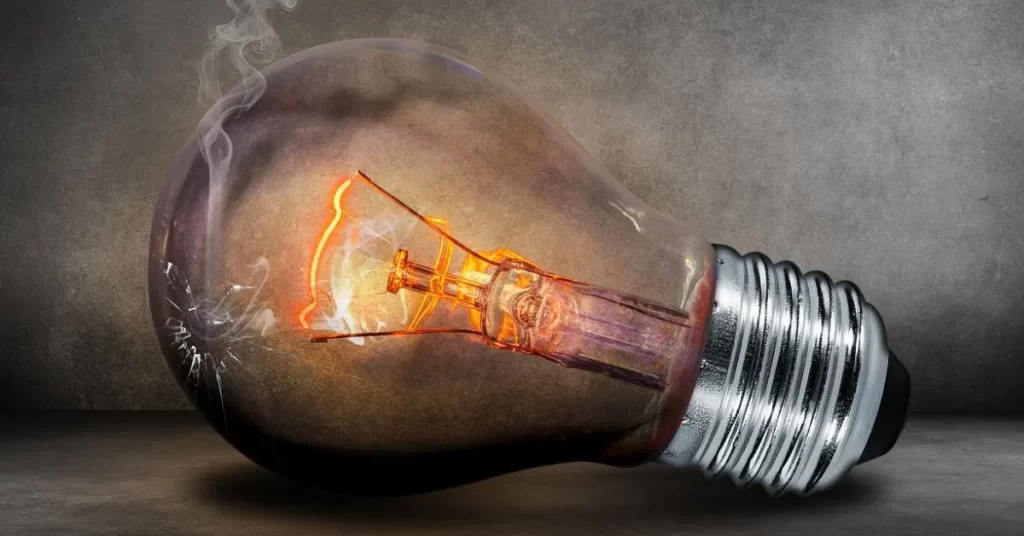
39: INERT ENVIRONMENT (A) Replace a normal environment with an inert one (B) Introduce a neutral substance or inert additives into an object (or system) or its environment (C) Carry out process (partially or fully)  in a neutral or natural or calm or non-distractive or unbiased (free from undesired elements) environment. EXAMPLE : Electric Bulbs (using Argon), Sound Absorbing Panels, Dampers, using fire retarding substances in or around objects prone to fire, Increasing the volume of powdered detergent by adding inert ingredients, Electron-beam welding in vacuum, Vacuum Packing SYNONYMS: Calm Environment, Inert Atmosphere, Design for Environmental Sustenance ACB: “Inert Environment” principle refers to the concept of isolating a system or component from its external environment, particularly from factors that might negatively affect its performance or functionality. The term “inert” in this context implies an environment that does not introduce unwanted or disruptive elements into the system. The principle suggests creating conditions where a system or component is shielded or isolated from external influences that could have a detrimental impact. This could include protection from extreme temperatures, corrosive substances, electromagnetic interference, and other harmful factors. For Instance:  Traditional incandescent light bulbs typically contain a filament made of tungsten enclosed in a glass bulb filled with an inert gas. The inert gas used in incandescent bulbs is usually argon. The purpose of the inert gas is to slow down the evaporation of the tungsten filament and extend the lifespan of the bulb. The filament in incandescent bulbs is made of tungsten. When the bulb is turned on, the filament heats up due to the flow of electric current. As the tungsten filament heats up, it becomes incandescent, emitting visible light. However, tungsten has a high melting point, and under normal conditions, it would evaporate quickly. To address the evaporation issue, the bulb is filled with an inert gas, commonly argon. Argon is chemically inert, meaning it doesn’t readily react with other elements, and it helps slow down the evaporation of the tungsten filament. The presence of the inert gas helps to maintain the integrity of the tungsten filament, allowing the incandescent bulb to have a longer lifespan compared to a vacuum-sealed bulb. By introducing neutral substances or additives into objects, engineers and designers can enhance their properties, protect them from environmental factors, and extend their lifespan, improving their overall performance and durability. Introducing a neutral substance or additives into an object involves incorporating inert, protective, or antioxidant coatings or additives to enhance the object’s properties or protect it from external factors. Here’s how this process works:  Identify Object and Requirements: Determine the object or material that requires enhancement or protection and identify the specific requirements or challenges it faces. This could include factors such as corrosion, oxidation, wear and tear, or exposure to harsh environments. Select Neutral Substance or Additives: Choose neutral substances or additives that are compatible with the object’s composition and properties, as well as with the desired application requirements. Examples include inert gases (such as nitrogen or argon), protective coatings (such as polymer coatings or metal plating), or antioxidant additives (such as stabilizers or inhibitors). Design Application Method: Determine the most suitable method for applying the chosen substance or additives to the object. This could involve techniques such as spraying, dipping, brushing, or incorporating additives during manufacturing processes. Apply Coatings or Additives: Apply the selected coatings or additives to the object according to the chosen application method. Ensure thorough coverage and adherence to the object’s surface to achieve the desired level of protection or enhancement. Monitor Performance: Monitor the performance of the object over time to assess the effectiveness of the applied coatings or additives. This may involve conducting tests, inspections, or evaluations to measure factors such as corrosion resistance, oxidation resistance, wear resistance, or other relevant properties. Iterate and Improve: Based on the performance evaluation, make any necessary adjustments or improvements to the coating or additive formulation, application method, or other factors to optimize the object’s performance and durability. Examples of how this principle can be applied include: Protective Coatings: Applying a polymer coating to metal surfaces to prevent corrosion or oxidation, such as using epoxy coatings on steel structures exposed to harsh environments. Inert Gas Atmospheres: Introducing inert gases, such as nitrogen or argon, into storage containers or packaging to displace oxygen and prevent oxidation or spoilage of sensitive materials or products. Antioxidant Additives: Incorporating antioxidant additives into plastics, polymers, or lubricants to inhibit degradation caused by exposure to heat, light, or oxygen, prolonging their lifespan and performance. Creating an inert environment is essential in situations where the presence of reactive elements could lead to product degradation, safety hazards, or interference with desired processes. Inert atmospheres are carefully controlled to maintain stability and prevent chemical reactions that could impact the quality or integrity of materials.An inert environment refers to a space or atmosphere that lacks chemically reactive elements or substances. In such an environment, the presence of reactive gases or elements is minimized or entirely eliminated to prevent undesired chemical reactions. The term “inert” is used to describe substances or environments that do not readily react with other substances under normal conditions. An inert environment typically involves the absence or minimal presence of chemically reactive gases such as oxygen, which is known to support combustion and oxidation reactions. The goal of creating an inert environment is to prevent or minimize undesired chemical reactions. This is particularly important in situations where reactive substances need to be protected or where specific processes require a controlled and stable environment.  Inert gases, such as nitrogen, argon, and helium, are commonly used to create inert atmospheres. These gases are chemically stable and do not readily react with other substances under normal conditions. In the food packaging industry, inert environments are created using gases like nitrogen or carbon dioxide to extend the shelf life of perishable goods by reducing oxidation and spoilage. Inert gases such as argon are used in welding to prevent oxidation of metals during the welding process. Some chemical reactions require inert environments to ensure the purity of the reaction and prevent unintended side reactions. In the production of electronic

Thermal Expansion

37: THERMAL EXPANSION  (A) Use expansion or contraction of material by changing its temperature (as in transformation of properties) (B) Use various materials with different coefficient of thermal expansion transformation of properties ( multiple or composite material with relative difference in thermal or desired or required properties). EXAMPLE:  Shape Memory Alloys, Bi-metallic Strips (in Thermostats) SYNONYMS: Relative Change ACB:  The principle refers to the utilization of the phenomenon of thermal expansion or contraction to improve a system or solve a problem. Thermal expansion is the tendency of matter to change its shape, area, and volume in response to a change in temperature. This principle suggests taking advantage of temperature-induced changes in the dimensions of materials. When temperature increases, most materials expand, and when it decreases, they contract. Systems that can automatically adjust to changes in temperature without external intervention represent an application of the “Thermal Expansion” principle. Such self-adjusting mechanisms can contribute to improved reliability and performance. Bimetallic strips, consisting of two different metals with different coefficients of thermal expansion, are a common example of applying this principle. When heated or cooled, these strips bend due to the uneven expansion or contraction of the metals, and this bending can be harnessed for various purposes, such as in thermostats. The choice of materials with specific thermal expansion properties can be crucial in the application of this principle. Selecting materials that expand or contract in a predictable and controlled manner can contribute to the overall effectiveness of a design.   Composite materials and alloys are both engineered materials with specific properties tailored for particular applications. Use of expansion or contraction of materials by changing their temperature, along with shape memory effects in metals, are phenomena related to the material’s ability to undergo reversible changes in shape or size in response to external stimuli, such as temperature variations.  Shape Memory Effect in Metals: Shape memory alloys (SMAs) are metallic materials that exhibit a unique property known as the shape memory effect (SME). This effect allows them to “remember” their original shape and recover it after deformation when subjected to specific temperature changes. SMAs typically have two stable phases: austenite (high-temperature phase) and martensite (low-temperature phase). By undergoing a reversible phase transformation between these phases, SMAs can exhibit significant changes in shape or size in response to temperature variations. Expansion/Contraction of Materials with Temperature Changes: Many materials, including metals, polymers, and ceramics, undergo expansion or contraction when their temperature changes. This behavior is governed by the material’s coefficient of thermal expansion (CTE), which describes how much the material’s dimensions change per degree of temperature change. When heated, most materials expand due to increased molecular vibrations, while cooling leads to contraction as molecular motion decreases. In shape memory alloys, the reversible phase transformation between austenite and martensite phases is accompanied by significant changes in volume and shape. Heating the SMA above a certain temperature (called the transformation temperature or transition temperature) triggers the phase transformation from martensite to austenite, causing the material to revert to its original shape (shape memory effect). Conversely, cooling the SMA below the transition temperature induces the martensitic phase transformation, allowing the material to be easily deformed into a new shape. When heated again, the SMA returns to its original shape. Thermal properties play a significant role in the sealing of plastics, especially in processes like heat sealing, ultrasonic welding, and induction sealing. These methods utilize heat to create a secure bond between plastic materials, either to form a package or to join plastic components. Heat sealing involves applying heat to a specific area of plastic film or sheet to create a bond. This is commonly used in packaging applications. Heat is applied to raise the temperature of the plastic above its melting point, allowing it to flow and form a seal upon cooling. Efficient heat transfer is crucial to ensure uniform sealing across the material. Ultrasonic welding uses high-frequency vibrations to create friction and heat between plastic parts, causing them to melt and fuse together.  Induction sealing involves using electromagnetic induction to heat a metal foil liner in a plastic cap. The heated foil bonds with the container’s neck, providing a secure seal. Hot bar sealing, also known as impulse sealing, uses a heated bar or element to weld two layers of plastic together. It is commonly used in the production of bags and pouches. Thermal impulse sealing combines heat and pressure to seal thermoplastic materials. It is commonly used for packaging and bag sealing. Laser sealing utilizes a laser beam to heat and melt specific areas of plastic, creating a bond. This is often used in precision applications. Thermal properties play a crucial role in laminations, where layers of materials are bonded together to create a composite structure. Laminations are commonly used in various industries, including packaging, construction, electronics, and manufacturing. Understanding and controlling thermal properties are essential for achieving strong bonds, ensuring product integrity, and meeting specific performance requirements. Heat lamination involves applying heat and pressure to layers of materials, typically with an adhesive layer, to create a bond. Cold lamination uses pressure-sensitive adhesives that do not require heat for activation. It is often used for temperature-sensitive materials. Hot melt lamination involves applying a thermoplastic adhesive in a molten state between layers of materials. Thermal film lamination uses a heat-activated film or foil applied to the substrate. The film bonds to the material when heat and pressure are applied. Vacuum lamination involves using vacuum pressure to press layers of materials together, often with the application of heat and/or adhesives. Resin infusion lamination involves infusing a resin into a fibrous reinforcement material to create a composite structure. Photonic curing involves using intense light, typically from a high-power flash lamp, to cure inks or coatings on flexible substrates.  In printing, thermal laminating films are often used to protect and enhance printed materials. These films are heat-activated and adhere to the surface of the printed material. These examples demonstrate how thermal expansion is utilized in various systems, leveraging materials with different coefficients of thermal expansion to achieve specific transformations or functionalities based on temperature variations: Refrigeration and air conditioning systems use thermal expansion

Phase Transition

36: PHASE TRANSITION: (A) Make use of the phenomena of phase change (of an object or system e.g., solid to liquid or process) or (B) Makes use to achieeve specific  effects developed during such a change in the phase  of a system or object (i.e., a change in the volume, the liberation or absorption of heat etc or during the gap or in-between or during the transition from one phase to another phase in a process) EXAMPLE: Freezing Water (& using expansion as effect), Boiling (& using latent heat or different boiling points for desired effect e.g., liquid-liquid separation, heat pump uses the heat of vaporization and heat of condensation of a closed thermodynamic cycle to deliver useful function, Melting (& using physical effect or change in dimensions, volume as effect e.g., wax candles), Crystallization, Superconductivity  SYNONYMS: ACB: The Phase Transition refers to changes in the state of matter or the structure of a system. It can involve transitioning between solid, liquid, gas phases, or other structural changes. For instance: LED lamps use light-emitting diodes to produce light. When an electric current passes through the semiconductor material in the LED, it emits photons, creating visible light. LED lamps are highly energy-efficient, converting a larger percentage of electricity into light and producing minimal heat. LED lamps have an exceptionally long lifespan, often exceeding that of both incandescent and CFL lamps. LEDs are considered environmentally friendly as they contain no hazardous materials like mercury. The transition from a solid to a liquid state (melting) and vice versa (solidification). For instance, the use of wax in a thermostat, which melts at a certain temperature to allow for the opening or closing of a valve. The transition from a liquid to a gas state (evaporation) and back to a liquid state (condensation) is seen in various applications, such as in cooling systems like refrigerators and air conditioners. The freezing and thawing of materials can be utilized in applications like freeze drying in the food industry or anti-icing systems. Some materials can undergo a change in crystal structure, known as polymorphic transformation. An example is the shape memory alloy, which can change shape based on temperature. Elements that exhibit different forms under different conditions, like carbon (diamond, graphite), demonstrate the Allotropic Transformation.  Separation of different phases within a system, like the separation of oil and water, can be applied in various industries for purification purposes. Transition between amorphous (non-crystalline) and crystalline states, seen in applications like the development of certain types of glass.  Phase transitions are fundamental phenomena in nature that drive changes in the state and properties of substances. By understanding and harnessing these transitions, people can develop innovative solutions to a wide range of technological challenges in fields such as energy, materials science, climate control, and thermal management. A phase transition is a physical process in which a substance undergoes a change in its thermodynamic state, resulting in a transformation from one phase to another. These phases can include solid, liquid, gas, or more exotic states such as plasma or supercritical fluid. Phase transitions are characterized by changes in the substance’s properties, such as density, volume, entropy, and internal energy, as well as changes in its physical structure and arrangement of atoms or molecules. Examples of phase transitions include:  Melting: The transition from a solid phase to a liquid phase. For example, ice (solid water) melting into liquid water at its melting point of 0°C. Freezing: The reverse process of melting, where a liquid changes into a solid phase. For example, liquid water freezing into ice at its freezing point of 0°C. Evaporation: The transition from a liquid phase to a gas phase, occurring at the surface of a liquid. For example, water evaporating into vapor at temperatures below its boiling point. Condensation: The reverse process of evaporation, where a gas changes into a liquid phase. For example, water vapor condensing into liquid water droplets in the atmosphere to form clouds. Sublimation: The transition from a solid phase directly to a gas phase, bypassing the liquid phase. For example, dry ice (solid carbon dioxide) sublimating into carbon dioxide gas at room temperature.  Phase transitions occur due to changes in temperature, pressure, or both, which affect the balance of forces and interactions between atoms or molecules in the substance. The transition from one phase to another is driven by thermodynamic principles, such as minimizing the free energy of the system or achieving equilibrium between phases. We make use of phase transitions to solve various problems and develop technologies in numerous fields. Thermal Management: Phase change materials (PCMs) are substances with high heat storage capacity that undergo phase transitions at specific temperatures. They are used in thermal management systems to store and release thermal energy efficiently. For example, PCM-based cooling vests use the latent heat of fusion during the solid-liquid phase transition to absorb excess body heat and keep the wearer cool. Energy Storage: Reversible phase transitions, such as those occurring in rechargeable batteries or fuel cells, are used to store and release energy. For example, lithium-ion batteries rely on the reversible phase transition of lithium ions between electrode materials during charging and discharging cycles to store and deliver electrical energy. Climate Control: HVAC systems utilize phase transitions such as evaporation and condensation to control indoor humidity and temperature. For example, air conditioners cool indoor air by removing heat through the evaporation of refrigerant liquids and subsequently condensing them back into liquid form. Materials Science: Engineers and scientists leverage phase transitions to design and develop materials with specific properties for various applications. For instance, shape memory alloys undergo reversible phase transitions between martensitic and austenitic phases, allowing them to “remember” and recover their original shape after deformation. These materials find applications in medical devices, actuators, and aerospace components. A second-order phase transition, also known as a continuous phase transition, is a type of phase transition that occurs without any abrupt change in the order parameter or the discontinuity in the first derivative of the free energy with respect to the order parameter. In simpler terms, during a second-order phase transition, there is a gradual change in the

Parameter Change

35: TRANSFORMATION OF PROPERTIES The Parameter Change principle refers to a concept where the value of a certain parameter or characteristic of a system or product is intentionally changed to achieve a desired effect. This principle involves manipulating key parameters to improve performance, overcome limitations, or find innovative solutions to problems. The essence of the Parameter Change principle lies in recognizing that altering specific parameters can lead to significant improvements or breakthroughs in a given system. By deliberately changing or adjusting certain factors, engineers and innovators can find ways to enhance functionality, efficiency, or overall performance. Recognizing the critical parameters or characteristics of a system that are relevant to the problem at hand. Deliberately changing the value or state of identified parameters to achieve a specific goal or address a particular issue. Evaluating the impact of parameter changes on the overall system and identifying how these alterations contribute to the desired outcome. Generating inventive solutions by considering alternative values, states, or combinations of parameters. A:. Change the physical state of the sysetm B: Change the concentration or density (or consistency or intensity) C: Change the degree of flexibility (shape, structure or phase specific dimensional properties) D: Change the object’s temperature and/or other physical properties such as volume, pressure, density, inductance, capacitance, viscosity, radiance  etc. E: Change the operational effect or properties by varying the chemical compositions or properties – formulation, pH, solubility etc. F: Change the order of occurence of actions or operations (introduce serial-position effect, Introduce peak-end effect)  G: Consider the full spectrum of properties, states of transition, interfaces, etc., as a set — not in isolation — for the transformation, parameterization, or configurations of the system. (eliminate essentialism).   EXAMPLE: Ice or Sugar Cubes, Washing Detergent Cubes, Freezing the liquid centers of filled candies and then dipping into melted chocolate, Transporting petroleum, oxygen and nitrogen as liquid instead of gas, Liquid Soaps , Powedered Milk or Medicines or Paints (later to be converted into liquid just in time prior to the use), Alcoholic Beverages, Medicines, Seal-Ink, Vulcanized Rubber , Adjustable Dampers, Thermostat, Liquid-Liquid Separation, Flat or Deflated Tires (for improved grip on sandy terrains), Raising the temperature above the Curie point to convert a ferromagnetic substance to a paramagnetic substance, Employee Benefit Programs (flexibility in terms of options and contributions most suited to an individual) etc. SYNONYMS:  Transformation of Properties, Configuration, Parameter Change ACB:  The Parameter Change principle refers to a concept where the value of a certain parameter or characteristic of a system or product is intentionally changed to achieve a desired effect. This principle involves manipulating key parameters to improve performance, overcome limitations, or find innovative solutions to problems. The essence of the Parameter Change principle lies in recognizing that altering specific parameters can lead to significant improvements or breakthroughs in a given system. By deliberately changing or adjusting certain factors, engineers and innovators can find ways to enhance functionality, efficiency, or overall performance. Recognizing the critical parameters or characteristics of a system that are relevant to the problem at hand. Deliberately changing the value or state of identified parameters to achieve a specific goal or address a particular issue. Evaluating the impact of parameter changes on the overall system and identifying how these alterations contribute to the desired outcome. Generating inventive solutions by considering alternative values, states, or combinations of parameters. A:. Change the physical state of the sysetm A. Change the physical state of the system refers to altering the physical characteristics or properties of a system to achieve a desired outcome or address a problem. This principle involves manipulating factors such as temperature, pressure, volume, or state of matter to optimize system performance or functionality. Example: Phase Change Cooling in Electronics Thermal Management: In electronics thermal management, phase change cooling exemplifies the application of this principle to solve the problem of heat dissipation in electronic devices. As electronic components operate, they generate heat, which can degrade performance and lead to premature failure if not effectively managed. Phase change cooling systems utilize the principle of changing the physical state of a coolant to efficiently absorb and dissipate heat from electronic components. These systems typically employ a coolant fluid, such as a refrigerant or dielectric fluid, which undergoes a phase transition from liquid to vapor as it absorbs heat from the electronic components. During operation, the coolant fluid is circulated through a closed-loop system that includes heat exchangers and evaporators located in proximity to the electronic components. As the coolant absorbs heat from the components, it undergoes a phase change from liquid to vapor, effectively transferring thermal energy away from the components. Once the vaporized coolant reaches a condenser unit, it undergoes a phase change back to liquid as it releases heat to the surrounding environment or a separate cooling system. The liquid coolant is then recirculated back to the evaporator to repeat the cooling cycle. By changing the physical state of the coolant fluid from liquid to vapor and back to liquid, phase change cooling systems efficiently manage heat dissipation in electronic devices, maintaining optimal operating temperatures and prolonging component lifespan. This approach enhances the reliability and performance of electronic systems, particularly in applications where traditional air or liquid cooling methods may be insufficient. B: Change the concentration or density (or consistency or intensity) B: Change the concentration or density (or consistency or intensity) involves altering the concentration, density, consistency, or intensity of a substance or medium within a technical system to achieve a desired outcome or solve a problem. This principle relies on adjusting the composition or distribution of materials to optimize system performance or functionality.  Example: Inkjet Printing Technology: In inkjet printing technology, the principle of changing concentration or density is applied to control the deposition of ink onto a substrate, such as paper or film. Inkjet printers utilize microscopic nozzles to eject droplets of ink onto the printing surface, forming characters, images, or patterns. By modulating the concentration and density of ink droplets deposited on the substrate, inkjet printers can achieve varying levels of color intensity, shading, and detail in the printed output. The printer’s control system adjusts the frequency and volume of ink droplets

Discarding and Recovering

34: REJECTING AND REGENERATING : (A) Reject (or discard, dissolve, evaporate, melt, disappear, appear to disappear etc) an element of an object (or system) after its intended function is achieved or is rendered useless after an operation, (B) Restore (or recover or regenerate or return etc) used-up parts or its characteristics (directly or indirectly) during an operation. (C) Need based assembling-disassembling or activation or deactivation or onboardig or offloading of a system or part i.e. make use of object (or system) and its characteristics on temporary or interim or need basis as a part of the main system. EXAMPLE: Bio-degradable Packaging Material, Rocket Boosters, Bullet Castings, Medicine Capsules, Inductors, Capacitors (or any other transient energy accumulator or dispensing element), Rechargeable Batteries, Self- sharpening lawn mover blades, Self-cleaning tapes, Performance Based Roles SYNONYMS: Rejecting and Regenerating, Charge and Discharge, Design for Reusability, Discarding and Recovering, Forgeting and Recollecting ACB: “Discarding and Recovering”  suggests that rather than disposing of a component or substance entirely, consider ways to recover it and reuse it in the system or process. The idea is to minimize waste and make use of resources more efficiently. The principle encourages engineers to find ways to reduce waste and environmental impact by recovering and reusing materials, components, or by-products. Instead of completely discarding materials or components that may still have value, explore methods for recovering and incorporating them back into the system. Recovering and reusing materials or components can have economic advantages, as it reduces the need for new resources and can lower production costs. In addition to economic benefits, this principle aligns with environmental sustainability by promoting practices that minimize resource consumption and waste generation. By integrating recovery and reuse into the design and operation of a system, one can optimize the overall efficiency and effectiveness of the system. Practical applications of this principle might include processes for recycling materials, recovering energy from waste heat, or finding ways to reuse components or subassemblies in a product life cycle. Inkjet Printers: Ink cartridges are replaced when they run out of ink. Cartridges can be refilled or recycled, recovering some parts and reducing waste.  Car Air Fresheners: Air fresheners are discarded once they no longer emit fragrance. Some air fresheners allow for the replacement or refilling of fragrance cartridges, recovering the housing. Batteries in Electronic Devices: Batteries are replaced when they are depleted. Some devices have rechargeable batteries, allowing for the recovery of energy by recharging. Water Filtration Systems: Water filter cartridges are replaced after a certain period or usage. Cartridges may be recyclable, and some systems allow for the recovery of materials for reuse.  Biodegradable stents are a type of medical device used in the treatment of coronary artery disease. Traditional stents are metallic mesh tubes that are permanently implanted to keep a coronary artery open after a blockage has been cleared (usually through angioplasty). Biodegradable stents, also known as bioresorbable stents, have the advantage of being gradually absorbed by the body over time. Biodegradable stents are often coated with a drug that helps prevent restenosis (renarrowing of the artery) and inflammation. The drug is gradually released over a specific period. The stent provides temporary support to the artery while it heals. This is particularly crucial during the initial healing period when the risk of restenosis is higher. Over time, the biodegradable stent is gradually absorbed by the body. The degradation process involves the breakdown of the stent material into harmless byproducts. As the stent dissolves, the artery is expected to return to a more natural state, regaining its ability to expand and contract as needed. One of the main advantages is that, unlike traditional stents, biodegradable stents do not remain in the body indefinitely. This can reduce the risk of complications associated with long-term metallic presence. As the stent dissolves, there is the potential for the treated artery to regain more natural flexibility. The gradual drug release from the stent may help in reducing the need for long-term medication to prevent restenosis. The concept of recharging batteries can be attributed to various inventors and contributors over time. However, one significant figure in the development of rechargeable batteries is the Italian scientist Alessandro Volta. Alessandro Volta invented the voltaic pile, an early form of a chemical battery, in 1800. The voltaic pile was constructed using alternating layers of zinc and copper discs separated by cardboard soaked in a saltwater solution. This arrangement created a chemical reaction between the metals and the electrolyte, generating a continuous electric current. Although the voltaic pile was not rechargeable, it laid the foundation for later advancements in battery technology. The development of rechargeable batteries involved subsequent innovations, and various types of rechargeable batteries have been introduced over the years. One notable milestone was the invention of the lead-acid battery, the first practical rechargeable battery, by Gaston Planté in 1859.  In the discharge phase, the chemical reactions within the Rechargeable Batteries produce electrical energy, and electrons flow from the negative electrode to the positive electrode, creating a current that can power devices. During the charging phase, an external power source is applied to the battery. This external energy drives the chemical reactions in reverse, restoring the battery to a charged state. Rechargeable batteries offer the advantage of multiple cycles of use, making them environmentally friendly and cost-effective compared to single-use (non-rechargeable) batteries. Gaston Planté invented the lead-acid battery in 1859. The lead-acid battery consists of lead dioxide (positive plate), sponge lead (negative plate), and a sulfuric acid electrolyte. During discharge, the chemical reactions produce electrical energy. What makes the lead-acid battery rechargeable is the reversible nature of these reactions. When an external electric current is applied during charging, the chemical processes are reversed, restoring the battery to a charged state. Since the lead-acid battery, various types of rechargeable batteries have been developed, including nickel-cadmium (NiCd), nickel-metal hydride (NiMH), and lithium-ion (Li-ion) batteries. Each type has its own chemistry and characteristics. The modern lithium-ion battery was developed in the late 20th century, with commercial applications starting in the 1990s. Lithium-ion batteries use lithium ions as the charge carriers. During discharge, lithium ions move from the negative electrode (anode) to the positive electrode (cathode), generating electrical energy. During charging,

Homogeneity

33: HOMOGENEITY The principle of homogeneity in interaction emphasizes using the same material or materials with identical properties in interacting elements, promoting compatibility, efficiency, and reliability in various applications. Design objects that interact with each other using the same material or materials with identical properties. Container and Contents Interaction: Storing chemicals prone to reactions with container materials. Craft the container using the same material as the contents. This minimizes chemical reactions and ensure the integrity of the stored substances. Diamond Cutting Tool: Creating a cutting tool for extremely hard materials. Develop a cutting tool using diamonds (same material). Achieves effective cutting due to the hardness of diamonds. Matching Thermal Expansion: Assembling objects with different thermal expansion rates. Use materials with matching thermal expansion coefficients. Prevents distortions or structural issues caused by temperature variations. Building Components from Identical Materials: Constructing a building with various components. Use the same material for components exposed to similar environmental conditions. Ensures uniform aging and resistance to external factors. Automotive Parts with Consistent Material: Manufacturing automotive components for uniform stress distribution. Design parts using materials with consistent properties. Enhances overall durability and performance through material uniformity.  A: Objects interacting with the main object should be made out of the same material (or material with similar properties) as the main object. B: Objects interacting with the main object should be made out of the same material (or material with similar properties) as the main object. EXAMPLE:  Tire and Tube, Medicine and Capsule, Bottle and Cap, Book Cover & Bookmark, Leather Shoes, Diamond Cutters, Packaging (made up of same or similar material as the packaged items) ex Ice Cream Cones, Food Wraps, Tacos, Rolls, Puffs etc SYNONYMS: Uniformity, Standardization, Standards or Protocols, Interoperability ACB:  The principle of homogeneity in interaction emphasizes using the same material or materials with identical properties in interacting elements, promoting compatibility, efficiency, and reliability in various applications. Design objects that interact with each other using the same material or materials with identical properties. Container and Contents Interaction: Storing chemicals prone to reactions with container materials. Craft the container using the same material as the contents. This minimizes chemical reactions and ensure the integrity of the stored substances. Diamond Cutting Tool: Creating a cutting tool for extremely hard materials. Develop a cutting tool using diamonds (same material). Achieves effective cutting due to the hardness of diamonds. Matching Thermal Expansion: Assembling objects with different thermal expansion rates. Use materials with matching thermal expansion coefficients. Prevents distortions or structural issues caused by temperature variations. Building Components from Identical Materials: Constructing a building with various components. Use the same material for components exposed to similar environmental conditions. Ensures uniform aging and resistance to external factors. Automotive Parts with Consistent Material: Manufacturing automotive components for uniform stress distribution. Design parts using materials with consistent properties. Enhances overall durability and performance through material uniformity.  A: Objects interacting with the main object should be made out of the same material (or material with similar properties) as the main object. A. Objects interacting with the main object should be made out of the same material (or material with similar properties) as the main object.: This principle suggests that components or objects interacting with the main object within a technical system should ideally be constructed from the same material or materials with similar properties. By using consistent materials throughout the system, engineers can optimize compatibility, minimize compatibility issues, and enhance overall system performance. Example: Engine Piston and Cylinder in an Internal Combustion Engine: In an internal combustion engine, such as those found in automobiles, the piston and cylinder components exemplify the application of this principle. The piston moves up and down within the cylinder, converting the energy generated by fuel combustion into mechanical motion to power the vehicle. Both the piston and cylinder are typically made from materials with similar properties, such as cast iron or aluminum alloys. These materials offer high strength, durability, and thermal conductivity, essential for withstanding the high temperatures and pressures generated during engine operation. Using materials with similar properties for both the piston and cylinder ensures proper sealing, reduces friction, and promotes efficient energy transfer between the components. It also minimizes wear and tear, prolonging the lifespan of the engine and optimizing its performance. In nutshell,  the use of consistent materials for interacting components within the internal combustion engine aligns with the principle of objects interacting with the main object should be made out of the same material or materials with similar properties. This practice enhances compatibility, reliability, and overall system effectiveness within technical systems. B: Objects interacting with the main object should be made out of the same material (or material with similar properties) as the main object. B. Make one or more different objects in the system capable of achieving the same action or effect as the main object: This principle suggests diversifying the capabilities within a technical system by ensuring that multiple objects can perform the same action or produce the same effect as the main object. By incorporating redundancy or alternative methods, engineers enhance system reliability, resilience, and adaptability, particularly in contingency scenarios where the main object may fail or encounter limitations. Example: Redundant Flight Control Systems in Aircraft: In aircraft design, redundant flight control systems exemplify the application of this principle to enhance safety and reliability. Modern commercial airplanes are equipped with multiple redundant systems to ensure continued control and maneuverability, even in the event of a failure or malfunction in the primary flight control system. These redundant systems may include duplicate control surfaces, hydraulic actuators, and electronic control units that can independently perform the same functions as the main flight control system. For example, if a primary hydraulic system fails, backup hydraulic systems or mechanical linkages allow pilots to maintain control over the aircraft’s flight surfaces, such as the rudder, elevator, and ailerons. By having multiple objects capable of achieving the same actions or effects as the main flight control system, aircraft designers mitigate the risk of single points of failure and increase the aircraft’s ability to withstand unforeseen contingencies, such as equipment malfunctions or external disturbances. This redundancy enhances flight safety and ensures that critical flight maneuvers can still be executed, even in challenging conditions. Overall, the incorporation of redundant flight control systems in aircraft demonstrates how diversifying capabilities within a

Changing Color

32. CHANGING COLOR (USE OF COLORS, COLOR CHANGES, Change Optical or Visual Properties or Appearance): (A) Change the color of an object (or system) or its environment (from fixed mono color to fixed multi-color to variable multi-color to use of variable spatial-temporal full spectrum colors matching with the changing environment), (B) Change the degree of translucency of an object (or system) or its environment (from fixed opaque to fixed partially translucent to fixed partially transparent to fixed fully transparent to variable spatial temporal transparency), (C) Use color additives to observe an object (or system) or process which is difficult to see (or observe) otherwise employ emissive or luminescent traces or trace atoms if such colored additives are already used in the object (or system) SYNONYMS: Use of Color, Change Optical or Visual Properties or Appearance. EXAMPLES:  Camouflage, Photo Chromatic Glass, Traffic Signals, Safe Lights in Photographic Dark Rooms, Bandage, Water Curtains (with color additives), Fluorescent Signs or Additives, UV Spectroscopy, Use of Colored Tags/Labels/Status ACB: The “Change Color” inventive principle refers to the concept of altering the color of an object or substance to enhance performance, increase visibility, or achieve other specific objectives. It encourages creative thinking about how color alterations can bring about improvements or solve specific problems in various domains.  Modifying color can serve functional purposes beyond the aesthetics. Use color-changing materials for traffic signs that adapt to ambient lighting conditions. For example, signs could appear brighter during low light conditions or change color in response to weather conditions. Packaging materials that change color based on the freshness of the contents. This could involve color changes indicating the expiration of the product or changes in temperature that might affect its quality. Clothing made from thermochromic fabrics that change color based on body temperature. This could be used in sports apparel to indicate exertion levels or in healthcare for monitoring patients’ body temperatures. Bandages with color-changing indicators that react to the pH levels of a wound, providing visual cues about the healing process. This could help healthcare professionals assess the status of a wound without removing the bandage. Exterior paint that changes color based on temperature or sunlight intensity. Darker colors could be used in colder weather to absorb more heat, while lighter colors could be used in warmer weather to reflect sunlight and reduce cooling needs. Labels on parts or products that change color during different stages of manufacturing. This visual cue can help workers quickly identify completed or inspected items, reducing errors and streamlining the production process. Enhance visibility and usability in emergencies. Fire extinguishers with color-changing indicators to show whether they have been used or are still fully charged. This helps users identify operational extinguishers in an emergency. Soil sensors with color-changing indicators based on moisture levels. The color change could signal when plants need watering, aiding in indoor gardening and plant care.  The Von Restorff effect, also known as the isolation effect, is a principle in psychology that describes the phenomenon where items that are distinctive or stand out from their surrounding context are more likely to be remembered. Use of colors can help distinquish one part to be immediately spotted or identified as different from the rest. Using distinctive colors, shapes, or symbols for safety-critical elements can draw attention to them and ensure that operators or users are aware of their importance. By making critical functions or alerts visually distinct, users can quickly locate and access them, reducing the risk of errors and improving usability. At an abstract level, it involves modifying the color of an object or substance as a strategic solution to bring about improvements in functionality, performance, or user experience. Changing the color of an object to enhance its visibility, recognition, or perception. Modifying the color of safety signs, labels, or indicators to ensure they are easily noticed in different environmental conditions. Using color changes as a dynamic way to convey information or status. Incorporating color-changing elements in smart devices or systems to indicate different states or conditions, providing real-time feedback to users. Adjusting the color of an object in response to environmental changes or stimuli. Developing materials that change color based on temperature, humidity, or sunlight to optimize performance in varying conditions. Employing color changes as a visual representation of change, progress, or transformation. Using color shifts in visual interfaces, progress bars, or indicators to represent stages of completion, encouraging user engagement. Using color modifications to indicate specific events, issues, or alerts. Incorporating color-changing features in warning systems, where a color shift signals the occurrence of a critical event or the need for attention. Using color variations to signify temperature changes and facilitate control. Creating materials or devices that change color with temperature fluctuations, aiding in temperature monitoring and control. Utilizing color changes to evoke emotional responses or enhance mood. Designing environments, products, or interfaces that adapt their color schemes to create atmospheres conducive to specific emotions or activities. Incorporating color changes as part of interactive user interfaces. Developing interactive displays, touchscreens, or user interfaces where color variations provide feedback, response, or engagement in response to user actions. Employing color changes for identification or branding purposes. Designing products or packaging with color-changing elements to differentiate between versions, batches, or brands. Using color shifts to indicate changes in biological or chemical states. Creating color-changing indicators in medical diagnostics or environmental monitoring systems to detect specific biological markers or chemical reactions.  The principle can be applied to resolve various technical and business contradictions by leveraging the visual and functional aspects of color: Visibility vs. Stealth in Military Applications i.e. need for visibility in certain conditions and stealth in others. Develop materials that can change color based on the environment, providing adaptive camouflage for military equipment. Monitoring temperature without invasive sensors. Create materials that change color with temperature variations, offering a visual indication of the heat generated in electronic devices. Conveying battery status without draining power. Design battery indicators that change color based on the remaining charge, providing users with a visual representation without activating power-consuming displays. Monitoring structural integrity without intrusive inspections. Integrate color-changing materials into structures that respond to stress or damage, offering a visual cue for maintenance needs. Continuous health monitoring without invasive devices. Develop fabrics with embedded

Porous Materials

31: POROUS MATERIALS: (A) Make an object (or system) porous or add supplementary porous elements (inserts, covers, etc.). (B) Fill the pores (cavities holes or voids) in advance with some substance, if an object (or system) is already porous. EXAMPLE: Foam Metals, Sponge Cleaners, Medicated Swabs, Gel Filled Porous Material (in seats, mattresses etc), Porous Metal Mesh (to wick excess of solder from the joint), Air FIlters, Bubble Wraps For Packing SYNONYMS:  ACB:  At an abstract level, the principle menas introducing permeability or openness into a system. It involves creating a structure or environment with voids, openings, or channels, allowing the free flow or interaction of certain elements while maintaining the integrity of the system. Need for efficient information flow without compromising security. It involves finding the right balance between openness and control, adaptability and stability, and selective permeability to create innovative solutions in various domains. Implement a porous organizational structure that allows for flexibility and adaptation to change while maintaining consistent core values and strategic objectives. Designing a system with selective permeability, where certain elements are allowed to pass through or interact, while others are restricted. Creating organizational structures, processes, or technologies that selectively allow the flow of information, innovation, or resources based on strategic objectives. Creating collaboration platforms and frameworks that allow controlled interaction and information sharing among teams and departments, fostering a culture of innovation. Establishing symbiotic relationships within a system where elements mutually benefit from interactions. Seeking active customer engagement while respecting privacy concerns. Building partnerships and alliances where organizations, departments, or entities collaborate in a mutually beneficial manner, creating a porous network of shared resources. Using materials with cavities, holes, or voids to enhance the functionality or properties of a system.  Use porous materials to enhance absorption or filtration capabilities. Examples include water filters, air purifiers, and sponges. Introduce porosity to reduce overall weight while maintaining structural integrity. This principle is applicable in aerospace, automotive, and lightweight construction materials. Utilize porous materials to create insulating layers that trap air and reduce heat transfer. Applications include insulation in buildings and protective clothing. Incorporate porous materials to absorb sound and reduce noise levels. This is commonly seen in acoustic panels and soundproofing materials. Introduce porosity to increase the surface area available for reactions, such as in catalysis or adsorption processes. Use porous materials to facilitate smoother fluid flow. This is seen in water filters, fuel cells, and permeable pavements. Employ porous materials to create flexible and adaptable structures. This is applicable in areas like robotics, soft robotics, and flexible electronics. Introduce porosity strategically to enhance the material’s strength-to-weight ratio. This is employed in applications like lightweight structural components. Use porous materials to regulate moisture levels by absorbing or releasing water vapor. This is seen in moisture-wicking fabrics and building materials. Utilize porous materials to control the release of gases, liquids, or other substances. This principle is applied in drug delivery systems and controlled-release technologies. Porous materials are characterized by the presence of voids or open spaces within their structure. These voids can be used for various purposes, including absorption, filtration, insulation, and more. Here are some examples of porous materials: Sponge, Activated Carbon, Zeolites, Pumice, Aerogels, Ceramic Foam, Porous Plastics, Foam Rubber, Silica Gel, Cork, Balsa Wood, Cotton, Metal-Organic Frameworks (MOFs) and Porous Concrete are some of the exmples. The inventive principle is often applied to resolve contradictions by introducing materials with cavities, holes, or voids. Use a porous material like activated carbon. Activated carbon has a high surface area due to its porous structure, enabling effective absorption of gases and liquids without significantly increasing weight. Utilize materials with a porous structure, such as honeycomb structures made from materials like aluminum. This approach provides strength with reduced weight, addressing the contradiction between strength and weight. Apply aerogels, which are highly porous materials with low density. Aerogels provide excellent thermal insulation while being lightweight and less bulky compared to traditional insulating materials.  Implement silica gel, a porous material that can absorb and hold moisture efficiently. Silica gel is compact and widely used in applications where moisture control is crucial without adding significant bulk. Employ porous materials in water and air filters. The porous structure allows for effective filtration while maintaining a reasonable flow rate, resolving the contradiction between filtration efficiency and flow rate. Use materials like cork, which have a porous structure that provides buoyancy while keeping overall weight low. This addresses the contradiction between buoyancy and weight. Introduce porous materials in acoustic panels. The porous structure of materials like foam or fiberglass enables effective sound absorption without the need for thick and heavy panels. Employ porous materials in controlled-release technologies. The porous structure allows for the controlled release of substances while keeping the overall system compact and efficient. Utilize porous materials like zeolites. The porous structure of zeolites provides a large surface area for catalysis and adsorption without significantly enlarging the system. Use materials with a porous structure in flexible structures. The introduction of porosity enhances flexibility while maintaining strength, addressing the contradiction between flexibility and strength. The primary purpose of the net is not to control the flow of fluids through the material, as seen in some traditional porous material applications. Instead, the porosity of fishing nets serves the functional purpose of capturing and retaining aquatic organisms while allowing water to flow freely. Fishing nets exhibit a structure with openings or voids that allow water to pass through while capturing and retaining fish. The porous nature of fishing nets is integral to their functionality in the context of fishing and marine activities. The design of the net allows water to flow through while trapping and securing fish within its mesh. The mesh structure of the fishing net forms a network of openings or pores, allowing water to pass through. The size of the mesh can vary depending on the type of fish being targeted. Fishing nets are permeable to water, which allows them to be used effectively in aquatic environments. The open structure facilitates water flow, reducing resistance and drag. The pore size and design of the net contribute to selective capture, allowing smaller fish to escape while capturing the target species. This selectivity is essential for sustainable fishing practices. The choice of materials for fishing nets takes into account factors such as strength,