
DIGITAL MARKETING & CUSTOMER MANAGEMENT

The Elder Sibling’s Dilemma

I was only 12 years old when my mom told me, “Act wisely; you are setting an example for your younger sister”. My role model at that time happened to be Saina Nehwal, a badminton player and Olympic medalist. At that point in time, she was most definitely older than 12. Not to mention her long list of achievements, gold-plated medals, and global recognition. So the idea of being a role model myself felt absolutely absurd. This very phrase, repeated across the years, made me realize how being an elder sister isn’t merely a role you apply for; it is something that is assigned to you early on in your childhood. A role that’s not part-time but somewhat permanent; its responsibilities, though unspoken, change ever so slightly with the passing of time. Growing up, my parents would watch over me with hawk-eyed attentiveness. Even a small misstep, like sleeping half an hour late, eating something outrageously unhealthy, or spending a little too much time outside with my friends, felt heavily scrutinized. I felt pressured to follow everything to the T, where a slight feeling of hesitance or denial would trigger a full-blown argument. What puzzled me was how my younger sister’s endless sleepover and late-night party requests were met with a little more leniency and a little less opposition. In retrospect, being an elder sibling always felt like being held to stricter standards. Recalcitrance, I learnt, is a luxury the youngest can afford much more easily than the eldest. For a certain time, being an elder sister meant constantly trying to separate identity from responsibility. I felt caught in between “who I am” and “who I’m needed to be”. I felt obligated to carry out certain tasks and inculcate specific habits, not necessarily for myself, but for my sister. This meant going to bed on time, studying regularly, or limiting screen time because “if I do it, my sister will follow too”. These expectations seeped into the smallest moments. Helping your sibling with homework because you are expected to “know better,” and perhaps the worst of them all—being forced to give up the larger half of a delicious slice of chocolate cake. Yet, responsibility wasn’t the only thing that followed me closely. In my childhood, the bond with my younger sister was marked largely by irritation. My younger sister mirrored me in almost everything, from what I ate to where I went and how I behaved. It often felt as though I was being mirrored by a mini version of myself. Although it may seem frivolous, the reason for my agitation wasn’t the imitation itself, but the fear that it would blur the lines between our identities, leaving little room for individuality or authenticity. Only later did I come to understand that younger siblings view their elder ones as their first and most visible reference point, a way to navigate the world around them. In moments when parents aren’t around, elder siblings become emotional anchors, offering a sense of safety and familiarity. Over time, we grew up with minds of our own. My sister and I developed different tastes and styles, forming our own unique and distinctive personalities, as the irritation I initially used to feel gradually faded away. But being an elder sister isn’t all that bad. Those unspoken responsibilities quietly shaped my personality over time. Somewhere along the way, taking up responsibility became innate rather than being forced upon me. Whether it’s heating up meals, giving my sister medicine when she’s sick, or helping her with academic work, I felt a tiny sense of fulfillment. We no longer fight over food by splitting it with geometric precision. Instead, I find myself giving her the liberty to pick her share first. I also found myself becoming more empathetic. I was able to listen to others with more patience and understanding, give my unsolicited advice to those in need, and resolve fights in a gentler manner. I noticed how deeply reassuring it was to be trusted by someone without hesitation, to share moments of silent understanding with your sibling, and to create a safe space between each other, devoid of any judgment. In those moments, I came to realize that I am no longer a guide, role model, or third parent. I am simply an older sister.
Suspense After Dark ft. Freida McFadden

Trigger warning: This article contains references to blood and acts of killing. Reader discretion is advised. In the literary world, there was once a time when thrillers meant private investigators, razor-sharp detectives, and grumpy police officers, all determined to catch a cold-blooded killer. Add in sly assassinations, political intrigue, and tons of forensic evidence to the mix, and you have a classic thriller novel at your disposal. Although these elements are widely used in literary fiction, they’re gradually losing their appeal among recent readers. In fact, I’ve come to notice the growing shift from typical “detective-led” thrillers to ones filled with domestic suspense and psychological depth. I remember picking up The Housemaid by Freida McFadden, thinking of it as a casual bedtime read. Instead, I finished it in one sitting, wide-eyed and utterly glued to the pages of the book. Every now and then, a silent gasp would come out of me as I found myself engrossed in the enigma of it all, where moral lines were blurred beyond recognition, and every single character was a double-edged sword. By sunrise, the book was filled with sticky tabs, dozens of highlights, and random scribbles of thoughts splayed across page margins.  That day, I definitely remembered to lock my door before sleeping. It was that very experience that made Freida McFadden one of my favorite thriller authors. So what exactly makes her books an absolute page-turner? “The door isn’t stuck. It’s locked.” ― Freida McFadden, The Housemaid One such reason is McFadden’s ability to transform ordinary, domestic spaces into psychological traps. In The Housemaid, Millie arrives at the Winchester mansion with a perfect job to give her a fresh start. What was initially thought to be a safety net quickly becomes a place of surveillance and control. Throughout the novel, Millie unravels subtler aspects of the house, such as doors that lock only from the outside, lethal medications stashed away in bathroom drawers, and laundry clothes stained with blood. She’s also assigned a tiny attic to stay in with walls inscribed by mysterious scratches. Screams echo behind expensive walls, and the kitchen, a place typically associated with warmth and comfort, becomes a site of punishment and scrutiny.  Similarly, in her book Never Lie, Tricia and Ethan stumble upon a lonely, snow-bound mansion during their house-hunting search. What once seemed like a luxurious mansion slowly reveals its darker secrets: hidden rooms (love those), trauma-filled cassette tapes of therapy recordings, and an eerie portrait of a woman whose eyes seem to follow you everywhere you go (yikes). Through this, McFadden reveals how luxury often hides cruelty and how a seemingly ordinary and spotless house isn’t so perfect after all. “Women aren’t weak because they’re trapped; they become dangerous because they’re trapped.” – Freida McFadden, The Housemaid Another reason why I found her books so engrossing was the dynamic shifts in power play between various characters. I noticed how McFadden tends to invert the hierarchy of social class by placing women, typically those who conform to certain societal roles (such as an obedient worker, a devoted wife, or a polite colleague), at the forefront of the narrative. Instead of portraying these characters as weak and vulnerable, McFadden transforms their qualities of silence, empathy, and adaptability into powerful weapons of survival. This gives her characters an undercurrent of resistance—a quality that deeply resonated with not just me but countless other readers. Take Millie from The Housemaid trilogy. A character shrouded in poverty soon becomes a hidden threat with her concealed criminal past and her unsettling ability to kill without hesitation. Similarly, in The Coworker, Dawn is ridiculed for being too quiet and “different” from the rest. Not to mention, her weird obsession with turtles, oversized clothing, and her predilection for monochromatic meals. Nonetheless, her sharp observation skills enable her to uncover secrets, break into houses, plant fingerprints, and even frame her bully for a crime she didn’t commit. McFadden’s writing allowed me to look at characters through a different lens: one in which the quiet ones are often overlooked and underestimated. “My mother always says the only way two people can keep a secret,” she says, “is if one of them is dead.”― Freida McFadden, Never Lie The reason why McFadden’s books seem so addictive and bingeable is because of their cleverly crafted structure. Having read many of her books myself, I tend to enjoy shorter chapters that seem to mimic the attention-grabbing and dopamine-filled rhythm of Instagram reels and YouTube shorts. McFadden’s novels often feature multiple plot twists scattered throughout the narrative as opposed to a single, often predictable midpoint climax. As readers, we sit there, teetering on the edge of our seats, rewarded with the gratifying experience of plot twist after plot twist, where the mystery never seems to end. Whether it’s a missing clue, a mysterious recording, an overheard conversation, or a jaw-dropping confession from a protagonist that suddenly changes my entire perception of the character—these little bouts of suspense tend to keep our brains cognitively stimulated for longer periods of time. Before I know it, I’m reciting a commentary of my own, blurting out a string of expletives: “OMG,” “How did I not see that coming?” “No way,” “I knew it!”—which is exactly why the libraries and I never mix well, especially when I’m reading thrillers. Lastly, I find that the most disturbing yet fascinating part of McFadden’s novels isn’t about learning who lied but realizing that you believed the wrong person the whole time. After all, there’s nothing worse than realizing that your intuition was completely off, and suddenly you have trust issues, not just in real life, but with fictional characters too. McFadden’s novels hit me with the realization of how we often tend to judge people at a superficial level and jump to conclusions too quickly. She reminds us of how nothing is always as it seems and that no one is usually who they appear to be.

Ink, Paper and Everything Unsaid

Inside my bedside table lies a small gift box nestled among scattered pencils and diaries. A box that safeguards a pile of letters with pages preserving snippets of conversation that once dared to be forgotten, where each and every word silently calls to a story of its own. The first letter I received was a “goodbye letter” when I left school in third grade to shift to a new school. I remember being pushed out of class by a bunch of classmates who had a surreptitious twinkle in their eyes. Later that day, I received a large sheet of colored paper with the words “Rishita 3B” written in bold. I opened it to see multiple writings sprawled across the vast expanse of the paper. Some words were huge, their letters proudly spaced out, while others were small and tiny, yet carried a heavy meaning. Some words were soft and gentle, the “t”s and “y”s curling around the ends almost as if they were smiling back at me. Some letters were neat and flawless, while others were written in a hurried scrawl, the pen struggling to keep pace with their racing mind. Back then, I was too young to understand why receiving that letter felt oddly intimate. In hindsight, I know why. I realized how handwriting is often an imprint of the soul, and that’s why it lingers. The grainy texture of the paper, fold lines, coffee stains, and fingerprints all leave traces of presence behind. Traces, I find, are filled with such sensory richness that they transcend digital ephemerality and create a sense of permanence. One of my favorite letters was one that I received from a close friend of mine after graduating 12th grade, a time when we bid adieu to high school life, silently rejoicing in the adventures (and misadventures) that had shaped us. I read it aloud the very same day, streams of happy tears pouring down my face. I remember my mother looking at me with concern etched across her eyebrows, wondering why I was crying so much, while my sister quietly laughed at my unexpected outburst over just words on a piece of paper. But it was much more than that. Here’s a short snippet from the letter she wrote to me:  “I can’t promise you that college won’t be tough at times. It will be, and frankly, it should be. There are going to be times when your ground feels shaky and you just want to run away. But there will also be a point when you realise that you can stand on your own, even though it feels like everything is falling apart. Like when you realised you can counter your opponent’s smashes in a match. So, my advice to you, not as a writer, but as your friend, is to just take a deep breath. Just keep swimming 🙂 “ This letter, unlike the others, was an ode to our friendship and felt like a warm hug. Her words carried gentle reassurance and provided me with a much-needed boost of confidence before I started college. Handwritten letters inadvertently end up capturing a moment in the past. Everything from our style of writing to our emotional state of mind is preserved through words frozen in time. It is almost as if they were a mini time capsule wrapped in paper. They lie there, undistorted and completely unedited, giving us an accurate depiction of our past selves. Letters often reveal subtle emotions that are brought to life through writing, but oftentimes, this sense of vulnerability is hidden by a digital screen and the rhythmic clacking of a keyboard. As the digital world takes precedence in our daily lives, text messages and digitalized words begin to feel robotic. Messages are evenly spaced and refined through hidden edits. They lack the small imperfections of being human, replaced instead by universalized emojis that simplify the complexity of emotion. We live in a world where unrehearsed and unedited thoughts are trivialized as opposed to carefully crafted text messages. Somewhere amidst the world of WhatsApp and instant DMs, we learned to communicate effectively, but not tenderly. In doing so, we forgot the slowness that comes with penning down thoughts into tangible words and the quality of devoting time and attention to writing things down by hand. Handwritten letters are not just read; they are kept and cherished. They lie silently, somewhere between pages in a book, folded into a diary, stuck on fridge walls, pressed under a pillow, with a promise of revisiting them during moments when we feel a little too nostalgic. We write messages that vanish over time, forgotten within mere seconds, lost in the long digital chain of texts, and eventually deleted as if the conversation ceased to exist. We don’t reread texts from 2020, but we keep letters for decades.

How To Handle Setbacks (Without Falling Apart)

  We’ve all been there, hurt by the sharp sting of failure. Having experienced a multitude of them myself, trust me, you’re not alone. Losing a close match to your opponent after putting in countless hours of training, then turning back to see your coach’s downturned smile in a futile attempt to hide his disappointment. Giving up something you were deeply passionate about because it no longer seemed feasible. The shivers of disbelief that run through your body as you stare down at your report card, realizing you were two marks away from a well-deserved “A” grade. And suddenly, you have this inexplicable sense of hatred towards the number “88”.The list goes on. My first instinct is to silently curse everyone and everything around me at that very moment. Then comes the sulky phase, typically consisting of social isolation and snarky, cold-hearted remarks. After what feels like an eternity, I run to the nearest supermarket, hastily dumping buckets of ice cream and chocolates into my shopping cart. Though not the healthiest coping mechanism, I’ve learned that chocolate is undeniably the cheapest and most effective therapist out there. But as much as I’d love to believe chocolate can fix everything, life (unfortunately) demands a little more effort. So, once reality starts to kick in and the sugar high finally wears off, here are a few simple yet effective ways to tackle setbacks in a healthier way.   1. Feel and Accept It: Oftentimes, our first instinct is denial. We refuse to accept the harshness of the situation and the reality that we tend to dismiss. We momentarily throw fire on others or distract ourselves, hoping that these feelings will get suppressed and somehow vanish as time passes. I remember blaming my badminton racket for losing a match during a tournament, as the strings broke, which meant I had to switch to another one mid-match. Or the fact that I didn’t wear my lucky color, red, on the day I lost (superstitious, I know). Or receiving fewer marks than expected on an essay I thought I had nailed, and then blaming it all on the professor’s inability to understand the crux of what I meant. But believe me, suppressing these emotions and shifting the blame onto others not only prolongs the pain but also reduces your sense of accountability. So, take the time out to fully acknowledge the situation in order to learn and grow from it. 2. Journal It Out: Journaling is an effective way to channel your emotions. To me, my journal is like a best friend—a silent companion and an incredible listener. Someone who doesn’t judge you for having one too many peri-peri cheesy fries from Copa as a midnight snack. Whether it’s angry scribbles on paper after a frustrating exam, streams of words spilling out during moments of sadness or anxiety, or the hollow feeling in your stomach that lingers after having an argument with someone you care about—trust me, writing it all down on paper makes all the more difference. I found that the act of brain-dumping thoughts onto paper not only reduces emotional baggage but also paves the way for the brain to take in and process new pieces of information. Additionally, it makes the process of identifying things like pain points, areas of weakness, and triggers a much easier process. Here are a few prompts that have worked for me and could do the same for you: “What exactly happened, and how did it make you feel?” “If I could go back, what would I do differently?” “Was there anything outside of my control?” “If so, can I let go of them?” “What are some objective, achievable steps to take going forward?” 3. Lean on Social Support: Social isolation is often a temporary way of attaining mental peace. I used to put my phone on Do Not Disturb, ignore calls from my friends, and listen to outrageously depressing music, hoping that my brain would find solace in isolation and avoidance. Believe me, shutting yourself off from the external world can only go so far. Sometimes all it takes is a five-minute pep talk from your best friend or one of those reassuring, bone-crushing hugs from your mom to remind you that you’re not alone—and suddenly, the world feels a little lighter.   4. Harness the Power of Self-Talk: Believe it or not, verbalizing your thoughts, internally or externally, can increase the likelihood of turning abstract emotions into tangible energy. What I mean is that a simple affirmation, such as “I am going to do well” before an exam or “This setback doesn’t define me,” plays a huge role in influencing the outcome, oftentimes aligning with what you say. As time passes, I realize the inevitability of these failures. Healing after heartbreak isn’t a linear process; it’s deeply personal, something TED talks and motivational videos often overlook with their generic advice and two-word punchlines. What truly makes a difference is the way in which we bounce back from these challenges rather than succumbing to them and taking them to heart.

Finding Diwali In The Little Things

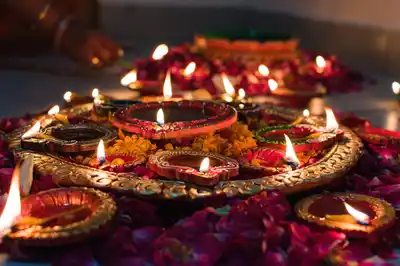
Finding Diwali In The Little Things My hands were tangled in strings of coloured Diwali lights. I sat on the sofa, patiently unwrapping the frenzied loops my mom had just passed me until they finally straightened into an ordered line of light. Somewhere between the tangled wires and the quiet hum of the evening, I realized how often joy hides in the simplest things. Just like Diwali evenings, sunsets too are equally warming. The sky morphs into a vast canvas with splashes of blue, orange, and yellow. I find myself relishing the paradoxical nature of sunsets. They happen every single day, yet linger only for a few minutes before vanishing into the darkness. But we often forget about the beauty of the ordinary, as our brains are wired to seek newness rather than contentment. As humans, we feel a sense of elation to newness. Our mind lights up at the thought of receiving a new phone or a new dress you’ve had your eyes on all summer. Yet, our excitement quickly fades upon attaining them, and our brains experience a sharp drop in dopamine. After dismissing that brand-new iPhone 17 Pro as old, our brains quickly adjust and return to the “baseline” level of happiness. Psychologists call this concept the “hedonistic adaptation trap.” As a result of this trap, our brains get accustomed to the repetitive loop of seeking new, often temporary pleasures. This trap is often the reason why the act of acquiring new things and experiences never seems truly satisfying. It hints at the notion that happiness, as opposed to pleasure, is often long-term and rooted in purpose and meaning. But every Diwali, I find myself breaking out of this trap by savouring the ordinary and the little things that often go unnoticed. With a fresh set of rangoli pigments in one hand, my sister and I look up Pinterest for “Best Rangoli designs”. My fingers naturally gravitate towards the most intricately designed rangoli from the collection of photos, silently praying that we possess even the slightest ounce of caliber to replicate it. My sister, giving me the stingiest side-eye, nods her head in disapproval as we begrudgingly settle on the simplest design, confident that we would nail this one (spoiler: we didn’t). We pick colours and go slow, focusing on the feel of the powder touching the cold, marbled floor of our living room. My mind is engrossed in the swirls of colour and the steady movements of my hands. I lose track of time as my overstimulated mind slows to a standstill, fully absorbed in the rangoli coming to life in front of me. We light diyas, their flickering flames setting every nook and cranny of our house aglow. The next day, the wind would snuff the light from the diyas and the rangoli would be swept away, yet the process of creating them felt blissful, knowing that it would cease to exist the very next day. Diwali taught me to find joy in impermanence. The first sip of hot tea, the feathers of steam rising from the mug. Huddling under a warm blanket while it rains outside. The feeling of rewatching your favourite show with the comfort of knowing how it all ends. The first sunlight after a long season of cold monsoon. The beauty that lies in the brevity of stock pictures and polaroids, only to be stashed away in an abandoned gift box and opened on days when I’m feeling a little too nostalgic. The silly little art competitions with my sister during bouts of boredom, and the inevitable fights over whose is better. However small these things may seem, the joy they bring is immeasurable. Like watching firecrackers light up the sky, the colourful rangolis lining each doorstep, or visiting my childhood favourite confectionery shop, Karthik Sweets, only to devour jalebis within seconds. I choose to find Diwali in the small things and to find joy in the mundane every day. NOVEMBER 12, 2025 JAPANESE TRANSLATION 私の手は、色とりどりのディワリのライトのコードに絡まっていました。私はソファに座り、母がさっき渡してくれたもつれた電飾を、辛抱強くほどいていました。慌ただしく絡んだ輪が、やがて一本の整った光の列へと変わるまで。 絡まったコードと、夕暮れの静かなざわめきのあいだで、私は「喜びは、実はとても単純なものの中に隠れていることが多い」のだと気づきました。 ディワリの夕べと同じように、夕焼けもまた心を温めてくれます。空は青、オレンジ、黄色が溶け合う、広大なキャンバスへと姿を変えていきます。 私は夕焼けが持つ、その矛盾した性質を味わっている自分に気づきます。夕焼けは毎日必ず訪れるのに、ほんの数分で闇の中へ消えてしまいます。 けれど私たちは、新しさを求めるようにできているがゆえに、ありふれた日常の美しさを忘れてしまいがちなのです。 人間は、新しいものに触れると高揚感を覚える生き物です。新しいスマートフォンや、夏の間ずっと欲しかった服を手に入れることを想像するだけで、心は明るくなります。 しかし、その興奮は手に入れた瞬間から急速に薄れていき、脳内のドーパミンは一気に低下します。ついさっきまで「最新」だった iPhone 17 Pro も、気づけば「もう古いもの」として扱われ、脳はすぐに慣れて、幸福度は元の基準値へと戻ってしまいます。 心理学では、この現象を「快楽適応の罠(ヘドニック・アダプテーション)」と呼びます。この罠のせいで、私たちの脳は、新しくて一時的な快楽を求め続ける終わりのない繰り返しに慣れてしまうのです。 その結果、新しい物や体験を手に入れても、本当の意味で満たされることはほとんどありません。このことは、幸福とは快楽とは違い、目的や意味に根ざした、長期的なものであることを示唆しています。 しかし毎年ディワリになると、私はこの罠から抜け出し、見過ごされがちな、ありふれた小さなものを味わうようになります。 新しいランゴリの顔料を片手に、姉妹で Pinterest を開き、「最高のランゴリ・デザイン」を検索します。私の指は自然と、写真の中で最も細かく、美しく描かれたランゴリへと引き寄せられ、それを再現できるほどの才能が、ほんの少しでも自分たちにありますようにと、心の中で祈ります。 すると妹は、これ以上ないほど冷たい横目を私に向け、首を横に振ります。そして私たちは渋々、「これなら絶対できる」と信じて、いちばん簡単なデザインに落ち着きます(結果は――失敗でした)。 色を選び、ゆっくりと手を動かしながら、粉が冷たい大理石の床に触れる感覚に意識を向けます。私の心は、色の渦と、一定のリズムで動く自分の手に完全に吸い込まれていきます。 刺激でいっぱいだった頭は、いつの間にか静まり返り、目の前で命を吹き込まれていくランゴリに、ただ没頭していました。 私たちはディヤに火を灯し、揺れる炎が家の隅々まで明るく照らします。翌日には、風がその火を消し、ランゴリも掃き清められてしまうでしょう。 それでも、翌日には消えてしまうと分かっているからこそ、それを創る時間は、この上なく幸福なものでした。 ディワリは、儚さの中に喜びを見つけることを、私に教えてくれました。 湯気がふわりと立ちのぼる、熱いお茶の最初の一口。外で雨が降るなか、温かい毛布にくるまる時間。結末を知っている安心感とともに、お気に入りのドラマをもう一度観るときの気持ち。 長いモンスーンの寒さが終わったあとに差し込む、最初の陽の光。 ストックフォトやポラロイドの、一瞬で切り取られた美しさ。それらは使われなくなったギフトボックスにしまわれ、少し懐かしい気持ちになりすぎた日に、そっと取り出される。 退屈な時間に始まる、妹とのくだらないお絵描き大会。そして必ず起こる、どちらの作品が上かという小さな喧嘩。 どれほど小さなことに見えても、そこから生まれる喜びは、計り知れない。 花火が夜空を照らすのを見ること、色とりどりのランゴリが家々の前に並ぶ景色、そして、子どもの頃から大好きだったお菓子屋「カールティク・スイーツ」を訪れ、ジャレビーを数秒で平らげてしまうこと。   私は、小さなことの中にディワリを見つけ、ありふれた日常の中に、毎日、喜びを見つけることを選んでいる。