wisdomhoots

A Himalayan Paradise

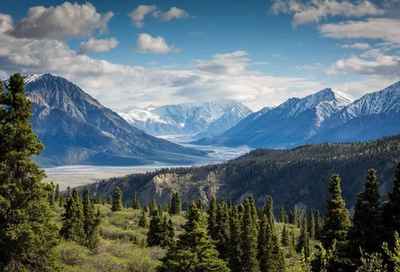
At the heart of Himachal Pradesh lies a congregation of snow-bound peaks that sleep quietly in the midnight chill. As the sun peaks above the horizon, the snowy mountains are lit aglow with ethereality, their white vertiginous slopes bathed by yellow-orange light. Standing proudly like tall spires, they beckon the climber in with their beauty, masking the dangers faced by those who once dared to climb them. Welcome to the Himalayas! Rocks, rocks, and more rocks… From the very start of the expedition, my rucksack became something extremely essential- a portable necessity, stuffed to the rim with cotton-clad armour to battle the harsh winter weather. It contained several pairs of thermals, balaclavas, caps, gloves, down jackets, and my most trustworthy ammunition: a handful of chocolate bars. Accompanied by 5 experienced guides and 12 of my fellow teammates, I started my journey from McLeod Ganj’s basecamp towards Triund: a beautiful meadow situated at 9,350ft amidst nature’s wilderness! With a trekking pole tightly clutched in one hand, I traversed amidst hilly terrains, tall pine trees and bushes filled with verdant foliage. The trail was strewn with rocks, arranged haphazardly like a twisted maze waiting to be solved. Some were as big as boulders, while others were small, sharp and jagged. After a 6-hour-long arduous ascent, we stopped in front of a panoramic mountain landscape to warm our cold hands with steaming plates of delicious Maggie. Let’s get Eco-friendly! Living in the mountains meant sacrificing my warm, cushioned bed for a small, waterproof, alpine tent. I remember how humbled I was when I first reached the Triund campsite. That night, I lay slanted, cocooned by a sleeping bag, while my tent balanced precariously over the edge of a mountain. Over the next few days, my survival soon became entrusted to 4 tightly (or not so tightly) latched pegs. And when the fate of your life rests on 10-centimetre, alloyed metal sticks, forget about getting beauty sleep. I’d much rather wake up with eye bags and dark circles as opposed to falling off a cliff. Apart from sleep deprivation, mountain life also entails a scarcity of water resources and washrooms. So, there’s nothing more terrifying and amusing than running to a tent at 12 am in the morning with frozen fingers and a barely functional head torch to do your business in a dug-up muddy hole. Let’s just say that the most convenient substitute to a flush is a heap of dried mud that lies on the side. Truly eco-friendly indeed. Plot twist… On our third day of the expedition, we reached Snowline, with an elevation of 10,000ft. We had lunch while basking in the sun and sang songs together in the tent that night. However, the once joyous atmosphere soon transformed into something more sullen. During a team meeting, one of our seniors spoke: “We have to descend back to Triund”- words I never expected to hear from the very people who had been our guiding force throughout the trip. They cited sub-zero temperature, lost confidence, high technicality, casualties, mortality and lack of resources as major limiting factors, but did so in a superficial manner without adequate explanation. Fuelled by shared disbelief and dissatisfaction, my fellow teammates and I stood outside our seniors’ tent at 1 am in the morning, desperate to solve our predicament. After several heated conversations, we finally convinced our guides and team leaders to continue our journey uphill as a bold act of defiance against nature’s harshness. While standing amidst the spine-chilling wintery breeze, we realised that nothing could come in the way of our relentless pursuit to the summit. Girl Power! On the night of 31st December, I was roused by the urgent voices of our guides. “Wake up! Breakfast ready hai!”. With a dehydrated system, sore muscles, and bandaged feet, I relished the black tea, poha, and dalia given to us as an early breakfast, in hopes of rejuvenating my fatigued and sleep-deprived self. At around 2 in the morning, the cold weather ate into my head torch’s battery at a speed faster than usual. With little to no visibility, I was tasked to navigate dangerous, steep routes and widely spaced boulders, silently praying that I don’t meet my demise with every waking step. At the crack of dawn, our team hit 13,000 ft, a point that marked the beginning of something far riskier than I could ever have imagined. During this time, many of my teammates who encountered bad injuries, dizziness, and excruciatingly painful headaches were forced to descend back to the campsite. Eventually, 5 of us remained, ready to take on whatever the mountains had to offer. With the city lights winking up at us from far below, the path ahead of me was an unprecedented mix of rocky terrains, soft murren, snow, and hard slats of ice where each surface required a different level of grip, balance, and adaptability. As I gained more elevation, I felt the weight of my rucksack almost double and press down on me. Gravity grinned at me with menace and gleefully laughed at the heavy breathing that accompanied my every step uphill. Fortunately, I was grateful to have a supportive team beside me, whose confidence and motivation never seemed to dwindle, even during the toughest of times. At around 10 am, we finally summited Indrahar Pass, one of the highest in the Dhauladhar range, standing at an astounding 14,245 ft. During the expedition, a fellow teammate of mine had said, “The more beautiful the view, the harder you need to work for it.” Those words struck me as my eyes were met with several snow-dotted mountain valleys; a view that instantly silenced my aching muscles and frazzled mind. After reaching the top, part of me felt proud to be the only female in the team to reach the summit. During the trip, days commenced with golden sunrises and steaming mugs of morning chai while nights were warmed by bonfires, shared songs, and horror stories that brought the team

The Elder Sibling’s Dilemma

I was only 12 years old when my mom told me, “Act wisely; you are setting an example for your younger sister”. My role model at that time happened to be Saina Nehwal, a badminton player and Olympic medalist. At that point in time, she was most definitely older than 12. Not to mention her long list of achievements, gold-plated medals, and global recognition. So the idea of being a role model myself felt absolutely absurd. This very phrase, repeated across the years, made me realize how being an elder sister isn’t merely a role you apply for; it is something that is assigned to you early on in your childhood. A role that’s not part-time but somewhat permanent; its responsibilities, though unspoken, change ever so slightly with the passing of time. Growing up, my parents would watch over me with hawk-eyed attentiveness. Even a small misstep, like sleeping half an hour late, eating something outrageously unhealthy, or spending a little too much time outside with my friends, felt heavily scrutinized. I felt pressured to follow everything to the T, where a slight feeling of hesitance or denial would trigger a full-blown argument. What puzzled me was how my younger sister’s endless sleepover and late-night party requests were met with a little more leniency and a little less opposition. In retrospect, being an elder sibling always felt like being held to stricter standards. Recalcitrance, I learnt, is a luxury the youngest can afford much more easily than the eldest. For a certain time, being an elder sister meant constantly trying to separate identity from responsibility. I felt caught in between “who I am” and “who I’m needed to be”. I felt obligated to carry out certain tasks and inculcate specific habits, not necessarily for myself, but for my sister. This meant going to bed on time, studying regularly, or limiting screen time because “if I do it, my sister will follow too”. These expectations seeped into the smallest moments. Helping your sibling with homework because you are expected to “know better,” and perhaps the worst of them all—being forced to give up the larger half of a delicious slice of chocolate cake. Yet, responsibility wasn’t the only thing that followed me closely. In my childhood, the bond with my younger sister was marked largely by irritation. My younger sister mirrored me in almost everything, from what I ate to where I went and how I behaved. It often felt as though I was being mirrored by a mini version of myself. Although it may seem frivolous, the reason for my agitation wasn’t the imitation itself, but the fear that it would blur the lines between our identities, leaving little room for individuality or authenticity. Only later did I come to understand that younger siblings view their elder ones as their first and most visible reference point, a way to navigate the world around them. In moments when parents aren’t around, elder siblings become emotional anchors, offering a sense of safety and familiarity. Over time, we grew up with minds of our own. My sister and I developed different tastes and styles, forming our own unique and distinctive personalities, as the irritation I initially used to feel gradually faded away. But being an elder sister isn’t all that bad. Those unspoken responsibilities quietly shaped my personality over time. Somewhere along the way, taking up responsibility became innate rather than being forced upon me. Whether it’s heating up meals, giving my sister medicine when she’s sick, or helping her with academic work, I felt a tiny sense of fulfillment. We no longer fight over food by splitting it with geometric precision. Instead, I find myself giving her the liberty to pick her share first. I also found myself becoming more empathetic. I was able to listen to others with more patience and understanding, give my unsolicited advice to those in need, and resolve fights in a gentler manner. I noticed how deeply reassuring it was to be trusted by someone without hesitation, to share moments of silent understanding with your sibling, and to create a safe space between each other, devoid of any judgment. In those moments, I came to realize that I am no longer a guide, role model, or third parent. I am simply an older sister.

Suspense After Dark ft. Freida McFadden

Trigger warning: This article contains references to blood and acts of killing. Reader discretion is advised. In the literary world, there was once a time when thrillers meant private investigators, razor-sharp detectives, and grumpy police officers, all determined to catch a cold-blooded killer. Add in sly assassinations, political intrigue, and tons of forensic evidence to the mix, and you have a classic thriller novel at your disposal. Although these elements are widely used in literary fiction, they’re gradually losing their appeal among recent readers. In fact, I’ve come to notice the growing shift from typical “detective-led” thrillers to ones filled with domestic suspense and psychological depth. I remember picking up The Housemaid by Freida McFadden, thinking of it as a casual bedtime read. Instead, I finished it in one sitting, wide-eyed and utterly glued to the pages of the book. Every now and then, a silent gasp would come out of me as I found myself engrossed in the enigma of it all, where moral lines were blurred beyond recognition, and every single character was a double-edged sword. By sunrise, the book was filled with sticky tabs, dozens of highlights, and random scribbles of thoughts splayed across page margins.  That day, I definitely remembered to lock my door before sleeping. It was that very experience that made Freida McFadden one of my favorite thriller authors. So what exactly makes her books an absolute page-turner? “The door isn’t stuck. It’s locked.” ― Freida McFadden, The Housemaid One such reason is McFadden’s ability to transform ordinary, domestic spaces into psychological traps. In The Housemaid, Millie arrives at the Winchester mansion with a perfect job to give her a fresh start. What was initially thought to be a safety net quickly becomes a place of surveillance and control. Throughout the novel, Millie unravels subtler aspects of the house, such as doors that lock only from the outside, lethal medications stashed away in bathroom drawers, and laundry clothes stained with blood. She’s also assigned a tiny attic to stay in with walls inscribed by mysterious scratches. Screams echo behind expensive walls, and the kitchen, a place typically associated with warmth and comfort, becomes a site of punishment and scrutiny.  Similarly, in her book Never Lie, Tricia and Ethan stumble upon a lonely, snow-bound mansion during their house-hunting search. What once seemed like a luxurious mansion slowly reveals its darker secrets: hidden rooms (love those), trauma-filled cassette tapes of therapy recordings, and an eerie portrait of a woman whose eyes seem to follow you everywhere you go (yikes). Through this, McFadden reveals how luxury often hides cruelty and how a seemingly ordinary and spotless house isn’t so perfect after all. “Women aren’t weak because they’re trapped; they become dangerous because they’re trapped.” – Freida McFadden, The Housemaid Another reason why I found her books so engrossing was the dynamic shifts in power play between various characters. I noticed how McFadden tends to invert the hierarchy of social class by placing women, typically those who conform to certain societal roles (such as an obedient worker, a devoted wife, or a polite colleague), at the forefront of the narrative. Instead of portraying these characters as weak and vulnerable, McFadden transforms their qualities of silence, empathy, and adaptability into powerful weapons of survival. This gives her characters an undercurrent of resistance—a quality that deeply resonated with not just me but countless other readers. Take Millie from The Housemaid trilogy. A character shrouded in poverty soon becomes a hidden threat with her concealed criminal past and her unsettling ability to kill without hesitation. Similarly, in The Coworker, Dawn is ridiculed for being too quiet and “different” from the rest. Not to mention, her weird obsession with turtles, oversized clothing, and her predilection for monochromatic meals. Nonetheless, her sharp observation skills enable her to uncover secrets, break into houses, plant fingerprints, and even frame her bully for a crime she didn’t commit. McFadden’s writing allowed me to look at characters through a different lens: one in which the quiet ones are often overlooked and underestimated. “My mother always says the only way two people can keep a secret,” she says, “is if one of them is dead.”― Freida McFadden, Never Lie The reason why McFadden’s books seem so addictive and bingeable is because of their cleverly crafted structure. Having read many of her books myself, I tend to enjoy shorter chapters that seem to mimic the attention-grabbing and dopamine-filled rhythm of Instagram reels and YouTube shorts. McFadden’s novels often feature multiple plot twists scattered throughout the narrative as opposed to a single, often predictable midpoint climax. As readers, we sit there, teetering on the edge of our seats, rewarded with the gratifying experience of plot twist after plot twist, where the mystery never seems to end. Whether it’s a missing clue, a mysterious recording, an overheard conversation, or a jaw-dropping confession from a protagonist that suddenly changes my entire perception of the character—these little bouts of suspense tend to keep our brains cognitively stimulated for longer periods of time. Before I know it, I’m reciting a commentary of my own, blurting out a string of expletives: “OMG,” “How did I not see that coming?” “No way,” “I knew it!”—which is exactly why the libraries and I never mix well, especially when I’m reading thrillers. Lastly, I find that the most disturbing yet fascinating part of McFadden’s novels isn’t about learning who lied but realizing that you believed the wrong person the whole time. After all, there’s nothing worse than realizing that your intuition was completely off, and suddenly you have trust issues, not just in real life, but with fictional characters too. McFadden’s novels hit me with the realization of how we often tend to judge people at a superficial level and jump to conclusions too quickly. She reminds us of how nothing is always as it seems and that no one is usually who they appear to be.

Ink, Paper and Everything Unsaid

Inside my bedside table lies a small gift box nestled among scattered pencils and diaries. A box that safeguards a pile of letters with pages preserving snippets of conversation that once dared to be forgotten, where each and every word silently calls to a story of its own. The first letter I received was a “goodbye letter” when I left school in third grade to shift to a new school. I remember being pushed out of class by a bunch of classmates who had a surreptitious twinkle in their eyes. Later that day, I received a large sheet of colored paper with the words “Rishita 3B” written in bold. I opened it to see multiple writings sprawled across the vast expanse of the paper. Some words were huge, their letters proudly spaced out, while others were small and tiny, yet carried a heavy meaning. Some words were soft and gentle, the “t”s and “y”s curling around the ends almost as if they were smiling back at me. Some letters were neat and flawless, while others were written in a hurried scrawl, the pen struggling to keep pace with their racing mind. Back then, I was too young to understand why receiving that letter felt oddly intimate. In hindsight, I know why. I realized how handwriting is often an imprint of the soul, and that’s why it lingers. The grainy texture of the paper, fold lines, coffee stains, and fingerprints all leave traces of presence behind. Traces, I find, are filled with such sensory richness that they transcend digital ephemerality and create a sense of permanence. One of my favorite letters was one that I received from a close friend of mine after graduating 12th grade, a time when we bid adieu to high school life, silently rejoicing in the adventures (and misadventures) that had shaped us. I read it aloud the very same day, streams of happy tears pouring down my face. I remember my mother looking at me with concern etched across her eyebrows, wondering why I was crying so much, while my sister quietly laughed at my unexpected outburst over just words on a piece of paper. But it was much more than that. Here’s a short snippet from the letter she wrote to me:  “I can’t promise you that college won’t be tough at times. It will be, and frankly, it should be. There are going to be times when your ground feels shaky and you just want to run away. But there will also be a point when you realise that you can stand on your own, even though it feels like everything is falling apart. Like when you realised you can counter your opponent’s smashes in a match. So, my advice to you, not as a writer, but as your friend, is to just take a deep breath. Just keep swimming 🙂 “ This letter, unlike the others, was an ode to our friendship and felt like a warm hug. Her words carried gentle reassurance and provided me with a much-needed boost of confidence before I started college. Handwritten letters inadvertently end up capturing a moment in the past. Everything from our style of writing to our emotional state of mind is preserved through words frozen in time. It is almost as if they were a mini time capsule wrapped in paper. They lie there, undistorted and completely unedited, giving us an accurate depiction of our past selves. Letters often reveal subtle emotions that are brought to life through writing, but oftentimes, this sense of vulnerability is hidden by a digital screen and the rhythmic clacking of a keyboard. As the digital world takes precedence in our daily lives, text messages and digitalized words begin to feel robotic. Messages are evenly spaced and refined through hidden edits. They lack the small imperfections of being human, replaced instead by universalized emojis that simplify the complexity of emotion. We live in a world where unrehearsed and unedited thoughts are trivialized as opposed to carefully crafted text messages. Somewhere amidst the world of WhatsApp and instant DMs, we learned to communicate effectively, but not tenderly. In doing so, we forgot the slowness that comes with penning down thoughts into tangible words and the quality of devoting time and attention to writing things down by hand. Handwritten letters are not just read; they are kept and cherished. They lie silently, somewhere between pages in a book, folded into a diary, stuck on fridge walls, pressed under a pillow, with a promise of revisiting them during moments when we feel a little too nostalgic. We write messages that vanish over time, forgotten within mere seconds, lost in the long digital chain of texts, and eventually deleted as if the conversation ceased to exist. We don’t reread texts from 2020, but we keep letters for decades.

Ranganathittu

Ranganathittu We left Whitefield before dawn on 18 January 2026, with a thermos and camera in the glovebox and the expectation of a quiet day by the Cauvery. The drive to Ranganathittu is a comfortable road trip of roughly 150–160 km (about 2–3½ hours depending on traffic), threading past Bangalore’s suburbs and the greener plains toward Mysuru and Srirangapatna. If you time the start early, you dodge the worst of Bangalore traffic and reach the sanctuary when the birds are at their most active. Ranganathittu is small — only about 40 acres made up of several river islets — but famously dense with life. The islets were formed centuries ago after a weir was built across the Kaveri (Cauvery) in the 17th century, and the place began to attract nesting birds in large numbers; ornithologist Salim Ali helped persuade the Maharaja to protect the site in the 1940s. Today it’s the largest bird sanctuary in Karnataka and was even designated a Ramsar wetland in recent years. That mix of natural history and protection is why birders call it “Pakshi Kashi” (bird Kashi). From a handful of islets formed by a 17th-century embankment on the Kaveri to one of South India’s most celebrated bird sanctuaries, Ranganathittu’s journey is a story of nature finding opportunity in human intervention. Since 1940, the sanctuary stands today as a testament to timely conservation and foresight. With continued efforts by the Karnataka Forest Department and the declaration of an eco-sensitive zone around it, Ranganathittu remains not just a haven for birds, but a living reminder of how history, ecology, and responsible stewardship can coexist in harmony. What we found — is that the heart of the experience is the guided boat ride around the islets. Boats pull close enough to watch colonies of nesting birds on the shrubs and boulders, and the soundscape of flapping wings and distant calls is unforgettable. People who visit regularly emphasize going early (boats generally start in the morning), taking a boat for the best views, and keeping still and quiet to maximise sightings. Weekends get busy; midweek mornings are calmer. Ranganathittu hosts both resident and wintering species. Common and eye-catching birds you’re likely to see are painted storks, spot-billed pelicans, open-billed storks, Asian woolly-necked storks, various egrets and herons, darters and cormorants, and spoonbills — and if you’re lucky, some kingfishers and migrant waders. In winter months (November–February) many migratory species increase the numbers and variety, so a January visit is excellent for birdwatching. Beyond birds, the river banks and reedbeds shelter monitor lizards, smooth-coated otters, bonnet macaques, mongoose, and a notable population of freshwater (mugger) crocodiles often basking on sandbanks — a dramatic natural contrast to the nesting storks overhead. Why January? Winter in southern India brings migrants from the north and temperate regions, and the cooler, drier weather makes boating and shoreline watching pleasant; many visitors say January combines good bird numbers with comfortable light for photography. (Nesting activity peaks during and after the monsoon, but January gives you the mix of resident colonies plus winter arrivals.) Recommendation: Start early (first boats) to see active birds and soft morning light. Take the boat ride — it’s the main way to see the nesting colonies up close. Bring binoculars and a telephoto lens if you photograph; keep voices low. Carry water, a hat and sun protection (even in January the sun can be strong later). Avoid throwing anything into the water — the sanctuary is small and sensitive; local rules protect nesting sites. For anyone from Bangalore who wants to escape the city for a single morning or day of birding and river scenery, it’s one of the best nearby choices. https://youtu.be/b4xnv5pTwF0https://youtu.be/TgXUWGdHSokhttps://youtu.be/ruzbXBOMWLg Sample Itinerary (Time and Activity) Here’s a clean, practical sample itinerary for a one-day trip from Whitefield → Ranganathittu → back to Whitefield, paced the way most people actually enjoy it (early start, relaxed wildlife time, good food stops). Total distance: ~155–165 km one way. Best day: Any day; weekday if you want fewer crowds. Best season: Nov–Feb (January is excellent).   Early Morning: Whitefield → Breakfast Stop 5:30 AM – Depart Whitefield. Early start = smooth ORR + NICE Road + Mysuru Road. This also ensures you reach the sanctuary before birds retreat from the heat. 7:00–8:00 AM: Breakfast: Option 1 (popular & reliable): Kamat Lokaruchi. South Indian breakfast (idli, dosa, pongal). Clean restrooms. Quick service. Best if you want a no-nonsense stop. Option 2 (more relaxed by 7:30–8:30 AM): MTR – Maddur.  Famous Maddur Vada. Filter coffee stop. Slightly slower but iconic.  Drive: Breakfast → Ranganathittu  and by 8:00–9:30 AM -Route after Maddur: Maddur → Srirangapatna → Ranganathittu. The last stretch becomes greener and calmer, setting the mood nicely. 9:30 AM – 12:00 PM:Main Experience: Ranganathittu Bird Sanctuary. What to do:  Entry + Boat Safari (must-do).  Boat ride: ~20–30 minutes.  Short walking trails & viewpoints. What you’ll likely see in January: Painted storks, pelicans, spoonbills, Egrets, herons, cormorants, Crocodiles basking on rocks and Otters (if lucky!) Why this timing works: Bird activity is still high, light is great for photos, and boats operate smoothly. Tip: Do the boat ride first, then walk around.  12:30–1:30 PM:  Lunch Options (Post-Sanctuary): Option 1: Authentic local Karnataka meal: Hotel Mayura River View. Run by Karnataka Tourism. Riverside location. Traditional thali options. Option 2: Slightly upscale, relaxed. The Olive Garden. Calm ambience. Indian & continental options. Good for families or longer lunches. Optional Short Stop (If Energy Allows) 2:00–3:00 PM:  Srirangapatna. Tipu Sultan’s summer palace. Historic island town on the Cauvery. Even a 30–40 min walkaround is worth it. (Skip this if you want an earlier return — totally fine.) 4:30–5:00 PM: Tea Break on Return :  Recommended stop.  Café Coffee Day (Highway outlet). Stretch your legs . Coffee + snacks before final drive. 5:00–8:00 PM: Evening: Return to Whitefield. Expect Bangalore traffic after NICE Road. Put on music or a podcast — you’ll be tired but satisfied.  What to Carry: Binoculars (huge upgrade to the experience). Hat + sunscreen. Camera / phone with zoom. Water bottle. Cash (small fees, parking).   In short: Early start = best wildlife sightings, Balanced pace (no rushing, no boredom), Reliable food stops and Minimal stress driving Maddur Tiffanys (Nidagatta) Maddur Tiffany’s is a famous, long-standing South Indian restaurant, especially known for its iconic, crispy Maddur Vada, a beloved snack originating from Maddur town on the old Bengaluru-Mysuru highway. While it’s a popular

Emerging Future and IP – Part 1

Generative AI, a branch of artificial intelligence, is capable of autonomously creating new content, including designs, code, and even inventions. It has seen rapid adoption across industries like software development, drug discovery, and creative fields. While its potential for innovation is undeniable, it presents significant challenges to existing patent laws, especially regarding registration, enforcement, patentability, and ownership. Traditionally, patents have been granted to human inventors who demonstrate novelty, non-obviousness, and utility in their inventions. However, generative AI challenges this norm, as it can independently generate inventions. Questions arise regarding whether an AI-created invention can meet the criteria for patentability.  Patent systems are currently built around human ingenuity, raising concerns about the ability to assess whether an AI-generated invention is truly novel or simply a recombination of existing knowledge. One of the most complex issues is determining the ownership of AI-generated inventions. Patent systems worldwide typically require an individual or group of humans to be named as the inventors. When AI autonomously creates an invention, it raises fundamental legal and ethical questions: Should the AI developer, the user of the AI system, or someone else hold the patent rights? In recent cases like Thaler v. DABUS, courts have rejected the notion of AI as an inventor, insisting that only humans can be named in patent filings. This stance may need reevaluation as AI technology continues to evolve.   The model that generates original outputs is fundamentally an extension of the cognitive efforts and intent of its programmer. The AI system, while capable of creating new content autonomously, has been coded and designed to function in this way by its human developer. Therefore, any outcome produced by the AI can be seen as stemming from the intellectual work of the programmer who created the system. In essence, the AI model is merely a tool—an advanced one, but still an instrument—that reflects the ingenuity and invention of its creator. Consequently, any application or invention generated by the AI should, in theory, be attributed to the inventor of the AI system itself.  The enforcement of patents on AI-generated inventions also presents unique challenges. Patent offices may struggle to validate the originality and non-obviousness of an AI-generated invention due to the speed and volume at which AI systems can produce new designs or products. Additionally, enforcing these patents in the marketplace becomes complex, especially when it is unclear who owns the invention or when multiple entities contribute to its development.  Additionally, it’s crucial to clarify the object of invention in the context of AI. Traditionally, patent law distinguishes between process and product as two separate categories of patentable subject matter. However, in AI, the focus shifts to the model, which represents a blend of both process and product. The AI model is a procedural system that generates products (outputs), combining two dimensions that traditionally exist separately. Given this dual nature, patentability requires a different perspective. The inventive differences in AI should be assessed at the model level, where the true ingenuity lies, rather than at the output level. The outputs, such as text or images, may be better suited for protection under other legal frameworks, like copyright, as they can be independently created without utilizing the specific AI model. This distinction is essential to avoid confusion and ensure that the model, as the core invention, is the focus of patent law, while outputs fall under other intellectual property regimes, like copyright. To address these challenges, patent laws may need to evolve significantly. Legislators and policymakers will likely have to consider creating new frameworks that accommodate AI’s role in invention. These could involve hybrid models of ownership that recognize both human and AI contributions, as well as new standards for patent eligibility. Additionally, global collaboration might be necessary to develop harmonized policies that allow for the protection and enforcement of AI-generated inventions across jurisdictions. As generative AI continues to advance, its impact on the patent system will deepen. Current laws governing registration, enforcement, patentability, and ownership are struggling to keep pace with the technology. Adapting these legal frameworks will be crucial to ensure that innovation flourishes while also maintaining a fair and equitable system for recognizing and protecting inventors—both human and AI-driven. Future of IP: Top 10 changes to expect in the next decade Generative AI refers to a class of artificial intelligence systems designed to generate new, original content. These systems can create text, images, music, and even video based on the data they have been trained on. Unlike traditional AI, which focuses on tasks like classification or prediction, generative AI models produce novel outputs by learning patterns and structures from vast datasets. Key aspects of generative AI include: Models: Generative models like GPT (for text), DALL·E (for images), and others are based on architectures like Generative Adversarial Networks (GANs), Variational Autoencoders (VAEs), and Transformers.  Training Data: These models are trained on large datasets, allowing them to learn from diverse examples and mimic creativity in various domains. Applications: (i) Text generation: AI can generate coherent essays, articles, or even code. (ii) Image creation: Tools like DALL·E can generate realistic or artistic images from text descriptions. (iii) Music and video generation: AI can create music compositions or synthesize video content. (iv) Chatbots and conversational agents: Models like ChatGPT can engage in natural language conversations. Generative AI has potential applications in industries like entertainment, content creation, marketing, design, and more, offering tools for automation and creativity. The future of intellectual property (IP) is evolving rapidly, especially in response to emerging technologies like AI, machine learning, blockchain, and quantum computing. Over the next decade, IP laws and systems are expected to undergo significant changes to adapt to these technological advancements. Here are the top 10 changes to expect in IP:  1. Recognition of AI-Generated Inventions:  Current Situation: Most jurisdictions require human inventors to be listed on patent applications, with AI-generated inventions often facing challenges in being patented. Expected Change: Legal frameworks for AI-generated inventions will evolve, allowing for AI to be recognized as a co-inventor or even the primary inventor in some jurisdictions. This could necessitate new guidelines for determining ownership, authorship, and rights related to

Higher Education and Research in India

The current research university landscape in India includes some institutions founded pre-independence, most established in the decades following independence, with several earning global rankings and aspiring for greater international recognition and many young research universities, less than two decades old, seeking global acclaim.  Several private sector universities are emerging or under development with aspirations to attain global recognition as research institutions .Their research performance is yet to be fully gauged, with future trends expected to clarify their trajectory. Their endeavors are backed by significant philanthropic funding. While it’s early days, there’s potential for some of these private institutions to transform into research universities, mirroring the trajectory seen in the USA India possesses an extensive higher education (HE) framework, notably youthful and swiftly expanding. In India, there are approximately 900 universities with the authority to grant degrees.. The rate of growth has seen a substantial rise. From 240 in 2000, the count surged to over 750 by 2015.  Despite having over 900 universities, Indian universities have evolved differently from those in the developed world. Few Indian universities rank among the top 200 globally, with none appearing in the Times Higher Education (THE) and Shanghai rankings, and only a few in the QS rankings.  The Indian HE ecosystem further boasts in excess of 40,000 colleges, with the majority of them emerging,  as recent as in the current century.  The prerequisites for establishing colleges were relatively modest in terms of capital, laboratory facilities, land, and other necessities, thereby enabling more private entities to establish colleges.  The gross enrolment ratio (GER), indicating the percentage of eligible students enrolled in higher education (HE), presently stands at approximately 25% in India and is projected to increase to 30% soon. In comparison, GER in several developed nations like the USA, Australia, and European countries typically exceeds 80%, while China’s GER is around 40%.  The Indian government aims to raise the gross enrolment ratio (GER) in higher education. Given India’s youthful demographic, with over 20% of the population aged 0-10 and another 20% aged 10-20, the HE system must expand to accommodate the growing number of young graduates. To achieve this and further increase GER, the higher education system will need to sustain rapid growth over the next few decades. Though a handful of higher education institutions (HEIs) enjoy international renown for their research endeavors, the overarching emphasis and dialogue within the HE system predominantly revolve around education, with research-oriented universities often overlooked. The majority of Higher Education Institutions (HEIs) in India have prioritized education over research, resulting in a dearth of high-quality educational experiences. Given that involvement in research is widely recognized as crucial for both educational excellence and cultivating a robust academic culture, the prevailing trend in Indian HEIs suggests a deficiency in delivering top-tier education. Nowadays, there’s a growing recognition of the significance of research, leading to a shift in focus from solely education to a combination of research and education in numerous universities.  In many developed nations, this shift occurred predominantly in the early 20th century, with World War II providing additional momentum. Contrastingly, in India, where the basic literacy rate stood at less than 20 percent upon gaining independence in 1947, this transformation appears to be unfolding presently. The inception of the modern university system in India began with the establishment of the University of Calcutta by the British. Subsequently, the universities of Bombay and Madras were established with the explicit aim of nurturing educated human resources to serve the British administrative apparatus in India. These universities, boasting exceptional faculty and pioneering PhD programs, emerged as leading research centers in India, making them the country’s earliest research universities. Notable institutions at the time of independence included the University of Calcutta, the University of Madras, the University of Bombay, Lucknow University, Allahabad University, BHU, Agra University, Punjab University, and Aligarh Muslim University (AMU). However, despite their significance in education, these institutions primarily emphasized teaching. The Universities of Calcutta, Madras, and Bombay awarded early PhDs, being among the earliest universities in the modern format, established in 1857 by the British. In India, the PhD program began in the late 19th century, with Calcutta University granting the first PhD in 1877.  Until the mid-1900s, only a few universities in India conferred PhD degrees, and the number of PhDs awarded was minimal. PhD production in India remained low until before independence in 1947. This was primarily due to the British-established universities being designed to produce human resources to aid administration, with research not being a primary objective, despite the provision of the PhD degree. The total number of PhDs produced until the 1920s was less than one per year, and even in the 1930s, just about three were produced annually nationwide. In the 1930s, India’s PhD output was slightly over 1% of that of the USA, a figure that rose to approximately 5% in the 1950s, the decade following India’s independence.  The production of PhDs in India has seen continuous growth across various fields of study. India ranks fifth globally in terms of the total number of PhDs awarded. While India’s PhD output was significantly smaller than that of the USA around independence (approximately 5%), the current scenario is notably different. Presently, India graduates approximately one-third the number of PhDs awarded by the USA. In a vast higher education system like in India, top universities are expected to prioritize research while others focus on education. Ideally, these leading research universities should produce the majority of PhDs. Data from the USA shows that roughly half of all PhDs are granted by the top 50 universities out of approximately 400 PhD-granting institutions. This pattern suggests a strong higher education system where top universities typically emphasize research and provide rigorous PhD programs, leading to the production of high-quality PhD graduates. In the top 25 institutions, about 85% of PhD students are full-time, a pattern observed in both engineering institutions and universities. This high proportion of full-time students is anticipated as top research universities generally depend on committed full-time PhD candidates. However, this percentage decreases significantly in the remaining top 100 institutions, with about 45% and 68%

Flame University

FLAME UNIVERSITY FLAME University in Pune, India, is a private university known as a pioneer in liberal education in India, offering multidisciplinary undergraduate and postgraduate programs, including B.A., B.B.A., B.Design, and M.B.A. Established in 2015, it focuses on holistic, student-centric learning with an interdisciplinary approach, allowing students to combine majors and minors, and emphasizes leadership, innovation, and real-world skills, with a vibrant campus life and strong placements. Pune is a vibrant city that blends history, education, culture, and modern living with ease. Often called the “Oxford of the East,” it is home to some of India’s top universities and research institutions, giving the city a youthful, intellectual energy. Historically, Pune was the heart of the Maratha Empire, and this legacy still shows in its forts, old neighbourhoods, and cultural pride. At the same time, Pune is also a major IT and startup hub, especially around Hinjewadi, Kharadi, and Baner, making it both traditional and forward-looking. The city is known for its pleasant climate, green hills, and easy access to nature—treks, forts, and weekend getaways like Lonavala and Mulshi are just a short drive away. Pune’s food scene is equally diverse, ranging from iconic Maharashtrian dishes like misal pav to trendy cafés and global cuisine. Overall, Pune feels calmer than Mumbai but more dynamic than a typical city—a place that values learning, culture, and quality of life, while still offering plenty to do and explore. Traveling from Pune Airport to FLAME University is a smooth and straightforward experience. After landing at Pune Airport and collecting your baggage from the conveyor belt, the best way to reach the campus is by booking a prepaid airport taxi or an app-based cab such as Uber or Ola. The journey to FLAME University, located in Lavale, takes about one to one-and-a-half hours depending on traffic.  The route passes through key areas like Baner and Bavdhan before gradually giving way to greener, quieter surroundings as you approach the campus. The final stretch is scenic and hilly, offering a calm transition from the city to the university environment. Upon arrival at the main gate, campus security guides visitors to the reception or hostel area, making the overall journey safe, comfortable, and well-organized. What is Kurukshetra?  Kurukshetra is the flagship cultural and sports festival of FLAME University (in Pune, India). It’s a large, student-run event that brings together students from across India and beyond for 3–4 days of cultural competitions, performances, workshops, and sports. The festival blends arts, creativity, athletics, and student energy, making it one of the most anticipated annual events at FLAME. History — How It Started?:  The festival began as an initiative by FLAME students to cultivate a vibrant campus culture beyond academics. Its name — Kurukshetra — draws from the legendary battlefield in the Mahabharata, symbolizing healthy competition and spirited engagement. Over the years, the event expanded from internal showcases to a larger inter-college fest, inviting participants from other universities for competitions in music, dance, drama, literary arts, photography, debates, and sports. What Kurukshetra Is Like in 2026: In 2026, Kurukshetra at FLAME University has evolved into a well-established cultural and sporting festival with features like: Competitions & Events: Cultural Battles: Dance, music, fashion shows, dramatics, and fusion arts. Literary & Creative Arts: Debates, poetry slams, writing contests, and art exhibitions. Workshops & Talks: Guest artists, performers, and industry professionals lead interactive sessions. Sports & Games: Team sports, athletics, and fun campus games. Performances & Concerts: Evening pro-nights with live performances from popular bands, musicians, or DJs. Student talent shows spotlighting emerging performers. Inclusivity & Vibe: A mix of competition, camaraderie, cultural exchange, and celebration. Welcoming atmosphere for both university students and visiting delegates. Reinforces FLAME’s emphasis on holistic education — balancing academics with expression and leadership. Brings together a wide student community from multiple institutes.  Acts as a platform for young talent in arts, sports, and performance. https://youtu.be/3jNnCErmtKEhttps://youtu.be/97GqkjQoNFYhttps://youtu.be/IQF96Q0LeLI Badminton at FLAME Kurukshetra: Badminton has consistently been one of the most competitive and well-participated sports at Kurukshetra, FLAME University’s annual inter-college cultural and sports festival. Known for its fast pace and intense rallies, the badminton tournament attracts players ranging from casual enthusiasts to highly trained competitors, making it one of the most anticipated sporting events of the fest. When It Happens: The badminton tournament is typically held during Kurukshetra, which usually takes place in January or February. Matches are spread across one or two days, depending on participation, and are scheduled alongside other major sporting events. How the Tournament Is Conducted: Categories generally include: Men’s Singles. Women’s Singles. (In some editions) Mixed Doubles or Men’s Doubles, depending on time and registrations. Registration opens a few weeks before the festival, with slots filling up quickly due to high demand. Matches are conducted in a knockout format, ensuring high-stakes games from the very first round. Games follow standard badminton rules, with on-ground referees and student volunteers ensuring smooth coordination. What sets the Kurukshetra badminton tournament apart is its electric atmosphere. Friends crowd around the court, cheering loudly for every smash, drop shot, and rally. The matches often go down to the wire, with momentum  shifting rapidly and underdogs frequently challenging experienced players. Winners at Kurukshetra badminton vary each year, as the tournament is open to a wide pool of participants from different colleges and backgrounds. Rather than being dominated by a single institution or player, the event is known for fresh faces and surprise victories,  which keeps the competition exciting and unpredictable. Beyond trophies and titles, the badminton tournament at Kurukshetra represents: Sportsmanship and discipline, Mental agility and physical endurance, A break from academic routines through healthy competition. For many players, it is not just about winning, but about testing their limits, playing under pressure, and experiencing the thrill of competition on a larger stage. My Kurukshetra Experience: On Court, With a Racket in Hand: Participating in badminton at Kurukshetra was one of the most grounding and memorable experiences of my time at FLAME University. Kurukshetra, the university’s annual cultural and sports festival, brings an energy to campus that’s hard to describe unless you’re in the middle of it. For me, that energy found its shape on the badminton court—early mornings, tight schedules, nervous stretches, and the quiet focus that settles in just

Magical Musings

“Just look at those dragons!” As a teenage kid, I always found myself utterly engrossed between the pages of a fantasy novel. My tiny little mind would light up with fireworks every time I thought of something “supernatural” that defied the workings of our mundane, ordinary world. I made friends with fictional characters, gasped at every plot twist and marvelled at the intricately constructed world-building. My childhood was spent walking along the halls of Hogwarts, dodging Seraph blades from Cassandra Claire’s Shadowhunters while I traversed into the action-packed realm of Sarah J. Maas’s Erilea. It was through spending years immersed in such phantasmagorical realms filled with strange creatures, waxed candles, ancient runes and artful pentagrams that eventually shaped my interest in tarot. For a long time, tarot cards have captivated the minds of many with their enigmatic inscriptions, intriguing archetypes and mystical allure. Tarot is believed to have originated in 15th-century Northern Italy, where it was initially played as a game. Later, it was used in cartomancy, an art form steeped in fortune-telling and divination. Comprising of 78 cards, a tarot deck is split into two sections: the Major Arcana (22 cards) and the Minor Arcana (56 cards). The Major Arcana often represents significant life events and pivotal turning points, while the Minor Arcana focuses on everyday experiences and daily actions. Personally, I feel like there’s something so therapeutic about having a physical deck of cards. It’s like these magical manifestations and so-called “spiritual energies” are captured and stored within something tangible, weighed down and solidified on paper. The cards carry an air of mysticism, enlivened by fantastical archetypes and aged with Roman numerals, making them feel truly ancient and timeless. Driven by curiosity, I got a tarot reading done last year on the night of Halloween. My hand hovered over a deck of face-down cards as I closed my eyes, letting them gravitate towards the card that called out to me the most. The card I chose was named The Star. It depicted an image of a calm figure kneeling beside a stream of water, which was fed to the surrounding grass. The card symbolized optimism, creative inspiration, and the attainment of inner peace after a period of chaos and restlessness. Surprisingly, I was able to draw an accurate connection between the card and my own life. As I stared at it, thoughts about the first few months of college came rushing back. Looking back, the boisterous energy that filled campus gradually subsided. Corridors once flooded with a sea of shuffling feet during move-in day soon emptied out. Loud, hyper screams lowered to midnight chatter behind closed doors.  Halls echo silence during weekend-long respites, when the RH lies abandoned for a location beyond the bounds of campus. Timetables found structure and routines were solidified. Friendships were forged over cups of evening tea, excitedly spilt during afternoon perimeter walks as we quenched our thirst for campus drama. The card wasn’t an unsettling foreshadowing of what was to come, but a pause. A moment for deep introspection, as I took a trip down memory lane to hand-pick experiences that truly encapsulated the essence of the card’s message. The Fool, depicted as a young traveler, symbolizes naivety, hopefulness and someone who takes a risk without thoughtful consideration. This card often reminds me of my food-driven impulsive self, especially during a heavily resisted late-night Narsi run for yet another one of those ice cream sandwiches. The Four of Swords, portraying a figure lying down, surrounded by suspended blades, symbolizes rest and renewal after a period of mental exhaustion. I’d like to think of it as an oddly calming feeling of relief after finally submitting an assignment that had haunted my to-do list for days. Strangely enough, tarot archetypes bear some resemblance to college life after all. Over time, tarot has evolved and so has its purpose. To me, tarot doesn’t function like a crystal ball that lets you peek into the future and neither is it a Magic 8-Ball that gives you a clear-cut yes or no answer. Frankly, predicting the future gives me the chills. Clearly, Percy Jackson’s prophetic dreams were more of a burden than a gift (poor guy suffered far too many sleepless nights, frightened by nightmares). After all, the future isn’t pre-written and doesn’t guarantee assuredness. It’s shaped by the many actions and decisions that we consciously make along the way. So why predict the future when doing so is simply futile? In the end, tarot isn’t a fortune-telling tool or a twisted way of eliminating our agency. These decks of cards call out to the lost, confused parts of ourselves who demand not answers, but a space for quiet rumination. A chance to slow down and streamline our scattered thoughts when the world around us feels a little too overwhelming and a little less magical. References Magical Musings

Change Without Novelty

I didn’t cry when I graduated from high school.    Caps were tossed into the air, candles burned out, and people rejoiced in the supposedly “bittersweet” moment that marked an important chapter in their lives. While students excitedly embraced each other with tight hugs, I simply stood there—placid, perplexed as to why I couldn’t quite bring myself to shed a few tears of my own. Initially, change unsettles you. It’s like a siren blaring in your head every time you walk into a new classroom, meet new people, encounter new teachers, or adjust to unfamiliar environments. There are times when change arrives with a weight capable of upending your entire world. I’d like you to ask yourself the following question: What happens when you build your life around something that suddenly disappears one fine day? I was forced to confront this dilemma four years ago when I left competitive badminton after nine hard-fought years in the sport. From 5 a.m. alarms and morning fitness sessions to rigorous summer camps and strict diets, everything felt deeply nostalgic.  I felt so dejected after I stopped training that my heart would skip a beat every time I saw a small child sauntering confidently onto the court carrying a kit bag twice his size. The sport was ingrained so deeply into my life that adjusting to this change was more than just replacing a routine; it meant rediscovering my identity, rebuilding my mindset, finding another purpose, and attaining emotional stability when the world around me felt foreign. Yet, while change can be deeply emotional and transformative, it can also be desensitizing.   Third grade was undoubtedly one of the best times of my life. Days were filled with morning mugs of Born Vita, movie screenings, “family-fun days”, and “cross-country runs”. I spent my first three years of schooling at one of Bangalore’s largest and most prestigious international schools, where everything felt expansive and lively. Soon after, I shifted to a school that felt starkly different. Unlike my previous school, this one had a surprisingly small campus with a culture rooted in academic rigor. I still remember how my hands would turn sore from hours of relentless note-taking in pursuit of something everyone around me seemed to want: academic excellence. But just when life began to find its rhythm, I changed schools yet again. And again. No, this isn’t a typo—my formative schooling years spanned across four different schools. Over the past 12 years, I’ve experienced change in all its forms. From eating rice and rasam to pasta and pita bread for lunch. I gained a newfound interest in a subject I once despised. Outgrowing my tomboy era. Alternating between befriending and unfriending. Breaking free of the monotony that came with a jam-packed nine-subject calendar to one with just five. And finally reaching a stage where true freedom felt less like a 5-minute snack break and more like stepping beyond the confines of four concrete walls. It was through these constant shifts in environment that instilled in me a sense of quiet detachment, only staying long enough to be simply present. But never enough to pause, process, or even reminisce. Memories began to take form but rarely solidified into something permanent. My life began to feel like a playlist on shuffle, with each song abruptly replacing the last, rarely allowing the melodies of the previous one to linger. Eventually, my brain got wired to these repetitions of novelty. I realized that I was no longer intimidated by the prospect of change. Instead, it had become something I’d simply grown accustomed to. My new sense of normal So perhaps the reason I didn’t cry on Graduation Day wasn’t that I was emotionless or indifferent. It was because somewhere along this rollercoaster of a ride, I had learned to let go of places, routines, and even parts of myself I never thought I’d lose. References https://www.hercampus.com/school/krea/change-without-novelty/